

Skip Traditional Container Gardens And Try This Affordable Alternative Instead
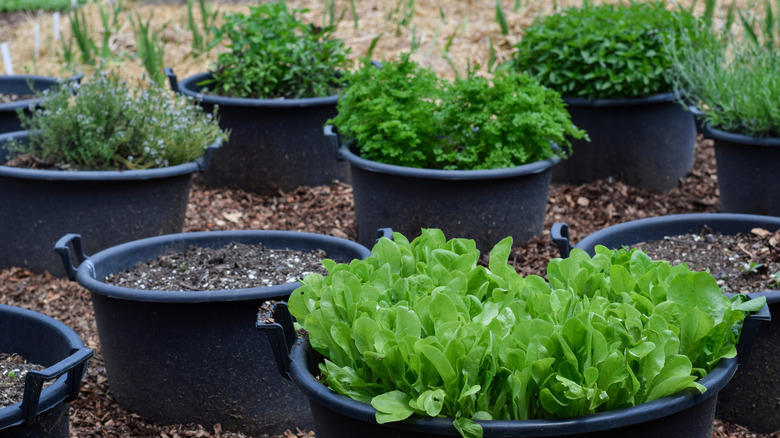
Container gardening is an ideal option for anyone who wants to grow vegetables in small spaces, but it can have benefits even for those with bigger yards. You have the option to move the plants to make the most of the sunlight, and it gives you more control over the soil and watering needs for the individual plant. However, before you fill up your chosen containers with vegetables and herbs, you might want to consider making an upgrade to self-wicking planters.
Self-wicking planters allow for more consistent watering of plants, which can be especially useful for beginner gardeners. With a self-wicking planter, you won't need to water your plants as often, and it even gives you the chance to go away for a few days without worrying that your plants will die. The plants can draw on the moisture as needed, so they won't dry out during the day, but at the same time won't have their roots sitting in water, which can lead to root rot.
Self-wicking containers require a bit of work to set up, but they're much more affordable than buying ready-made watering systems. Depending on the design, you'll just need plastic containers, PVC pipe, and landscaping fabric or mesh.
How to make a self-wicking planter
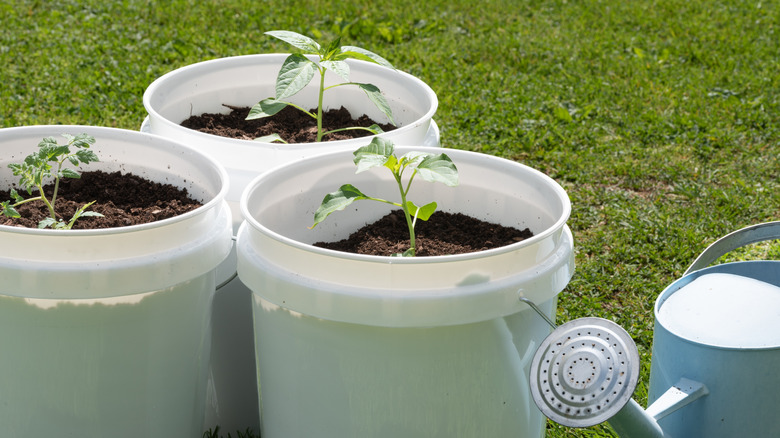
There are a few different ways to construct self-wicking planters, which gives you flexibility to use materials you have to hand. Still, the concept remains the same across the designs: The base of the planter contains a water reservoir, and the soil and plant sit at the top while the wicking chamber connects the two, allowing the plant to draw up moisture as needed. Whatever assembly method you follow, the key to making this a budget-friendly gardening option is to use what you have to hand.
The most straightforward assembly method starts with two plastic pots or tubs that fit inside each other. The top container gets a hole cut in the bottom where you add the wicking chamber, which can be made by drilling holes into an old yogurt cup. Recycled materials such as sections of drainpipe or even stones are used to keep the top container elevated above the waterline. The reservoir is filled using a section of pipe and has an overflow hole to prevent overfilling.
YouTuber Salty Acres demonstrates a slight variation on the method. Rather than having the water reservoir as a separate section, the water is held in a few one-gallon jugs that sit at the bottom of the planter. There are holes in the sides of the jugs that allow the water to seep slowly out into the surrounding soil. Alternatively, you can also use landscaping fabric to contain the soil and plant rather than a plastic container.