

The Aldi Canned Olives So Bad They Should Be Removed From Stores
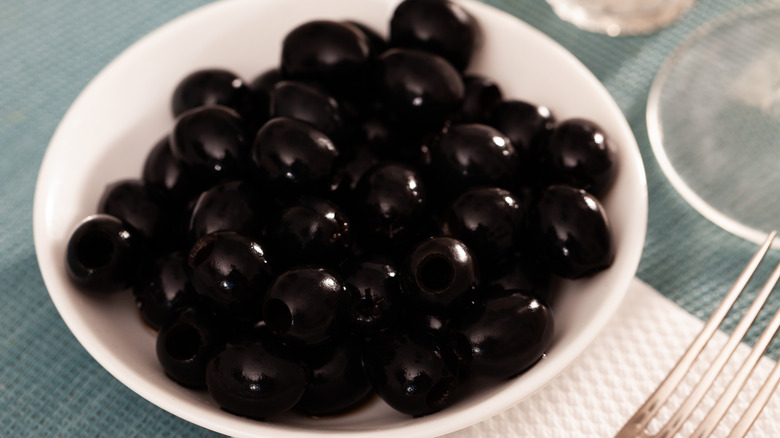
It's no secret that here at Tasting Table, we're always obsessing about how to help you shop so that you get the best value for your money. We're happy to highlight grocery store hits, but it's just as important to acknowledge the misses. We recently put together a list of 5 canned items to buy at Aldi and 2 to skip, based on customer reviews, to help you navigate the canned goods aisle at Aldi. Unfortunately, the Tuscan Garden Large Ripe Pitted Olives were one of the two items that should never see the inside of your shopping cart.
To say that the customers are disappointed with these olives would be putting it mildly. "They are revolting," commented somebody on Reddit, with another person echoing, "Yes! That's one of the few things I go elsewhere to buy." One of the most common complaints is the metallic taste of the olives, which could be due to an ingredient called ferrous gluconate — a form of iron that's commonly added to black olives to make their color more intense and uniform. Inevitably, this addition impacts the flavor, as iron supplements often taste metallic.
Another gripe Aldi customers have with these olives is their texture. People have referred to them as rubbery and mushy, lacking a certain firmness that most expect from a good olive. However, not all is lost in the olive department at Aldi — customers seriously adore these Specially Selected jarred olives.
Aldi's canned black olives are inconsistent (and we might know the reason why)
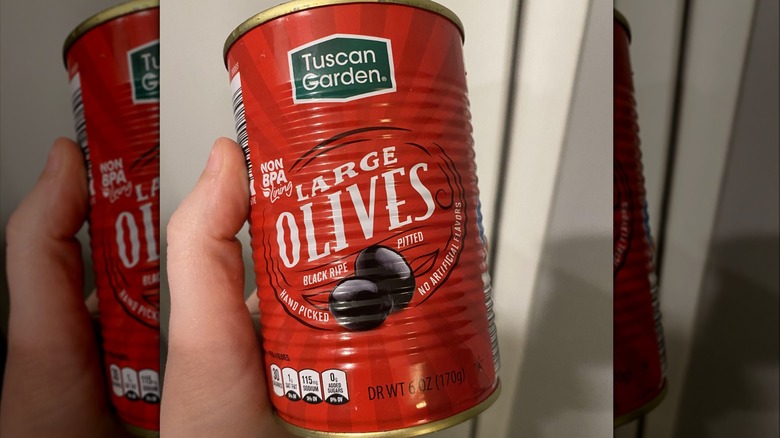
Among the complaints about the metallic flavor and mushy texture, a common opinion from Aldi customers is that the black olives are really inconsistent. On occasion, they might be okay, but the next time, they're a disappointment yet again. One reason for these variations could be the fact that the olives appear to be imported from different places.
Despite what the Tuscan Garden brand name might lead you to believe, the olives don't seem to come from Italy. Back in 2020, they were sourced from Greece. By 2023, they were sourced from Egypt, and in 2024 some cans had olives sourced from Egypt, while others had olives sourced from Portugal. Additionally, in 2024, Aldi was using at least two different distributors and manufacturers for the olives, which resulted in cans that visually deviated from each other in color. This lack of consistency in sourcing could be the reason why customers never know what to expect from the next can they'll buy.
But what can you do if a can of these olives is already in your pantry? Our best advice would be to use them up in foods where olives play more of a background role, and ideally pair them with something spicy or acidic. For example, hide them in a colorful niçoise salad with a strong lemon dressing, or toss them in the Mediterranean chickpea skillet with some cayenne pepper.