

Adding A Door To Your Kitchen Isn't Such A Bad Idea. Here's Why
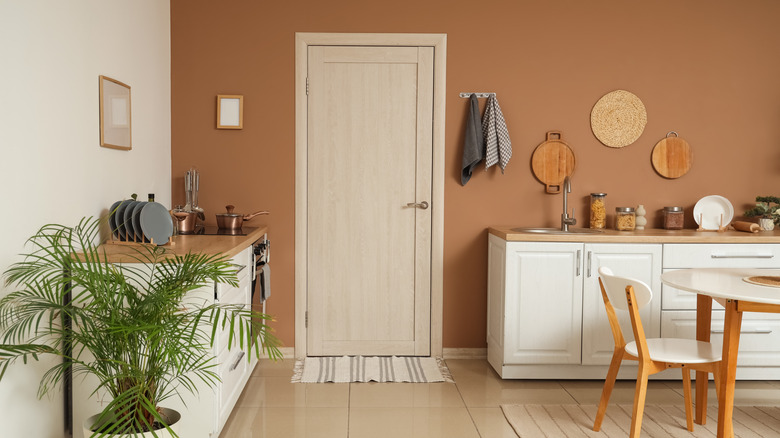
When you think about your dream kitchen, you may imagine a wide open space full of natural light, shiny appliances, and a clear view of the living space. Open layouts have been a major trend in kitchen design for years, and rightfully so. They give homes a seamless look, and they create an inclusive environment that's absolutely perfect for entertaining. It's for these reasons that adding a door to your kitchen may have never crossed your mind, but Kerrie Kelly, CEO and creative director of Kerrie Kelly Studio, shared with us why a closed kitchen isn't such a bad idea after all.
You may have never considered this, but adding a door can create more flexibility in your kitchen, according to Kelly. "There's a renewed interest in reintroducing separation in a more thoughtful, architectural way," she says. Going completely open-concept can be problematic during times when you want to keep the kitchen separate. For instance, you may want to keep that pile of dirty dishes far away from your guests, but with an open kitchen, it's not really possible and will inevitably cause more stress. With the presence of the door, the kitchen can "shift between being fully integrated and more contained when needed," Kelly explains.
In addition to the flexibility a door provides, it can also be a design choice that can elevate a space visually. "A door, especially one that is beautifully detailed or integrated into cabinetry, can elevate the kitchen into a more curated, intentional environment," Kelly says. If you choose the right one, doors can be both practical and beautiful. What's not to like?
Consider this before adding a door to your kitchen
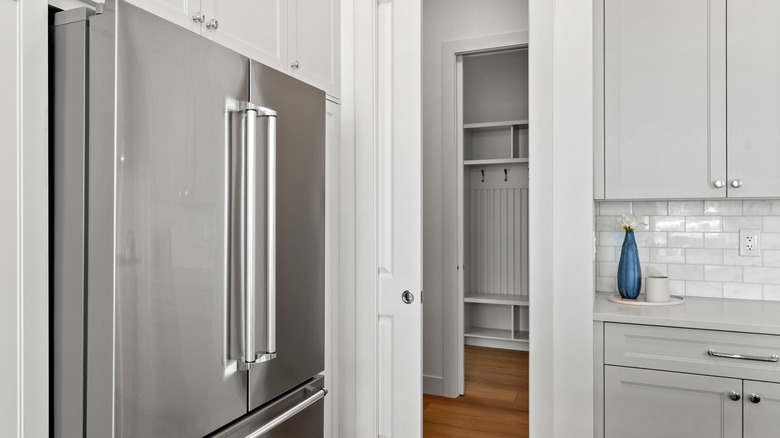
As Kelly mentions, a door shouldn't be something you automatically avoid when renovating your kitchen. Instead, you should consider that in the right space, a door can be a great addition for a handful of reasons. "It's particularly effective in open-plan homes where you want the option to control noise, cooking activity, or visual clutter," she says. However, despite its benefits, a door won't work with any old kitchen, so you'll want to really consider if it will work for yours before you dig out your tool kit to install one.
"The primary consideration is flow," Kelly explains. "A poorly placed door can interrupt circulation or make the space feel smaller." Of course, some modern spaces are so open that there may be nowhere to place a door to begin with. Other kitchens, such as galley kitchens, may have a door frame already where a door can clearly be placed. According to Kelly, you'll also want to coordinate your new door with your kitchen's cabinetry, appliances, and clearances to give it the best look — and chance at efficiency — as possible. "The key is ensuring it enhances the architecture rather than competing with it," Kelly says. Like most design-related things, a door should feel natural in your space, so if it ain't broke, don't fix it.