

What To Do If You Find Tomato Hornworms In Your Garden
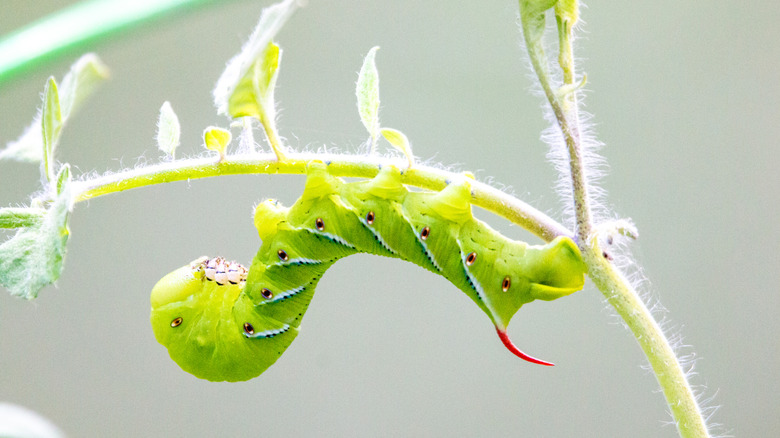
Every home gardener has to deal with pests at some point. If you're lucky, they're only a mild nuisance and won't have a big effect on your garden. But if you're growing vegetables like tomatoes, peppers, and eggplants, you may find yourself overwhelmed by tomato hornworms. These large green caterpillars can devastate a crop of tomatoes. If you don't want to use pesticides to control them, you do have other options.
Tomato hornworms can destroy a tomato plant basically overnight. Tasting Table has covered some ways to get rid of hornworms before, and the simplest option is to remove them by hand. Not everyone wants to touch such large caterpillars, but they're harmless to humans, and it's a surefire way to remove them. Once removed, you can drop them into soapy water.
The main issue with manual removal is that hornworms are hard to spot because of how well they blend in, especially when they are still small. Often, it is easier to spot their droppings, also called frass, which are clusters of little black spots. You can spray your plants with water and wait for the caterpillars to wiggle as they try to get away. A black light used in the dark will illuminate hornworms and is usually the best way to spot them.
Companion crops like basil and borage will deter hornworms. You can also plant flowering tobacco or dill as trap crops. Rather than repel hornworms, these will attract them more strongly than tomatoes. Plant trap crops eight to 12 feet away from your main crop to be effective.
Controlling tomato hornworms

Leaving tomato hornworms so they can be preyed on by parasitic wasps, which lay their eggs in the caterpillars, is a natural solution. These wasps are also pollinators, so if you have them around, they can help your garden thrive. However, you will lose some of your crop to the hornworms waiting for this to play out. You could also use ladybugs, which prey on not just hornworm eggs but many other pests and are otherwise harmless. Another beneficial insect is the green lacewing, which preys on tomato hornworms and other pests. Lacewings are attracted to plants like dill, fennel, sunflowers, parsley, and cilantro.
Neem oil is an effective natural deterrent for tomato hornworms that is usually harmless to pets and humans. Two tablespoons of neem in a gallon of water with a few drops of dish soap is sufficient. Spray the mix on tomato stems and leaves, including underneath, either first thing in the morning or in the evening. Though neem acts as a pesticide, it's more of a deterrent, so it's best to use it to prevent an infestation or to stop an early one. It will have less effect on larger caterpillars.
Tilling the soil at the beginning and end of the growing season is a good way to prevent hornworms because it destroys the pupae where they are trying to wait out the winter. If you want a natural pesticide for your garden, you can use Bacillus thuringiensis. It's a bacterium that is naturally found in soil and is harmless to plants and animals, but will kill many kinds of caterpillars and moth larvae.