

Plant Herbs This Way To Attract Pests — And Protect Your Garden
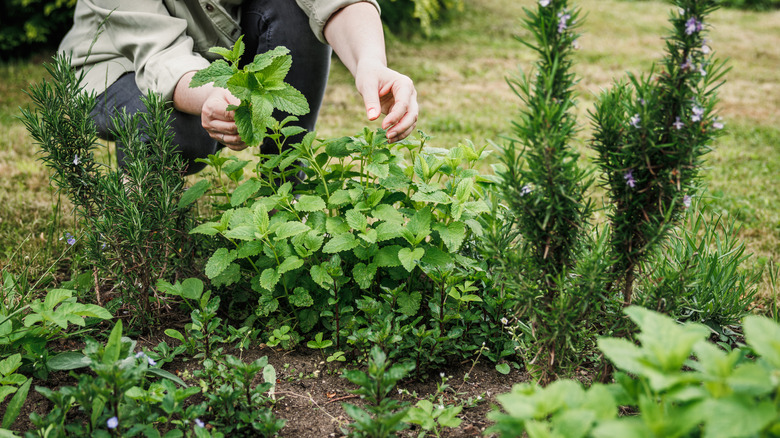
In 2009, the National Gardening Association determined that a well-maintained home garden could yield a $500 return on investment. By 2025, over 43% of Americans were growing vegetables, according to WDSU News. Given the time, money, and effort involved, you want to keep your garden pest-free. That's easier said than done, especially if you want to avoid pesticides. Instead, why not try planting sacrificial herbs?
Some plants are naturally more attractive to pests like aphids, snails, and caterpillars. If you want to protect your vegetables, planting a decoy herb garden a short distance away gives pests a tastier target and makes them less likely to go after your main crops. You can also use companion plants, such as planting peppers near tomatoes, as a second line of defense.
If tomato hornworms are after your tomatoes, try planting dill as a trap crop a few feet away. If slugs have been going after your lettuce, keep it in the center of your garden and plant parsley around the outside. The slugs will be drawn to the herb and more likely to leave your lettuce alone. If you're trying to rid your garden of caterpillars, they are also fond of parsley, so consider planting some to draw them off. Mustard can help keep flea beetles off of your broccoli, while basil may protect garlic plants from thrips. If you plant basil near tomatoes, it will also attract a species of wasp that preys on tomato hornworm so it can do double duty in your garden.
Plant a trap, it's a snap
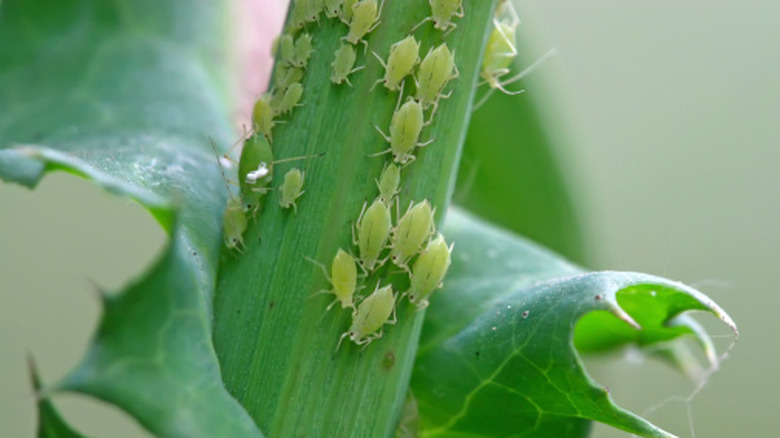
Many plants can be used as trap crops. Data from the University of Missouri showed that up to 100 squash plants could be protected from squash vine borers, squash bugs, and cucumber beetles by planting just a half dozen Blue Hubbard squash. Your home herb garden can work the same way.
Trap crops need to be planted a short distance from your actual garden, about 8 to 12 feet away. They should be far enough that bugs can't simply hop onto the plants you're trying to save, but close enough to offer pests an alternative. Use this alongside other tricks like sprinkling this sweet pantry staple to keep your garden pest-free.
Trap crops can be planted around the perimeter of your garden like a fence, or you can plant them in alternating rows. Since different herbs will attract different pests, you may need to do some careful planning if you are trying to trap more than one type. Just remember to never plant the trap too close to the main crop, otherwise the pests will probably consume both. Some herbs can also be planted to repel pests. Aphids and slugs will avoid chives, and cabbage moths don't like rosemary. Sage is particularly helpful and deters some beetles, snails and moths. Your trap crop needs to be planted before your main crop. This allows it to flower or seed first, which is when pests are most attracted. These herbs need to be maintained just as carefully as your main garden to ensure they stay desirable to the pests. With a little effort, you'll be able to enjoy an even more bountiful harvest.