

10 Strict Rules DoorDash Drivers Must Follow
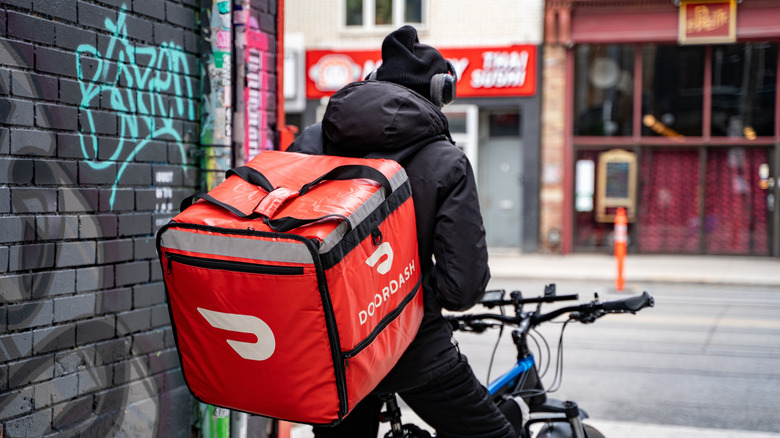
Just as DoorDash can ban customers who cause delivery issues for the company, it can also terminate the accounts of delivery drivers — known as Dashers — who don't follow the rules. Not only does the company conduct deep criminal and driving background checks on every new applicant, but drivers also have to uphold certain standards while they're working.
DoorDash's rules exist to ensure that customers feel safe receiving deliveries and to maintain the company's reputation. They also help reduce the company's legal liability, aiming to prevent Dashers from knowingly or unknowingly breaking local, state, or federal laws. For example, in order to meet the company's standards, Dashers must have suitable vehicle insurance and specific food-safe equipment for making deliveries. They must also remain respectful, reliable, trustworthy, and punctual.
Deviating from DoorDash's rules can result in a deactivated account, meaning the offending Dasher can no longer accept job requests. Honestly, we're glad the company has strongly enforced rules and vetting processes for drivers, because we want to be able to trust those handling our food and coming to our homes. Below are some examples of the strict rules that all DoorDash drivers must follow.
Anyone helping with a DoorDash delivery must have a Dasher account
One rule that all DoorDash drivers must follow is that they can never let anyone else make a delivery for them. A registered Dasher can't ask their non-Dasher friend or partner to assist them with their work or collect or deliver something on their behalf.
The company says that it's ultimately up to the individual driver how they complete their delivery, as long as anybody assisting with the job is a registered Dasher. This means that one Dasher could be driving while another collects and drops off the food items; however, only one Dasher will receive credit (and payment) for the delivery. The key takeaway is that anybody actively helping to make a delivery must be registered to work for DoorDash.
That said, there's nothing in the company's rules that prevents Dashers from having a passive passenger in their vehicle while they're working, including children. Plenty of DoorDash drivers on social media say that they often bring their kids along while making their deliveries. However, it's a risk that may not be worth taking, as there have been multiple instances of Dashers having their vehicles stolen while their children were still inside.
DoorDash drivers must have sufficient insurance
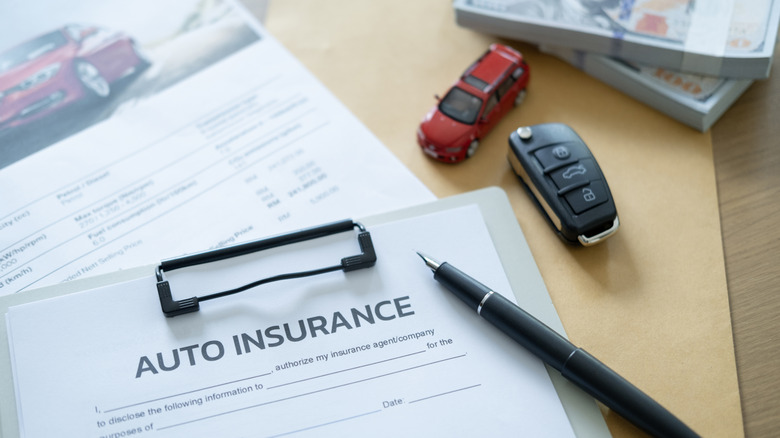
Anyone who delivers for DoorDash must prove to the company that they have appropriate vehicle insurance. However, it's crucial that Dashers ensure their policy covers work-related use, as some providers won't pay out for incidents that occur while making deliveries in a personal vehicle. Additionally, different states have varying requirements when it comes to the type and level of coverage drivers must have.
Writing on social media, one Dasher noted how many of the insurance companies they approached wouldn't cover Dashing at all. Other providers would only cover drivers if less than half their annual mileage comes from Dashing. While DoorDash does provide third-party liability coverage, the level of that coverage varies from state to state, and it only applies while a driver is on an active delivery. It's not considered a replacement for personal auto insurance and does not cover the Dasher themselves or their vehicle.
The good news is that there are insurance companies which cater specifically to gig workers, offering pay-per-delivery policies. This means drivers can have one policy for personal use, one for Dashing, and a level of third-party liability coverage provided by DoorDash.
DoorDash takes safety, harassment, and discrimination seriously
While it might sound obvious, DoorDash drivers aren't allowed to harass or discriminate against customers or compromise their safety. DoorDash wants its contracted drivers to treat customers with respect, meaning drivers aren't allowed to threaten or proposition their customers, and must refrain from using inappropriate language or gestures. Discriminating against customers with certain characteristics by treating them differently or in a demeaning manner is also forbidden.
Safety is another big concern, and DoorDash outlines a number of unsafe actions that it will not tolerate. These include actions related to firearms, driving with unsecured pets, driving under the influence, speeding, soliciting illegal drugs or controlled substances, and theft of food or other items. The company also forbids Dashers from making any sort of physical contact with customers and has an in-depth sexual harassment policy. Additionally, there are driving-related rules which ban actions such as driving on lawns and sidewalks or blocking intersections. Essentially, all customers and non-customers should feel safe around anyone who is representing DoorDash.
Customers who witness their driver breaking any of these rules are well within their rights to log a complaint with DoorDash. The company will inform the Dasher of any policy violations, and depending on the nature and frequency of the complaints, they may terminate the driver's account.
DoorDash drivers must not misuse customer information
DoorDash aims to maintain the privacy of its users to avoid legal issues and to be seen as trustworthy to gain and retain customers. As with most jobs, the company forbids drivers from stealing, publicizing, or misusing customers' personal information to commit fraud, engage in harassment, or conduct personal or professional business.
This means that Dashers aren't allowed to store personal details they glean from a customer, such as their name, address, or any other information they might learn via a delivery. Publicizing users' personal information is also forbidden — this includes taking pictures of merchants, customers, or anything with identifying information and sharing it online in a public forum.
Dashers also shouldn't abuse the DoorDash app's messaging or call features. If they need to phone or text a customer or merchant through the app, the conversation must be related to the delivery. They mustn't discuss unrelated personal or business topics, like trying to get a date or expand their professional network.
Anyone working for DoorDash must follow food safety regulations
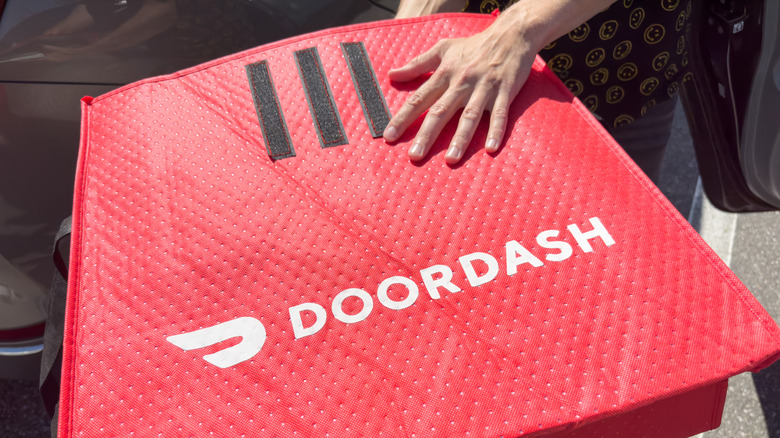
Because DoorDash drivers handle food, it's imperative they ensure the items are safe to eat on arrival. Dashers are charged with keeping food free from external contamination and within safe temperature ranges. They're also supposed to maintain the quality and integrity of the food as much as possible.
DoorDash drivers must ensure that all sealed food items remain unopened. They are specifically tasked with keeping your food at a safe temperature during transit by using an insulated "hot bag" which they can purchase from the company. Dashers are advised to wrap the items in a foil blanket before laying them flat in a clean hot bag, which should be zipped shut. Not only does this help the food stay warm, but it also reduces the risk of contamination. The company forbids Dashers from contaminating food in any way, which includes refraining from smoking or vaping in their vehicle. Drivers must also follow any allergy instructions.
DoorDash encourages its drivers to learn and follow any state food safety laws related to deliveries. For example, some states may have specific regulations relating to personal hygiene, storage temperatures, and separating orders to prevent cross-contamination. Even if a Dasher is technically following the rules, food temperatures may be affected if they don't separate hot and cold food items. This means that there are some foods you might want to avoid ordering for delivery, as they inherently pose a greater health risk.
Dashers engaging in fraudulent activity can have their accounts deactivated
DoorDash takes fraud seriously, and it's quick to deactivate the accounts of Dashers who engage in fraudulent activity against the company or its customers. Beyond being banned from Dashing, committing fraud may result in legal prosecution against the driver, too.
There are several forms of fraud that can result in account deactivation. For example, a driver may falsely claim they delivered an order or that a store was closed. It's also considered fraud if they share their account with someone else who completes deliveries on their behalf. A Dasher can be banned for misusing their "Red Card" – the payment card that DoorDash gives drivers to pay for items at the checkout. This includes over-swiping to pay for additional items or swiping and canceling the delivery.
Violating referral terms, like selling or trading the credits that drivers earn for making referrals, can also result in a ban. The company forbids Dashers from creating multiple accounts in an attempt to receive more delivery requests, and from using someone else's identification information to create an account. Occasionally, people will steal or "borrow" someone else's identity to sign up for DoorDash, usually if they wouldn't be accepted under their own circumstances. The company has a selfie verification process, but this isn't infallible.
DoorDash drivers have their accounts flagged for being late

It's in a delivery driver's best interest to get your food to you on time. Not only does punctuality boost their Dasher rating and increase the potential for tips, but if a driver is frequently late, their account may be flagged for review, suspension, or deactivation.
However, what DoorDash considers "late" is up for debate. Some Dashers on social media believe any delay over 10 minutes is an automatic violation, while others claim it only happens if a customer actively complains about the wait. Meanwhile, some Dashers report that they were notified of a violation after being just a few minutes late — hungry customers aren't always forgiving when they've had to wait on a late food delivery. To remedy delays, DoorDash has implemented specific speed clauses for restaurants like McDonald's, which increase the company's commission rate if drivers are kept waiting.
The good news for Dashers is that their rating is calculated using their last 100 deliveries, making it easier to improve their score over time. Additionally, if they receive a poor rating for a late delivery, the company may remove it if there were extenuating circumstances. Reasons might include long restaurant waits, orders from restaurants known for delays, extreme weather, or accepting an order that several Dashers have previously rejected.
A bad driving record can get you banned from DoorDash
With driving being integral to a Dasher's position as a contract worker for DoorDash, if they develop a bad driving record, the company may deactivate their account. This is out of concern for the safety of merchants, customers, drivers, passengers, and the local community. Not only do these policies apply to motor vehicle drivers, but they also apply to those who make deliveries via non-motorized transport, such as bicycles. DoorDash drivers are expected to follow all local traffic laws and regulations, so they mustn't speed or drive under the influence of alcohol or drugs.
As part of DoorDash's onboarding process, the company requests a Motor Vehicle Report. This must show no extreme driving violations within the last seven years and prove that the driver holds a valid license and insurance. It's believed that the company runs a fresh check once a year, so Dashers must maintain a clean driving record to continue working for the company.
However, it's not clear exactly how clean your driving record must be, with some Dashers noting on social media that deactivation seems to depend on the severity of the infraction rather than the quantity. For example, some drivers mention receiving one-off tickets for speeding or running a red light without any response from DoorDash. It appears that DUIs, serious or repeated traffic violations, and license suspensions are of greater concern.
DoorDash conducts regular criminal background checks
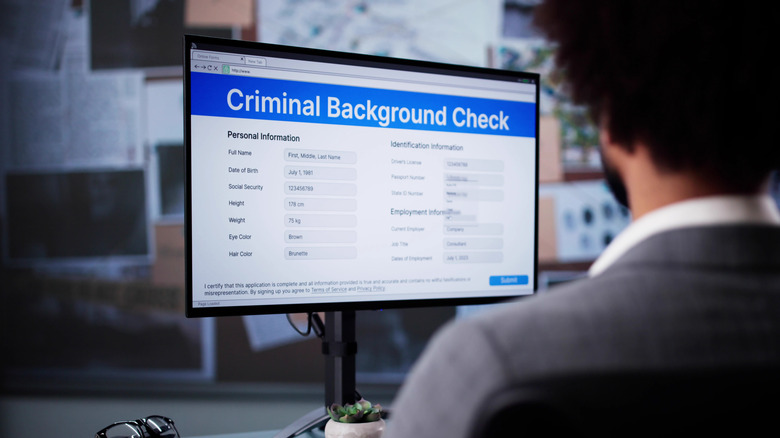
DoorDash conducts background checks for all new Dashers, including a Criminal History Report, which pulls together information at both the local and national level. The company claims that the third-party conducting the report automatically informs them of any future changes, while Dashers on social media believe a fresh report is conducted annually. Ultimately, if a driver commits a crime after the initial onboarding process, DoorDash will eventually find out.
The report should reveal everything from minor infractions to misdemeanors and felonies. After review, if any of the offenses on a Dasher's record are violent or considered to be a safety or fraud risk, the company may deactivate their account. Unsafe behavior can include anything from verbal and physical assault to theft.
If something is flagged in a Dasher's report, the company will notify them of the pending deactivation and provide a 14-day window to dispute it. During this period, the Dasher won't be able to use their account for deliveries. The dispute process gives drivers the opportunity to highlight potential errors or provide additional mitigating information, like case dismissals or expungements. If the driver doesn't effectively dispute the flagging within the 14-day period, their account will be deactivated. There is also an appeals process for drivers who believe their account was wrongly closed.
There are specific rules related to delivering alcohol
Interestingly, DoorDash has far more rules related to delivering alcohol than to food safety. In fact, the company's alcohol delivery rules have become stricter over the past few years. For starters, any Dasher delivering alcohol must be at least 21 years old, and they mustn't have any alcohol within reach while operating a vehicle. Upon arrival, they have to hand off any alcohol directly to the customer, but only after scanning a valid ID. They must also feel confident that the recipient isn't already under the influence of drugs or alcohol.
Drivers may refuse to deliver the alcohol if nobody answers the door, the customer appears to be underage (or there are lots of underage people around), or if the ID provided doesn't match the customer. There are also certain locations where alcohol delivery is forbidden, including K-12 schools, college campuses, prisons, delivery lockers, veterans' homes, state capitol grounds, reformatories, and businesses that sell alcohol. Some towns or counties may also be considered "dry," meaning they have specific rules limiting the purchasing or delivering of alcohol.
Dashers are incentivized to handle alcohol transactions carefully. If they're unable to hand over the items, they still get paid for the delivery and for returning the alcohol to the merchant. Plus, it's not unheard of for undercover law enforcement officers to order alcohol through delivery apps to check compliance.