

IHOP'S Name Made Way More Sense With The Original Menu
We may receive a commission on purchases made from links.
IHOP restaurant has identified with its acronym for so long that the official name seems like an afterthought — unless you frequented the fledgling 1958 restaurant as it expanded in the early 1960s. Back then, it operated under its full name of International House of Pancakes, even though it had no international locations until much later. So what gives with the name, when a single small pancake eatery in a Los Angeles suburb, founded by two American brothers, gives off such worldy airs?
The answer is quite simple, though it took the discovery of early '60s menus on resale sites like eBay to bring the "aha" moment to most folks. The word "pancakes" is a fitting name for an empire built on batter and griddles, but the "international" part came from the type of pancakes populating the menu. Co-founder Al Lapin decided from the beginning to go exotic, soliciting the talents of a Cordon Bleu chef to create pancakes with names like Kauai Coconut and Tahitian Orange Pineapple. Based on surviving menus from the early '60s, it soon expanded with pancake names and recipes from across the globe.
Several sale-listing photos on eBay depict what's identified as vintage 1960s-era International House of Pancakes menus that are die-cut in circular, orange, globe-shaped patterns. They're filled with geographically themed pancakes, including ones on a 1962 menu such as Brazilian Banana Pancakes, described as golden-ripe bananas tucked into four light pancakes; Hungarian Palacsinta with strawberry preserves, chopped pecans, thin egg batter and powdered sugar; Viennese Potato Pancakes made with grated potatoes and savory seasonings; French Pancakes, or Crepes Suzette, with orange Cointreau sauce; and Danish Aebleskivers, described as Copenhagen-style pancake balls served with strawberry apple sauce.
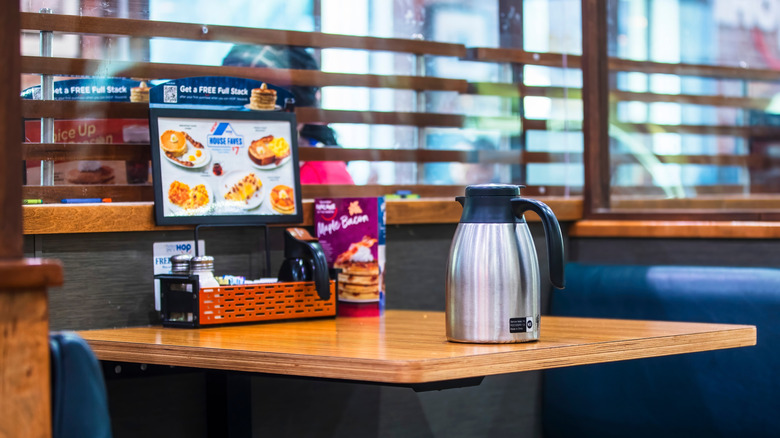
IHOP pancakes then and now
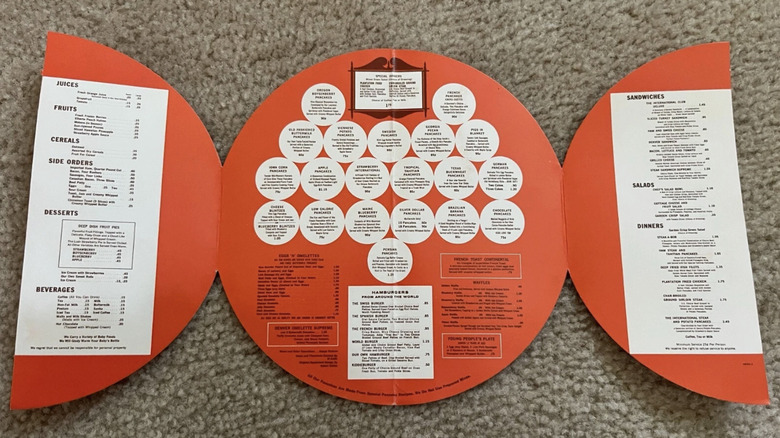
Many of IHOP's early menu items took diners on imaginary culinary journeys to far-flung destinations, but plenty other pancake concepts drew from American traditions as well. Families could take a figurative cross-country road trip by tucking into Texas Buckwheat Pancakes, Iowa Corn Pancakes, Maine Blueberry Pancakes, Oregon Boysenberry Pancakes, Georgia Pecan Pancakes, and even Pigs in a Blanket Pancakes. Was every creation emerging from an IHOP griddle an exact replica of its international counterpart? Probably not. But based on the chain's success, it managed to turn breakfast into something bigger and wider, with a sense of adventure — and maybe even a curiosity for food traditions and cultures far from American shores.
International House of Pancakes adopted the acronym IHOP in 1973 as part of a marketing program; opened its 500th restaurant in 1992; exceeded $1 billion in system-wide sales in 1998; and finally marched fast-forward into the real-life international market by 2014, with at least 130 locations in places like Canada, Saudi Arabia, Mexico, and The Philippines. More than 1800 IHOP restaurants across the globe now carry the flapjacks torch across every U.S. state and into the Americas, the Middle East, and other locales.
Today's menus at International House of Pancakes barely resemble the worldly flavors of its early days, with currently only one international-themed offering of Mexican Tres Leches Pancakes — which happened to rate as the best item in our ranked list of 10 IHOP Pancakes. The menu includes a wide variety of meals for lunch and dinner, as well expanded breakfast items such as these eight IHOP omelets sampled and ranked by our Tasting Table writer.