

Can You Use Too Much Charcoal When Searing Meat?
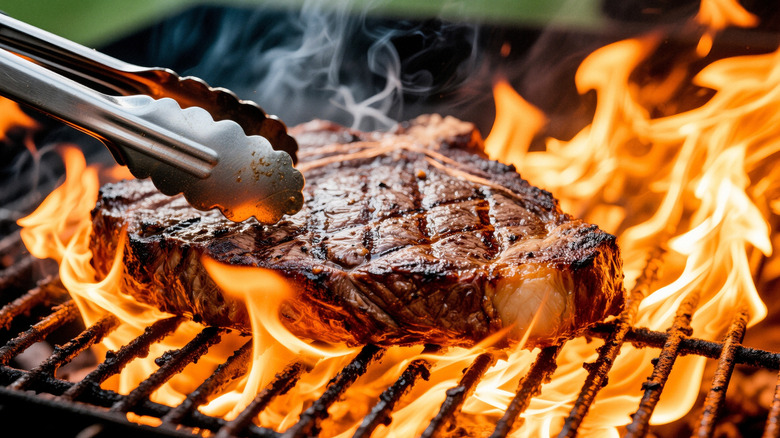
Dabblers and experts alike understand that grilling meat over charcoal can be as simple or as intricate as you want it to be. By controlling the amount of charcoal you put in and the arrangement inside your grill, you can really dial in the results for a perfect sear. The key to a great sear on meats like beef is high heat, and in this case, more is more.
One method for getting a scorching heat from your grill is to layer your charcoal to compound the heat output. One to two layers work for longer, sustained cooking at lower temperatures, but three layers of charcoal provide the rip-roaring heat necessary for a satisfying sear on steaks or roasts. So if more is more, is it even possible to use too much charcoal? The answer is yes, but not because there's too much heat. More than three layers makes it harder to keep your heat consistent, and gives you a literal hot mess to manage while cooking. Too much charcoal in your grill also makes it harder to arrange coals in intentional ways or to create varied zones within your grill.
Don't sweat the technique
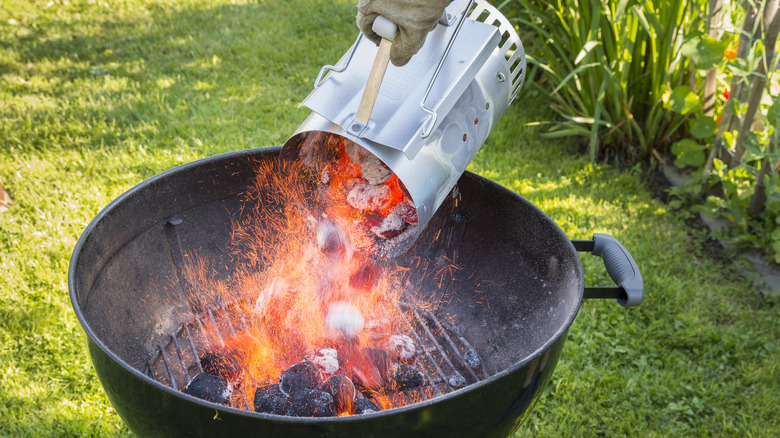
Unlike pan-searing, using charcoal can mean temperature is trickier to control. Rather than having a literal dial to help you get the temperature you need, you have to plan how to arrange your coals, how much to use, and how to light them. Three layers of charcoal should be plenty to get the grill as hot as necessary, but that only works if all your layers are hot at the same time. Aim for a temperature above 350 degrees Fahrenheit (ideally 450 to 500), but even as high as 1,000 degrees Fahrenheit for an effective sear — some people even sear meat directly on hot coals.
Some barbecues are big enough to place and light three layers of coals at the same time before spreading them into the formation you want. Otherwise, you can also use a full charcoal chimney starter to get a bigger batch of coals ready to layer. When the coals are ready to use, they'll be visibly hotter, as barbecue expert Steven Raichlen told Tasting Table, "If you're using briquettes, what you look for is the briquettes will glow orange and just start to be covered with gray ash. If you're using natural lump charcoal, it'll glow orange."
Control plus high heat equals a perfect sear
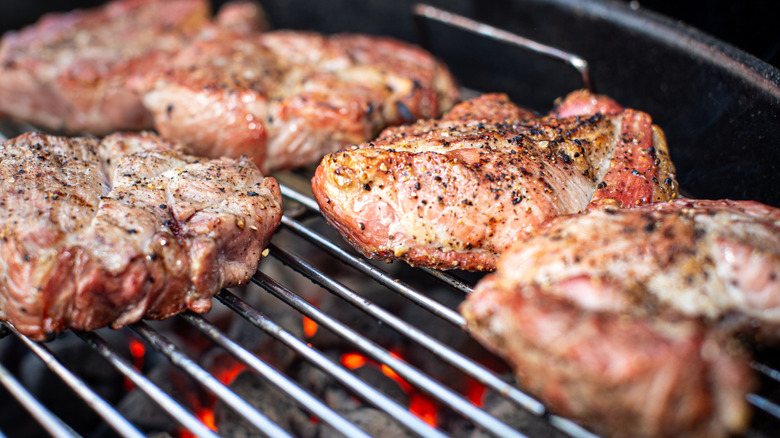
There's a reason why we need a high heat to get the sear we want. The Maillard reaction is the chemical process behind searing, where heat caramelizes the sugars and proteins in meat — creating the rich flavor we crave. To induce the Maillard reaction, you need the surface of the meat to reach at least 300 degrees Fahrenheit, and burning begins to occur around 355 degrees Fahrenheit, which also imparts the "char" flavor you want from searing.
Layering coals can also be used in a two (or more) zone setup. Pile three layers beneath a section of the grill where you intend to do the searing. Use sections with fewer layers, or even no charcoal at all, for more control over the grill's heat. This can be useful for managing your BBQ workflow if you're reverse searing steaks. To really get that steakhouse-perfect sear, ensure you dry and salt your meat ahead of time to create a smoky, caramelized crust.