

Why You Should Be Switching Green Onion For This Garlicky Herb In Your Garden
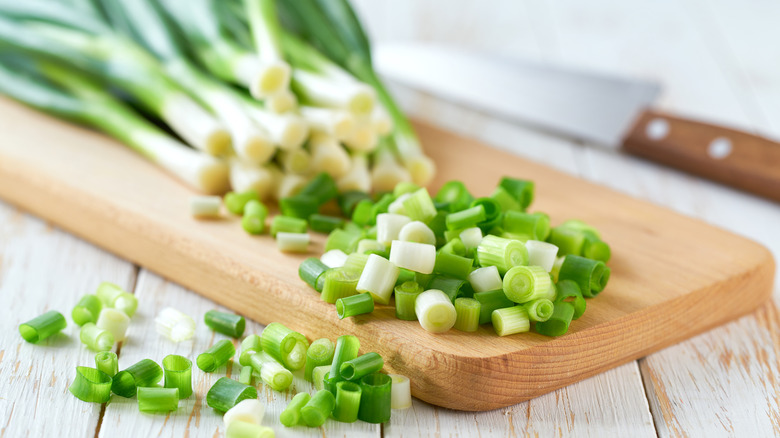
When you need a burst of freshness and flavor, it's hard to go wrong with green onions. You can add them to nearly anything, from tacos to fried rice to omelets. Best of all, they require minimal prep beyond slicing and they're simple to grow in your home garden. As versatile and delicious as green onions are, you can elevate your home herb garden by swapping them for garlic chives.
Despite the name, garlic chives are not chives, they're two completely different plants. The scientific name for garlic chives is Allium tuberosum, while regular chives, which are our favorite topping for baked potatoes, are Allium schoenoprasum. Both are members of the allium family, but regular chives taste like onion, while garlic chives have a subtle garlic flavor. They're milder than garlic, which makes them such a welcome addition to any dish where you might normally use green onion. The long, flat leaves look similar to green onions and can be used interchangeably.
Garlic chives are perennials and grow easily from seeds. They prefer moist soil in a place with lots of sun, but they are drought tolerant and can adapt to partial shade. They grow so easily you may need to watch how they spread through your yard, though they are easy to remove. The plants will flower in late July or August, and the star-shaped white flowers are edible and make a nice accent to dishes. Be aware that the plants are toxic to dogs and cats.
Make your garden thrive with garlic chive
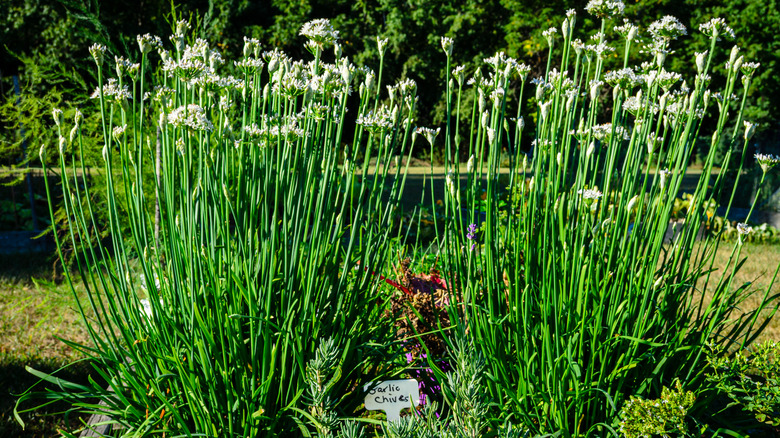
Like green onions, you can buy garlic chives at the store and plant them in your garden or grow them from seeds. When it comes to harvesting, you can cut the plant close to the root and take what you need. It will continue growing thereafter.
Because garlic chives blend both an onion and garlic flavor, they won't overwhelm a dish, but they may enhance flavor beyond what green onion might. Recipe swaps typically suggest replacing them at a 1:1 ratio. Dishes that work with garlic chives can include salads, soups, and even a summery steak marinade. Chopped and sprinkled on nachos, pizza, or pasta, they add flavor, color, and brightness. The flavor profile works well with potatoes, chicken, and especially well with fish. Like green onions, they're best used raw or added in the final moments of cooking. You could also mince some garlic chives to make a delicious compound butter.
Garlic chives have a fairly short shelf life — hey'll only last about three days in the fridge — so it's best to only take what you need from your garden. If you do take extra, or it's coming to the end of the season, you can freeze them for use later. The leaves can be frozen whole, or you can chop them and freeze them in ice cube trays with a little water. These cubes can be tossed into dishes as you cook.