

How To Cook The Best Burgers On Cast Iron
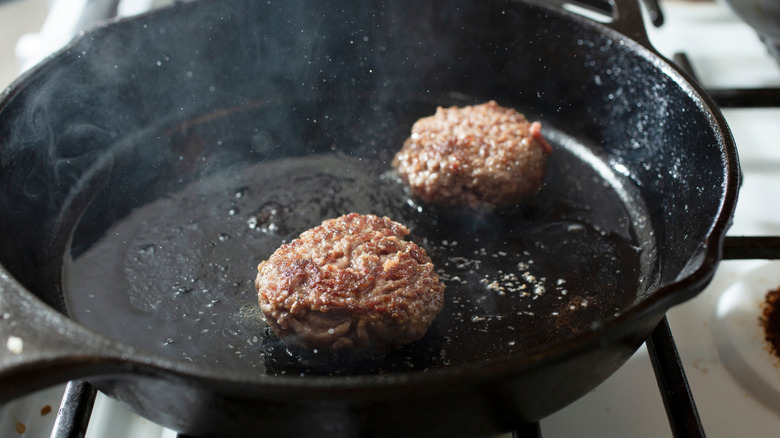
There's nothing like a juicy burger hot off the grill, with its rich, smoky flavors and undertones of char. Well, almost nothing. Let's not forget burgers cooked in a cast iron skillet. Grilling is all about the smoke and sizzle, but you can really only get that world-class sear from a scorching hot, heavy-as-heck cast iron pan. As a chef and recipe designer with a passion for burgers, I find the crisp, caramelized browning from cast iron can't be beaten.
While you might have your own methods, techniques, and recipes for making burgers, it's always good to review the fundamentals. That's why it's essential to understand the basics of cooking burgers in a cast iron pan before experimenting or adding your own pizzazz. Once we've nailed down the basics, it's your job to show some culinary creativity. There are endless tips and tricks for cooking burgers on cast iron, as well as mistakes you'll want to avoid, so let's set you up for success and review the process.
Season your cast iron pan
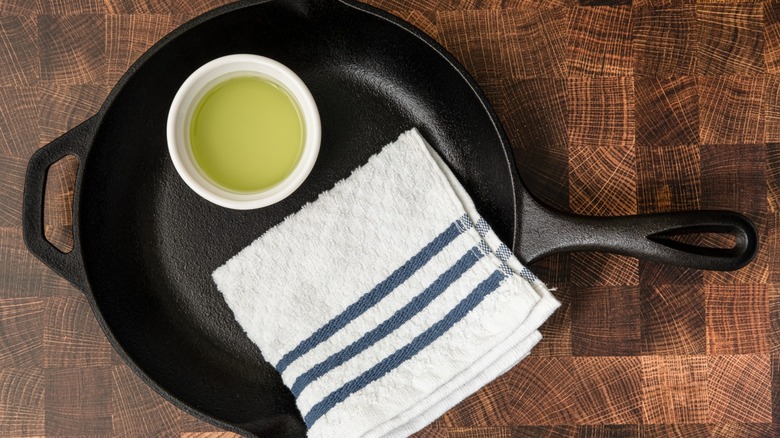
One of the biggest mistakes that people make when cooking burgers in a cast iron skillet is failing to season the pan. That doesn't mean sprinkling it with salt and pepper, but sealing the surface so food doesn't stick during cooking. Proper seasoning will also prevent food build-up and help promote a clean, even sear.
If you've worked with cast iron cookware in the past, you likely know about seasoning already, but it never hurts to review your knowledge. To season a cast iron pan that's been used before, first clean it thoroughly with steel wool or an abrasive sponge. Make sure the pan is completely dry, then coat the entire surface with a thin layer of cooking oil, preferably one with a high smoke point. Next, you want to place the pan upside down in your oven and bake it until the surface begins to smoke. Finally, remove the pan, carefully wipe off any excess oil, and bake it for another hour to let the oil bond to the surface. If you use your cast iron pan regularly, you shouldn't need to re-season it.
Use fatty ground beef
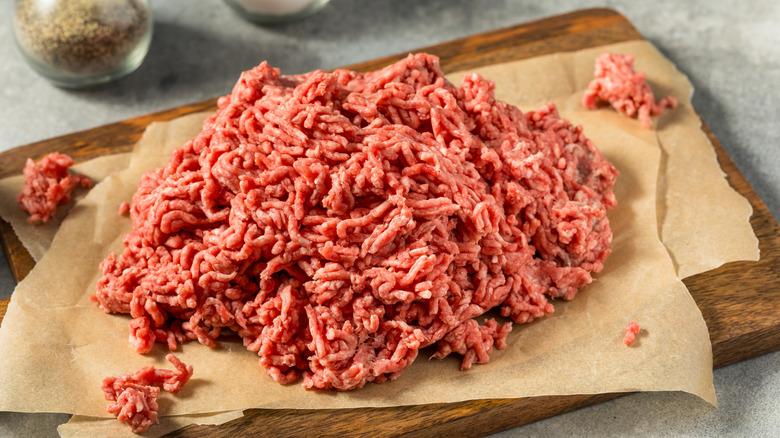
When cooking a burger in a cast iron pan, you shouldn't need a lot of oil, as the beef itself already contains fat. Personally, I agree with Ina Garten's choice of a lean-to-fat ratio of 80:20 when it comes to making burger patties. This beef is a bit fattier than the 90:10 stuff that's commonly sold in grocery stores as "lean." Burgers with a higher fat content end up extremely juicy, which is especially important when you're cooking smash burgers or thinner patties on cast iron.
If the beef you're buying doesn't list the fat ratio on the packaging, look for ground chuck beef, as this is naturally fatter and better suited for making burgers. If in doubt, ask your local butcher or grocer to help you out. The extra fat will simmer in the pan, essentially frying the patty and helping to create the brown, crispy crust. Some fat will also remain in the patty, keeping it juicy. This improved texture is crucial when cooking on cast iron as it will help prevent your burgers from drying out, particularly when you're using thin patties. If you're trying to cut down on saturated fats, it's still possible to use lean beef, but you may have to adjust your timings and temperatures.
Chill your burger patties before cooking on cast iron
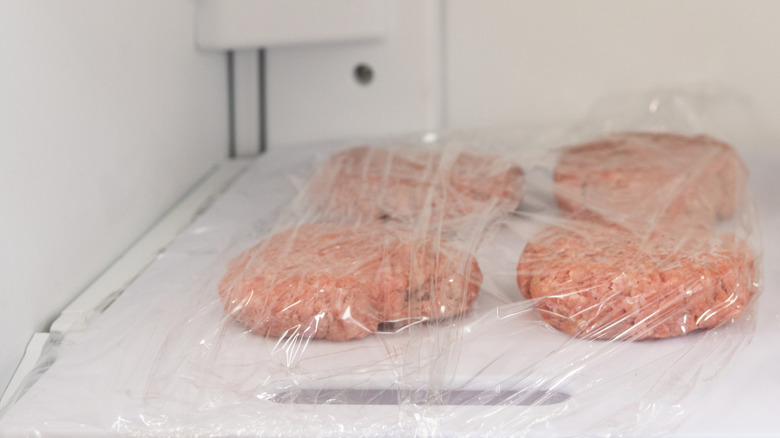
While certain fast food restaurants may boast that their burger meat is never frozen, some professional chefs actually recommend freezing your beef patties before cooking them. Ina Garten follows the 15-minute rule for her smashed cheeseburgers, briefly freezing the patties before adding them to the scorching-hot cast iron pan for a perfectly brown crust and crispy edges. This approach cools the fat just long enough that it won't immediately melt, preventing the beef from drying out — this hack is especially important when cooking thin patties. Plus, when you smash the patty down, the juice is more likely to stay inside. If you don't have access to a freezer, you can also chill your burger patties before cooking them.
It's actually safer to store your patties in a refrigerator or freezer before you're ready to cook them, as this helps prevent bacterial growth. If you're cooking outside on a cast iron flattop grill, it also stops bugs from contaminating your meat. Cooking a room-temperature patty on cast iron isn't the end of the world, but you'll have to keep a close eye on it to make sure it doesn't dry out.
Don't overwork the meat
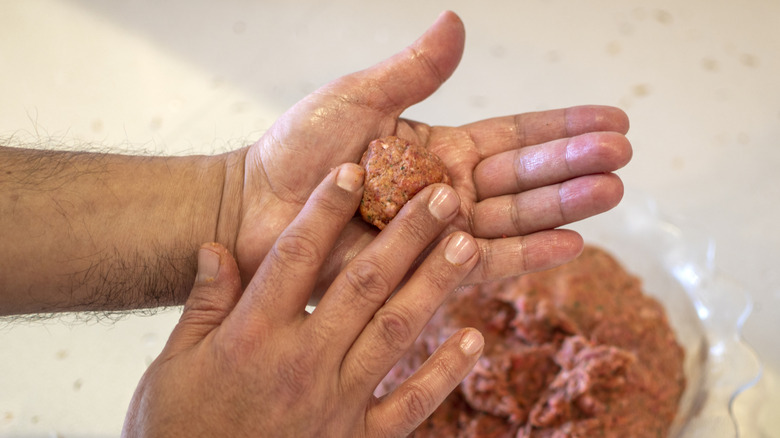
Not everyone likes handling raw meat, but for those of us in charge of forming burger patties and mixing in the seasonings, we don't have much of a choice. It's easy to get carried away when mashing and forming the patty, smashing the meat together until the burgers are completely uniform. However, overworking the meat can make the texture too tough and rubbery.
Overmixed burger patties become tough due to a protein called myosin. When myosin is handled too much, it breaks down and forms a glue-like substance. Additionally, the heat from our hands starts to melt the pockets of fat in the meat, which creates a chewier, denser texture. It's a good idea to wet your hands before making burger patties, and lightly mix your herbs and spices into the ground beef. Remember, this isn't Play-Doh — handle the meat gently and avoid squeezing it too hard. The goal is to create a rough patty shape that's slightly larger than your bun. It doesn't have to be perfect.
Season your burger meat
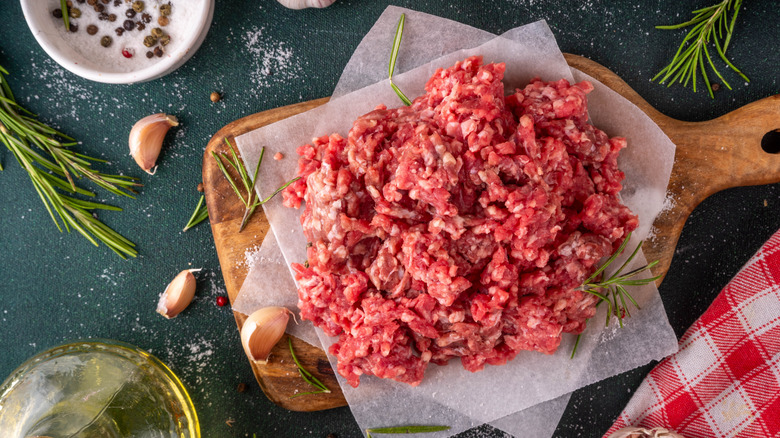
While quality beef patties will taste fine on their own, we aren't aiming for "fine." Flame-grilled burgers have a smoky undertone, and the cooking process contributes to the flavor, but we lose this aspect when we use a cast iron pan. We need to use seasonings — such as herbs and spices — to make up for this loss.
Salt and pepper are a must, but there are a few additional seasonings that will really make your burger sing, particularly onion powder, garlic powder, and parsley. A little smoked paprika can help emulate that barbecue essence, while a dash of soy sauce, miso paste, or Worcestershire sauce can help boost the umami quality. Alternatively, you can use your favorite store-bought grill rub.
That said, you want to avoid over-seasoning your burger patties. It's best to stick with a simple seasoning blend and add more flavors through burger toppings instead. Since the meat will be in direct contact with the cast iron, it's best to mix the herbs and spices into the ground beef instead of dusting them over the formed patties. This will help prevent the dry spices from burning.
Use high heat when cooking burgers on cast iron
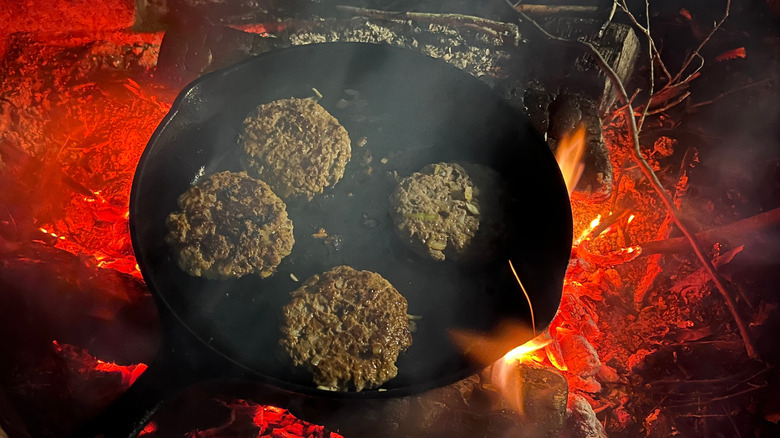
When I'm making burgers in a cast iron pan, I tend to use thinner beef patties. It's important to cook them just right to prevent them from drying out, but we still want a crispy brown crust. If you cook the patty too slowly, you might end up with a chewy hockey puck. The goal is to sear one side of the patty and flip it before the heat penetrates the inside of the burger. The solution is to crank up the heat.
If you're working with a thin patty or making smash burgers, you'll want to use a medium-high to high heat — between 400 and 500 degrees Fahrenheit. This will quickly create that brown crust, and as soon as it forms, it's time to flip the burger. This should give you a medium-rare center with a deep brown sear on the outside. For thicker patties, you can use a slightly lower heat, but you still want to hear that aggressive sizzle when the meat hits the pan. If you're using a meat thermometer, the perfect internal temperature for the burger should be around 130 degrees Fahrenheit.
Pat your burger patties dry before cooking them
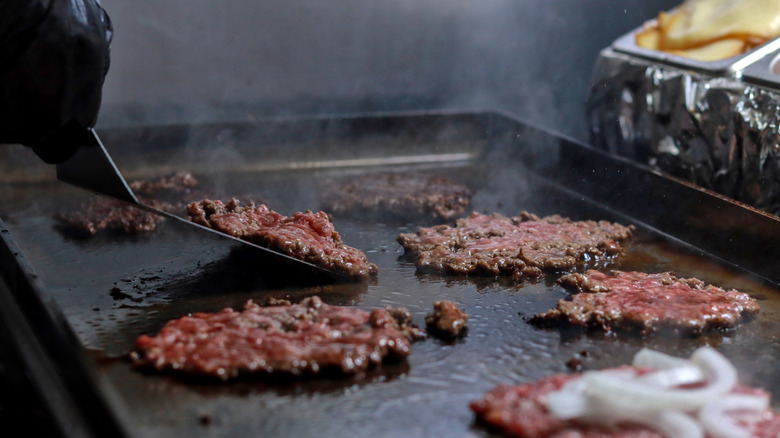
Burgers cooked in a cast iron skillet differ from grilled patties in a few ways, but the most noticeable difference is the outer texture. If, like me, you prefer an extra-crispy exterior, cast iron is the way to go. But while cast iron skillets are famous for crisping up just about anything else that hits their surface, there are some tricks that make this easier to achieve.
One way to attain the perfect burger crust is to pat your patties dry before cooking. Once you've formed your patties, use a dry paper towel to absorb any excess moisture, being careful not to overhandle the meat. If you're storing the burgers in the fridge or freezer, dry them after taking them out, just before cooking. If there's too much moisture present on the surface of the meat, it will steam when it hits the hot pan, rather than sear into a delicious, caramelized crust. This step is especially important if you're making smash burgers, where the meat covers a larger surface area of the pan.
Make a dimple in the center of your burger patties
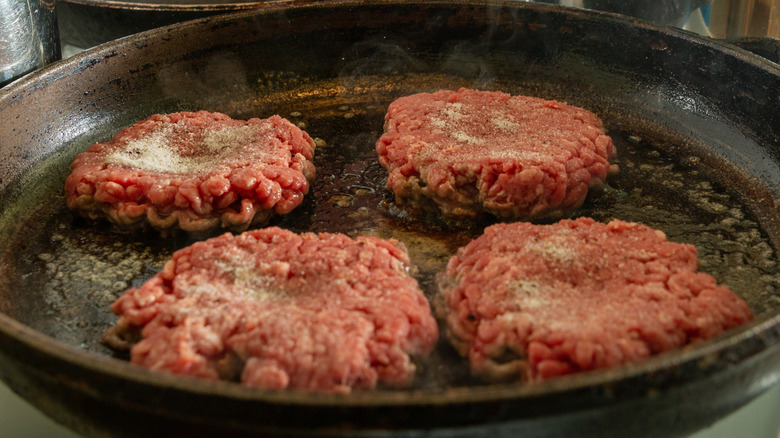
Dimples aren't just cute, they're the secret to making perfectly shaped burgers in a cast iron pan. Simply use your thumb to create a depression in each patty before cooking — don't worry, the dimple will disappear during the cooking process. But how does it lead to even patties?
As it cooks, the outer portion of the burger loses moisture and starts to shrink. This creates a dome-shaped patty. If the patty is rounded, when we flip it, only the center will be directly touching the cooking surface. When we're using a cast iron pan, we want the meat to have as much surface contact with the pan as possible. Adding a dimple means that when the outside of the burger shrinks, it becomes level with the center, giving us a nice, flat patty to work with. Well, mostly flat. This is less of an issue with smash burgers, which are pressed flat to the pan, but it's a crucial strategy for any other types of burger.
Be patient while your burger cooks
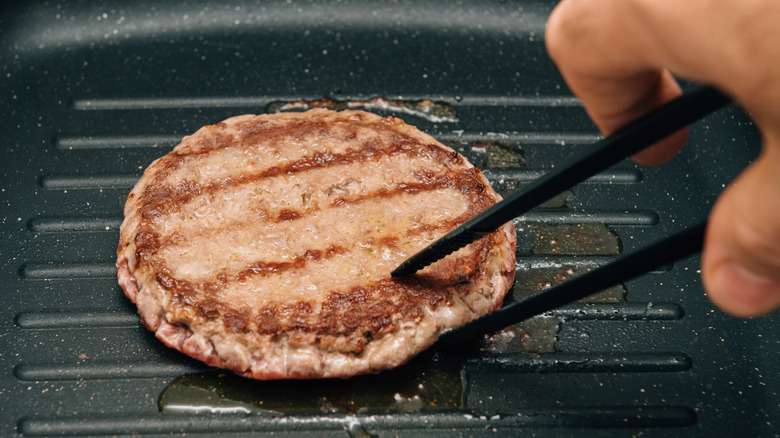
We've all been there: watching our burgers cook while struggling with the urge to press, smash, and flip that patty as soon as it starts to sizzle. But this is a moment for self-restraint. Practice patience, take a deep breath, and let the cast iron skillet do its job.
Constantly peeling the patty off the skillet to check how crispy it's getting disrupts the cooking process, and it's one of the most common mistakes people make with burgers. It's like tampering with pancakes before they're ready to be flipped — a big no-no in the flapjack community. The crispy brown sear comes from direct contact with heat as the meat slightly sticks to the cast iron pan. Severing that bond breaks that crust-forming seal. Plus, as I mentioned earlier, constantly manipulating the beef can overwork it and ruin the texture.
Once you've dropped the patty into your cast iron, you should only be flipping it once before it's done. Constantly turning or moving the patty is a taboo when making any type of burger, but it's especially problematic when using a cast iron skillet, as our main goal is to achieve the perfect crust. Restrain yourself, trust the process, and if you must check the doneness, use a meat thermometer instead of flip-flopping your beef.
Use a sharp metal spatula
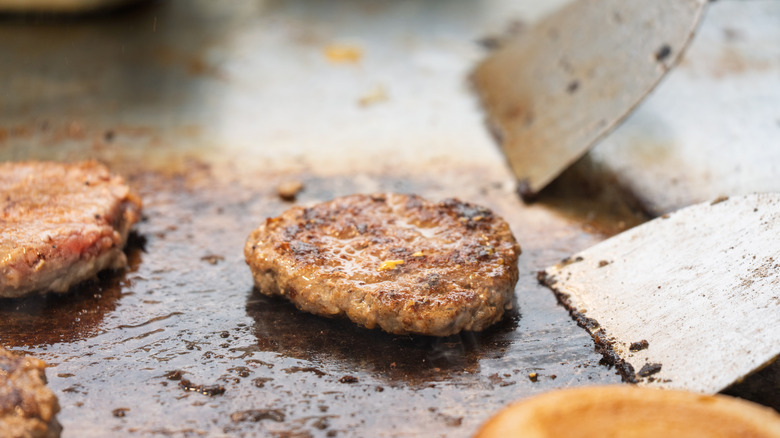
When making burgers in a cast iron skillet, there is only one cooking utensil you'll ever need — a sharp, flat-edged, stainless steel spatula. If you want crispy-edged burgers and a smooth, well-seasoned skillet, that is.
Silicone, wood, or nylon spatulas are great for avoiding scratches on non-stick pans, but your good ol' cast iron pan can take a beating. Non-metal spatulas often struggle to shift every bit of crispy meat from the pan, and they can even cut the burger away from the crust. Meanwhile, a sturdy steel spatula will easily sever the bond between metal and meat, lifting your patty away flawlessly with zero mess.
In fact, a stainless steel spatula may even improve your cast iron pan, creating a smoother cooking surface over time. Personally, I only ever use metal utensils with cast iron cookware, as it also makes everything much easier to clean when there's less food debris stuck to the surface.
Toast your burger buns in the pan fat
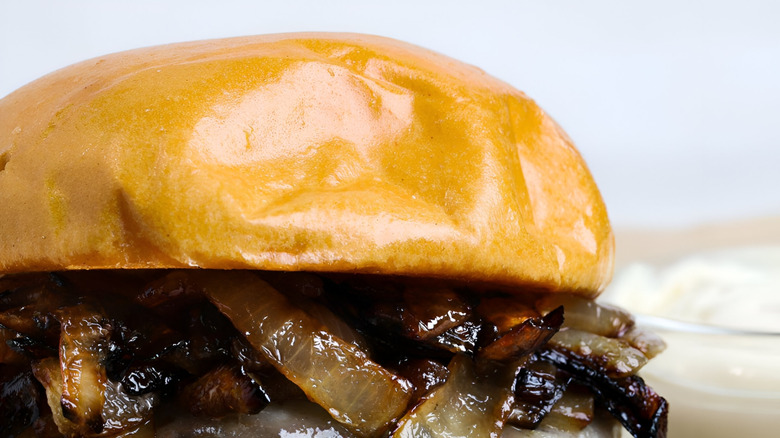
One major benefit to using a cast iron skillet instead of a grill to cook burgers is that you can save all of that delicious excess fat. You could certainly save it for frying eggs, roasting veggies, or flavor-boosting a stock, but I recommend using it right away.
Once your burgers are cooked, let them rest so the internal juices have time to redistribute throughout the meat. Meanwhile, place your burger buns in the skillet, face-down in the hot grease. The bread will absorb some of the fat and toast up nicely with the heat. These crispy, beefy buns are part of the burger-eating experience.
The best type of burger buns for toasting are brioche — they're light and fluffy, which means they're extremely effective at soaking up the burger grease, and they'll toast quickly. They provide the ideal burger-to-bread ratio, as they won't outweigh your patties. Brioche is also slightly sweet, so it complements the natural sweetness of the caramelized beef.
Adapt your cooking method for plant-based burgers
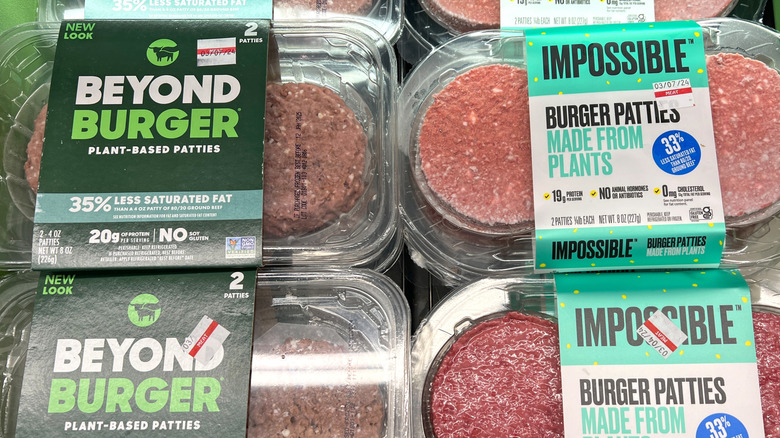
I typically prefer cooking plant-based burgers in a cast iron skillet rather than on the grill because I find they retain moisture better when they're trapped in a pan with fat. However, while most of the tips for cooking beef burgers in a cast iron skillet apply to plant-based meat, there are some differences to be aware of.
First, seasoning is twice as important. These days, plant-based meat can taste impressively similar to the real deal, but it's not identical — a little extra seasoning can go a long way. Also, remember that plant-based meat substitutes — such as Impossible or Beyond — typically take less time to cook than genuine meat. They can burn more easily, and dry out faster than you might expect. This means that your stove should be set to a lower temperature, ideally between medium and medium-high heat.
The other thing to bear in mind is that it's harder to achieve a nice crust with meat substitutes, so you might want to smash your plant-based burgers if you want them to brown properly. If you're worried about the inside getting overcooked, you can try cooking the patties from frozen. As I mentioned earlier, it's important to let your beef patties rest after cooking, but plant-based meats are typically best served immediately. Lastly, if you're using a cast iron skillet to cook plant-based burgers for a vegan or vegetarian, be aware that some people want to avoid eating food that's been prepared in a pan seasoned with animal fat.