

9 Seafood Buffet Red Flags That Should Send You Running
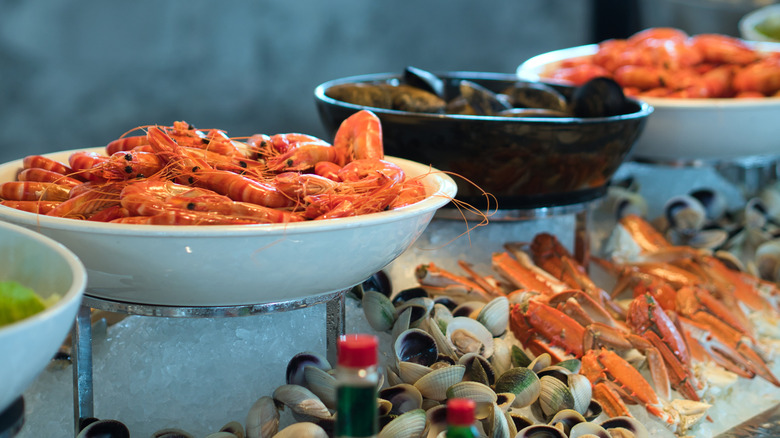
We love a buffet — there's something thrilling about being able to choose from so many different types of food, all laid in front of you. And seafood buffets can be particularly fun, since you get to choose from a wide array of food items that tend to be on the pricier end of the spectrum. But at the same time, seafood buffets can also be kind of dicey on the food safety front. After all, whenever seafood stays unrefrigerated and at room temperature for a longer period of time (generally two hours or more), you're opening yourself up to the risk of food poisoning. Therefore, you need to have a good sense of whether the seafood buffet you're eating at is hygienic enough to enjoy the food there without worry.
That's why we consulted food safety experts to learn about some of the most common seafood buffet red flags that should alert you that you might be at risk. We spoke to Mark McShane, chef and food safety expert at Level 3 Food Hygiene Certificate, and Dr. Naheed Ali, health expert, physician, and senior contributor at Vera Clinic, who outlined what you should be on the lookout for the next time you go to a seafood buffet. If you notice any of the following red flags, you might want to find somewhere else to eat. (And whatever you do, don't make these buffet mistakes.)
Seafood exposed to melted ice for an extended period of time
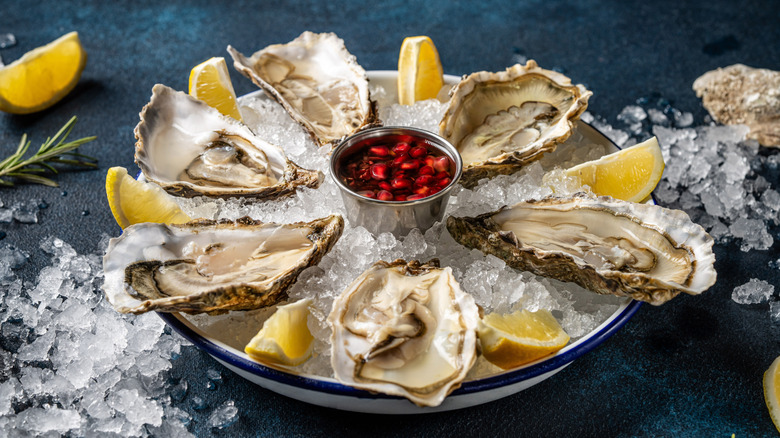
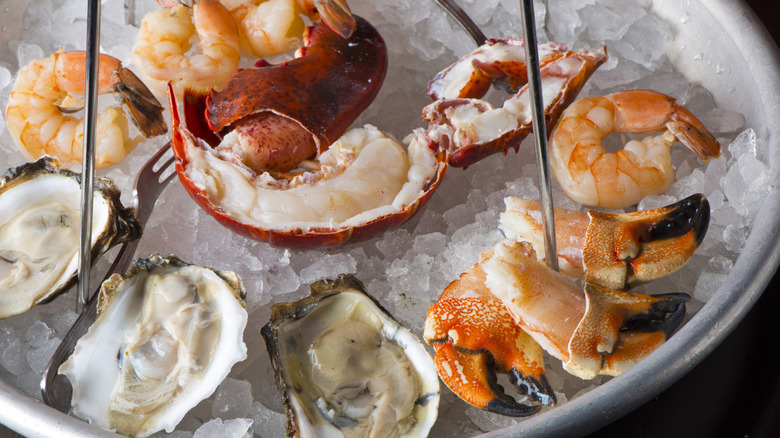
A lot of the time, when you're at a seafood buffet, you'll notice that the seafood is displayed on ice. This is especially true for raw bar items, like oysters and raw fish. This is generally a good sign, since it indicates that the seafood isn't being stored at room temperature. But to get a better sense of whether those items on ice are being kept at a safe temperature, you'll want to take a closer look at the rice itself. If it's already started to melt — and it's not being replaced quickly with fresh ice — you could be looking at a major seafood buffet red flag.
"If I observe seafood (shrimp, oysters, or crab legs) exposed on melting ice for an extended period of time with no replenishment, this would immediately raise a major red flag as all seafood requires refrigeration to control bacterial growth," says Mark McShane of Level 3 Food Hygiene Certificate. Therefore, if you notice a lot of melted ice, it should give you pause before you fill your plate.
Strange textures in shellfish
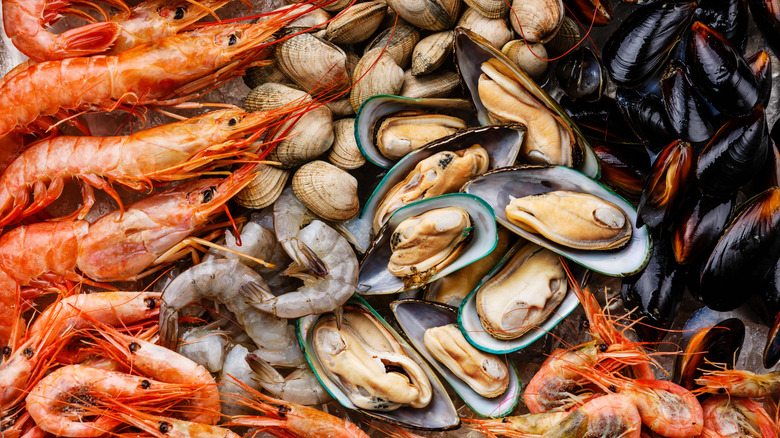
Not only will you want to pay attention to the ice at the seafood buffet you're at, but it also pays to take a closer look at the seafood itself. One major indicator that you could be getting some not-so-fresh seafood is if it has a strange texture to it. You already know what clams, oysters, and shrimp should look like when they're fresh, right? Often, you can tell if the texture is off before you ever take a bite.
"If you notice different textures among shellfish products (for example, if clams are rubbery instead of firm)," says Dr. Naheed Ali of Vera Clinic, "then they have probably sat out too long or have been reheated too many times." That doesn't necessarily mean that you should skip everything at the seafood buffet in question, but it can be an indicator that the staff may not be taking food safety quite as seriously as they should. To be safe, you should avoid any items that appear to have a strange or unexpected texture.
Signs of spoilage
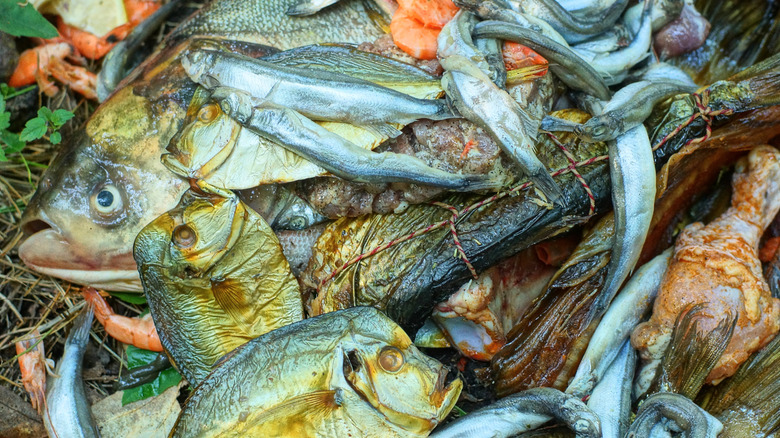
Looking at a piece of seafood's texture is a great place to start if you want to get a better sense of whether it's fresh. However, there are other ways of determining if seafood is spoiled or not, and you should also pay attention to these factors when you're trying to decide whether you want to dine at a specific seafood buffet or not. According to Mark McShane, you should look for visual signs of spoilage, like dry edges and color loss. Is that piece of raw tuna you're looking at darker at the edges, indicating loss of moisture? If so, it may have been sitting out for longer than it should, and you might want to skip it.
But visual cues aren't the only signs that you could be getting old or less-than-fresh fish. Another strong indicator that seafood is spoiled, says McShane, is a strong odor. Specifically, you want to be on the lookout for a strong, fishy smell. Fresh seafood will have a mild salty aroma to it, but overtly pungent, strongly fishy odors are not a good sign.
Variations in temperatures of food at the buffet
At a lot of seafood buffets, there will be different sections from which you can snag yourself some seafood. One section might include raw and cold items (like those you might expect to encounter on a seafood tower), while another might include more cooked fish options. In this case, variations in temperatures are fine. After all, you're not going to want your grilled swordfish served at the same temperature as your fresh oysters.
However, according to Dr. Naheed Ali, too much variation in temperature can be a red flag if you notice it in the same sections of the buffet, like the raw bar. "If some things appear lukewarm while others are cold and others are hot," explains Dr. Ali, "this is indicative of poor storage conditions and increases the possibility of bacteria growing on the food." Generally, you'll be able to get a sense of the temperature certain food is being served at once you start going around to the different buffet stations, so you might want to take a lap to check this out before you grab a plate and start serving yourself.
Unclean buffet area
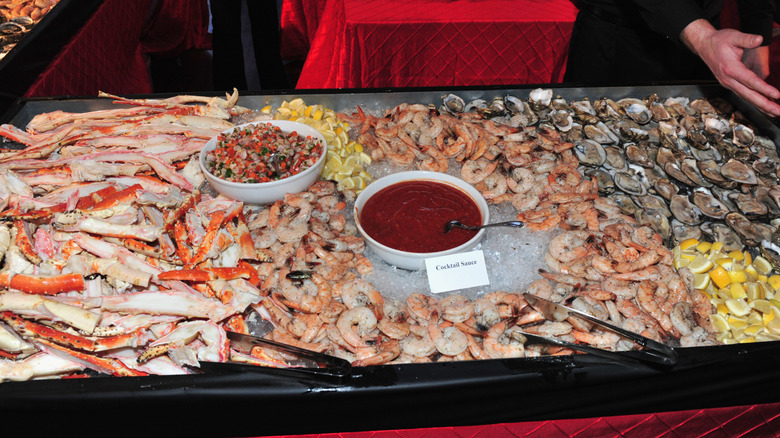
Of course, looking at the seafood itself is always a good first step in determining whether you're at a seafood buffet that can be trusted. But that doesn't mean you should only evaluate the food alone. In fact, the state of the restaurant — and particularly the buffet area itself — can tell you a lot about how seriously the staff takes food safety and food hygiene.
According to Mark McShane, you should evaluate "the cleanliness of the buffet area, including the condition of the sneeze guard, tray liners, and surrounding surfaces." If these areas look clean and well cared-for, that's a great sign. At least you know that the restaurant is focused on keeping the dining area clean. However, if you notice lots of smudges, dirt, crumbs, and general mess all over the buffet, it could be an indication that the staff isn't super careful when it comes to food prep and safety, either.
Inattentive staff
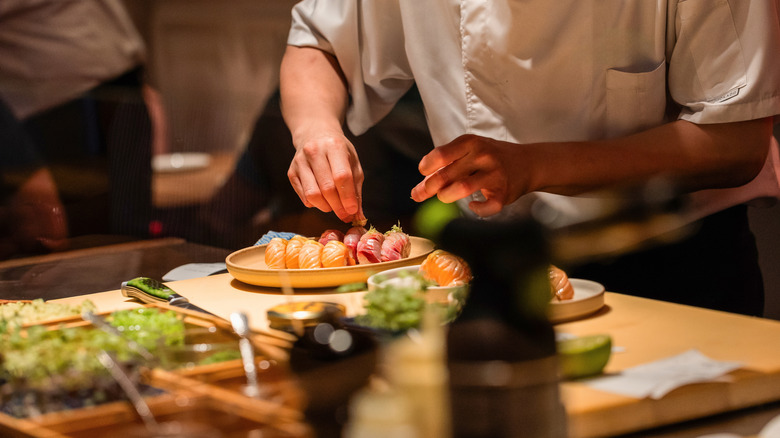
Now that you've carefully assessed the cleanliness of the space and the appearance and smell of the seafood itself, you can take a closer look at the staff. A lot of times, when you go to a buffet, you'll actually be able to see the chefs preparing the food that they're about to put out. Try to observe what they're doing to get a better sense of whether you're at a clean, hygienic seafood buffet or not.
"I pay close attention to how well the staff is performing their duties," says Mark McShane. "I want to see staff members wear gloves when required and handle food and money separately and wash their hands after each use." Generally, food service workers should use gloves when they're handling food that is ready to be consumed. For example, you're not going to want to eat oysters that someone's shucked with their bare hands. And because money can be covered in germs, you definitely don't want to eat at a place where staff members are handling money and food without washing their hands in between.
Visible cross-contamination
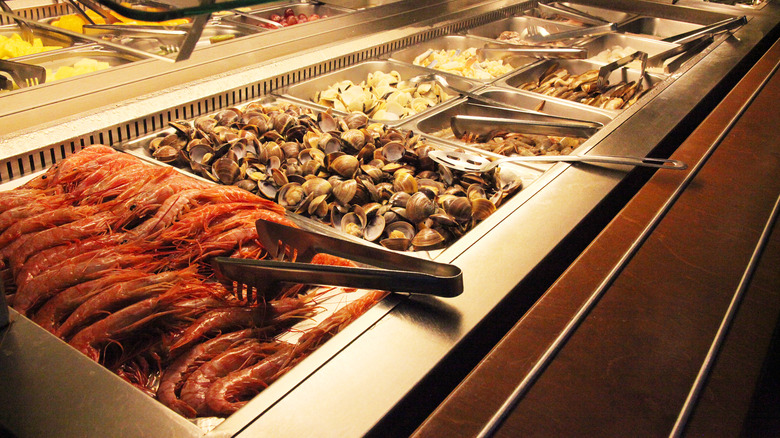
There are some seafood buffet red flags that are glaringly obvious, and visible cross-contamination is one of them. This can happen at any restaurant — not just seafood buffets — and it's a huge red flag in terms of food safety. According to Dr. Naheed Aldi, "If you see visible cross contamination (i.e., raw fish with cooked fish and vice versa with shared utensils), I would leave right away because those are clear indications of improper food safety techniques."
Food service professionals should be trained in the basics of food safety, like not using the same utensils for raw and cooked items, including seafood. If the staff isn't even following these super-basic guidelines, it's an indication that they may not take food safety seriously generally, which can put your stomach in jeopardy. Unless you want to take a real risk with your health, we'd recommend not just skipping that specific item that you saw a staff member cross-contaminate but the whole buffet as a whole.
Flies around the buffet area
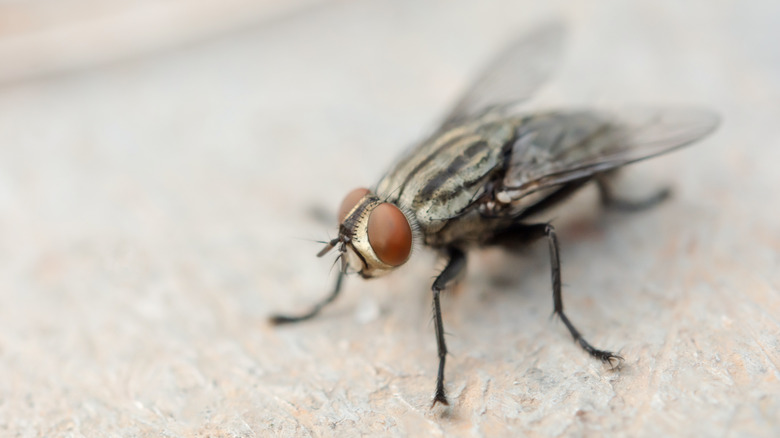
Generally, it's not a good sign when you see insects in any sort of establishment that sells food. Cockroaches are an obvious red flag, but flies aren't a good sign either. Of course, it's possible for a fly or two to be in any restaurant, but if you notice a lot of flies that are concentrated around the seafood buffet specifically, it's a red flag that should prompt you to reconsider dining at the restaurant you're at.
"Observation of flies flying around the buffet area will result in my decision [not to] dine there," says Mark McShane. Considering that flies can carry over 100 different pathogens and that they're attracted to food that's starting to spoil, you probably don't want to eat any food that's been exposed to a bunch of flies. They could also be an indicator that the restaurant is storing or serving food improperly or that it has other hygiene concerns.
Seasoning masking bad odors
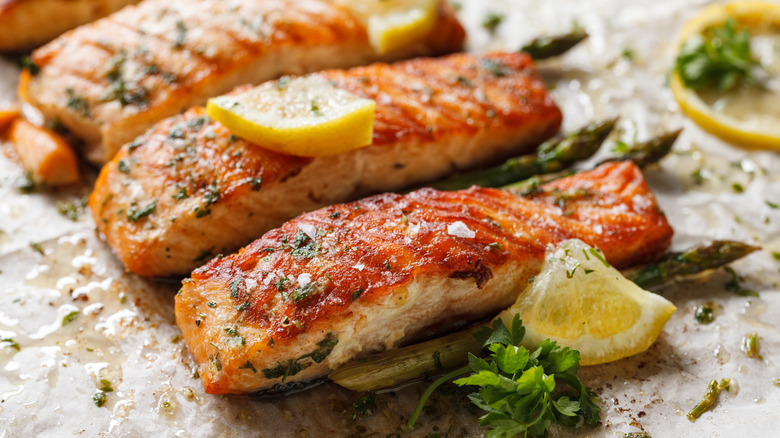
There's nothing wrong with eating seafood that's been prepared with plenty of seasoning. Since a lot of seafood tends to have a pretty mild flavor, seasoning can absolutely make it taste a lot more delicious. This is especially true when it comes to cooked seafood, which is often prepared with various seasonings. However, a good seafood restaurant will likely be serving up dishes that don't have much — if any — seasoning at all, and that's a good sign. When the ingredient can shine all on its own, it's an indication that you're truly getting fresh seafood.
On the flip side, a seafood buffet that's only serving strongly seasoned fish could indicate that it's not working with the freshest of ingredients. "If you go to a seafood restaurant that has so much seasoning on their food and/or sauces covering everything, they could possibly be using the seasonings and sauces to cover up the smell of spoiled fish," explains Dr. Naheed Ali.
Of course, you have to exercise your best judgment when it comes to this red flag. With certain types of cuisine, like Cajun seafood, you're probably going to encounter a lot of spice, and that shouldn't be treated as a red flag. But if that's all a general seafood buffet offers, you might want to look out for some of the other warning signs on this list.