

The Common Garlic Mistake That's Ruining Your Italian Dishes
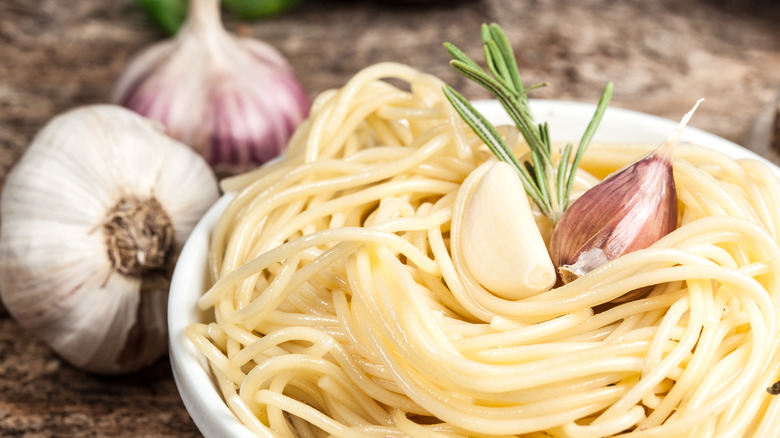
No matter which of the very best Italian dishes you crave, odds are it probably starts with a foundation of sautéed garlic to impart an inimitable aromatic savoriness. While sautéing garlic in a saucepan sounds straightforward, it's surprising how most of us are probably blundering the technique. We spoke with Jasper J. Mirabile Jr., owner and chef at Jasper's Restaurant and host of "Live! From Jasper's Restaurant," who said that a common mistake is throwing chopped garlic directly into hot oil.
"We never ever put chopped garlic in hot oil," says Mirabile. "Always heat your pan and add the oil and take the pan off the stove and add the garlic and stir. As you continue to stir, the garlic will cook just enough." Garlic is a delicate ingredient that is prone to burning, and it only takes a split second to go from aromatic to burnt and bitter. So, a gentle, cautious approach is best because, according to Mirabile, the "longer] you cook it, the more bitter the garlic becomes."
Heat a modest amount of oil in a saucepan over medium heat for a temperature that will bloom the garlic flavors without scorching it. Of course, timing is everything when it comes to sautéing garlic as the foundational ingredient for your Italian dish. "Right when it begins to brown, make sure you add your sauce, or whatever else you're going to add to the dish," the chef notes, "to stop the actual garlic-cooking process."
More mistakes to avoid and preparation tips for garlic
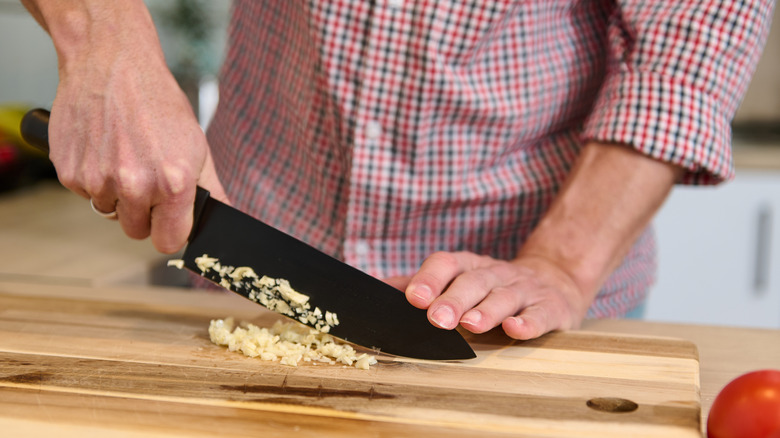
Now that Mirabile has presented the correct method for sautéing garlic, you may want to brush up on preparation tips. If peeling garlic is a pain, we've got many clever methods to streamline the preparation process. Mistakes can be made during the mincing process, as well. Not only should you oil your saucepan to cook garlic — "It just needs a little bit of oil," the chef notes — but you should also oil your knife before you start chopping it into pieces.
Garlic is sticky, and there are always slices that get stuck to the knife, resulting in an uneven texture. Oiling the knife will ensure that the slices will slide off the knife, and every clove gets an even chop. You don't always have to use a knife to cut garlic, either. Avoid the mincing mess altogether by freezing cloves of garlic and running them through the smallest holes in your box grater or microplane.
If you really want a cautious, low-and-slow method for cooking garlic, we'd recommend garlic confit. It may be a French culinary technique, but a sweet, tender garlic spread would amp up Italian dishes as well. Unlike sautéing, the confit technique drowns garlic in oil, simmering it over low heat for around an hour until it's a spreadable, sweet, mild paste. You could even turn it into a whipped topping to spread over focaccia or fold into polenta.