

10 Ways Grocery Store Bakeries Keep Baked Good Prices Low
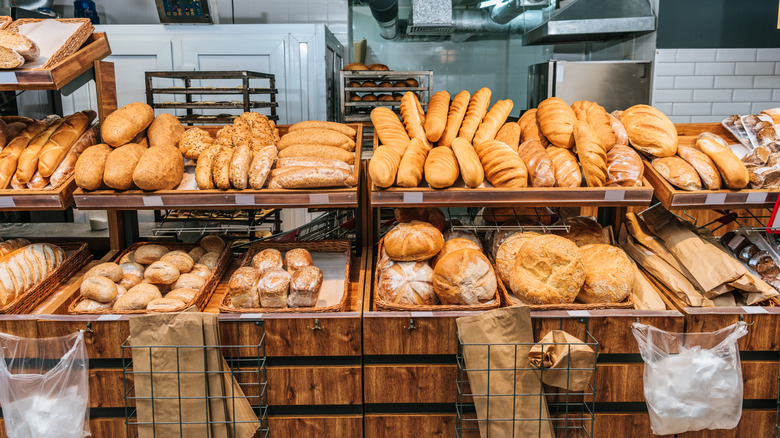
Relatively few of us live in a place where there's no bakery around. From small-town mom-and-pop shops to artisan patisseries in gentrified neighborhoods, or at the very least a coffee shop with a limited selection of baked goods, you can almost always find a place to pick up a treat for yourself.
Often, those treats come from the in-store bakery at a grocery store. And why not? You're already at the supermarket to buy groceries, and prices there are lower — sometimes a lot lower — than you can find at standalone bakeries.
There are a number of reasons for that, and although I trained as a chef, not a baker, I have some personal insight on the subject. Back in the '90s, my parents ran a literal mom-and-pop bakery, where I helped out on weekends (my cousin owns it now), and during my culinary career, I myself ran an in-store bakery at an upscale regional chain in Alberta, Canada. Here — drawn from my own experience, and from following industry trends for decades — are 10 ways those grocery store bakeries can keep their prices down.
Economies of scale
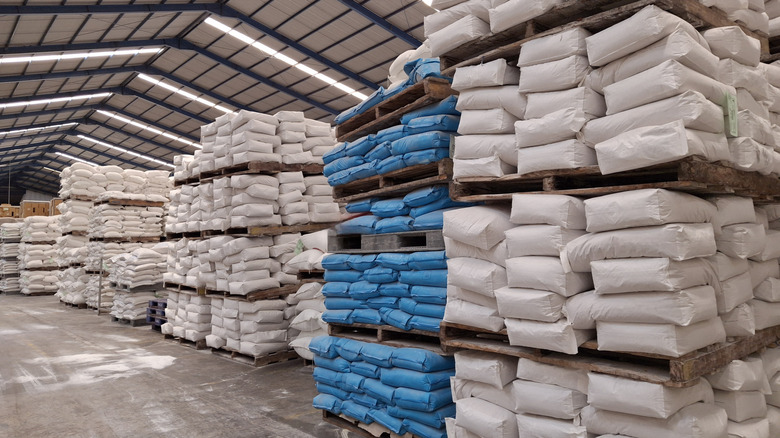
If you've ever read a news story about a potential merger of two related companies, you've probably heard the term "economies of scale." That's the business-school way of saying that "the more you buy, the better the price you can get." You likely already know this from your own shopping history. Costco is an obvious example, but even ordinary supermarkets usually offer "value-sized" or "family-sized" packages of everything from cereal to toilet paper.
For you, as a consumer, you have to pick and choose which things to buy in bulk, and the same goes for independent bakeries. Some things make sense, and others don't. That doesn't apply to in-store bakeries, because even a relatively small regional chain buys baking staples in volumes a small baker can't match. In stores that bake from scratch, that means super-cheap flour, eggs, sugar, and other ingredients. For those that don't (and I'll talk more about this), they can still negotiate good wholesale pricing on things like commercial cake mixes, prepared icing, or buckets of ready-to-bake batter.
Independent bakers don't have that luxury. In fact, my parents used to buy flour at the supermarket whenever it was on sale, because it was cheaper than ordering from a wholesaler. When you account for all the surcharges distributors and wholesalers add on for small accounts, it's no wonder you'll pay more for that cookie at an indie coffee shop or standalone bakery.
They may use a centralized commissary model
When you operate a food service establishment, as I've done, you know there are a handful of costs that will make or break you. The big ones are the cost of ingredients, the cost of buying or leasing a facility, the cost of your utilities, and the cost of labor.
In a bakery, skilled bakers are your most important employees. They're the ones who have the training or the experience to turn out high-quality products at scale, and it's just about impossible to operate without them. Usually, they're the highest-paid of your front-line staff, and you also need to allow for the cost of recruiting and training them periodically as bakers come and go.
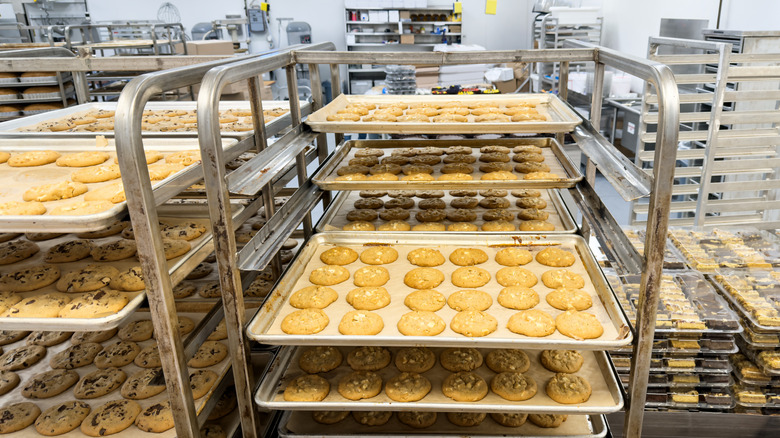
That's why many grocery chains operate on a commissary model, with one central bakery turning out baked goods for all of the stores in its region (some restaurants, like the growing Wonder chain, work on the same basis). It's more cost-effective to set up and staff one high-volume bakery than several small ones, and work at the store level can be handled by ordinary staff at ordinary wages. For grocers that go this route, it saves a lot of money.
Some bakeries rely on par-baked and ready-to-bake products
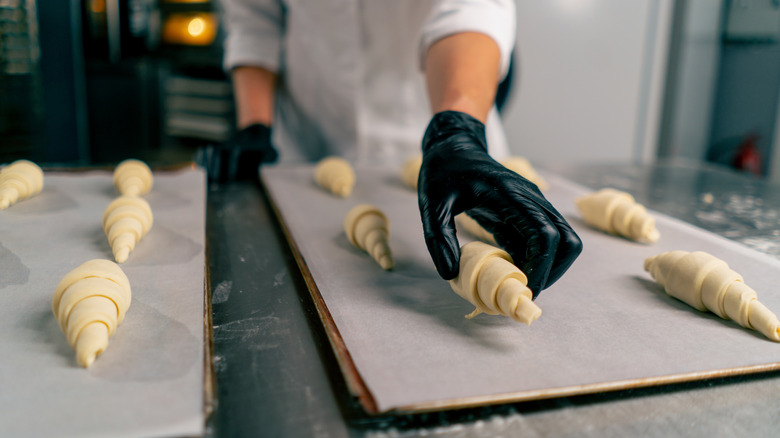
To be clear, even chains that operate on a commissary basis will often proudly display a sign that says their cookies and muffins are "baked fresh in-store." That's technically correct, though a bit misleading.
In-store bakeries that want to use relatively unskilled labor often rely on ready-to-bake or par-baked products. This can include things like premade cookie dough or muffin batter, or the exact same kind of brown-and-serve baguettes and rolls that you can find in the frozen section for your own use. This lets the supermarket use unskilled labor in their bakery department — anyone can fill a sheet pan and put it in the oven — while still being able to say that the finished product is "baked fresh from our ovens."
In fairness, this doesn't necessarily mean that their baked goods are inferior. Some ready-to-bake products from major manufacturers are actually pretty good, depending on the ingredients and price point. Also, if the grocer uses a central commissary to do their baking, those ready-to-use products may have been made fresh from scratch by skilled bakers at that central bakery. At the end of the day, as long as you're happy with what you get for the price, it's a win for everyone.
They may not use top-tier ingredients
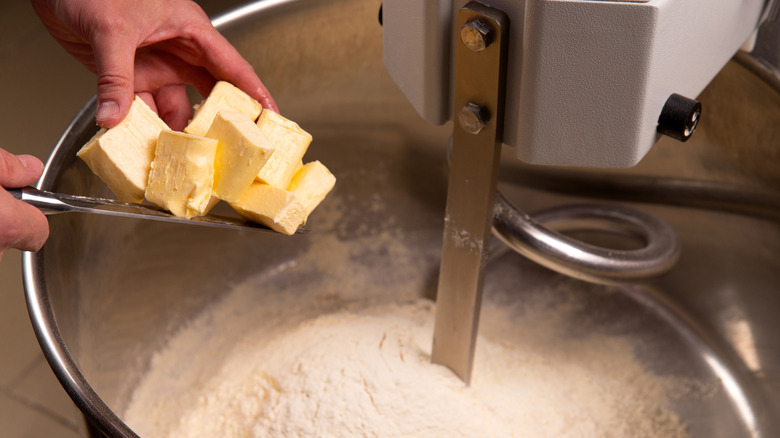
One of the strategies independent bakeries can use to compete against big chains is quality. A small artisanal bakery can carve out a market for itself through the use of premium ingredients like local fruit, or all-butter croissants or buttercream, that customers will happily pay extra for (I have one of those near me, and visit regularly). That way, they don't have to compete on price against the Walmarts and Krogers of the world, with all of their built-in cost advantages.
Most supermarkets aren't going after that market. Instead, they aim for the sweet spot of providing a good-enough product at a price that most shoppers consider reasonable. That means they're willing to make some compromises with their ingredients to keep the costs down. That might include things like using a lower-quality vanilla instead of pure vanilla extract, "chocolatey" coatings instead of real chocolate, or shortening rather than butter in things like Danishes or icing.
Whichever grocery store bakery you shop in, you'll quickly learn to avoid some of their baked goods, while others are perfectly acceptable. Don't be fooled by ambiguous phrases like "made with" butter, or fresh fruit, or what have you. That just means there's some of the named ingredient in the baked good, which (like those "baked fresh" signs) is misleading. Take a good look at the ingredients list instead, and that'll give you a better idea of what's actually inside.
Commercial recipes can have longer shelf lives
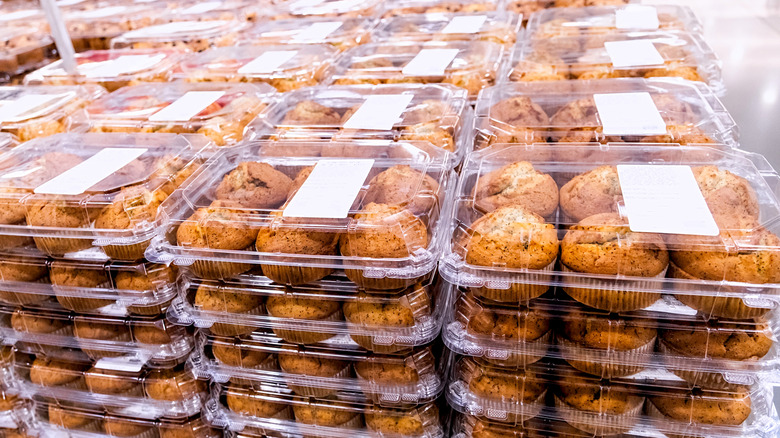
Home recipes measure ingredients in cups. A problem with those is that ingredients like flour can vary a lot, depending on whether you scoop it or use the spoon-and-level method. Commercial bakers measure wet and dry ingredients by weight, instead, because doing so produces consistent, reliable results. That's why we encourage people to bake with a scale at home, too.
But those big, weight-based commercial recipes open the door for grocery chains to add additives and preservatives that would otherwise be found only in the kind of industrial bakeries that churn out bread or cookies by the truckload. I'm talking about those small-volume ingredients that keep baked goods soft and fresh-tasting for longer. This is a big advantage for high-volume supermarket bakeries, because the longer a product lasts on the shelf, the more opportunity they'll have to sell it, and the less stale product they'll need to write off.
Home bakers and small-scale independent bakeries don't really have that option, because those multi-syllable additives make up a very small percentage of a given recipe. You need to either make a batch big enough to use them in quantity, or get yourself a lab-quality scale to measure a teeny-tiny portion for a normal-sized batch. It's not that a dedicated home baker with a yen for molecular gastronomy tricks can't do that with some ingredients, like maltodextrin, but the fuss and time investment make it impractical for small-scale bakeries.
Grocery store bakeries have more ways to repurpose their waste

One under-the-radar area where grocery store bakeries have an advantage over their independent counterparts is their ability to make use of unsold baked goods. It's not that standalone bakeries can't or don't do that as well, just that supermarkets have a lot more scope to make it work.
It's a subject that's dear to my heart, because I had frugality dinned into me during my childhood, long before I turned to a culinary career. That early training served me well when I ran an in-store bakery, because there are so many ways to turn unsold baked goods into something new. For example, leftover cake can be reused as cake pops, trifle, or cake "truffles." Surplus bread can be turned into bread crumbs, croutons, rusks, or — at holiday time — the main ingredient for stuffing. In the bakery I ran, I used it to make sweet or savory breakfast casseroles, or bread puddings with premium ingredients (fresh fruit, Callebaut chocolate) that we sliced and sold in containers with a cup of sauce.
Now, any bakery can do those things, but a grocer that prepares takeaway or ready-to-eat meals has an advantage. Those leftovers can be "sold" internally to the savory kitchen, where yesterday's bread becomes today's sandwiches, or turned into breadcrumbs and used on fish or fried chicken.
Shrinkflation applies here, too
It seems like the cost of food has done nothing but go up ever since COVID, and our grocery budgets have certainly been impacted. We've all grumbled about high prices, but a related trend — the price remaining relatively stable on a product, but the size getting smaller — is just as irritating.
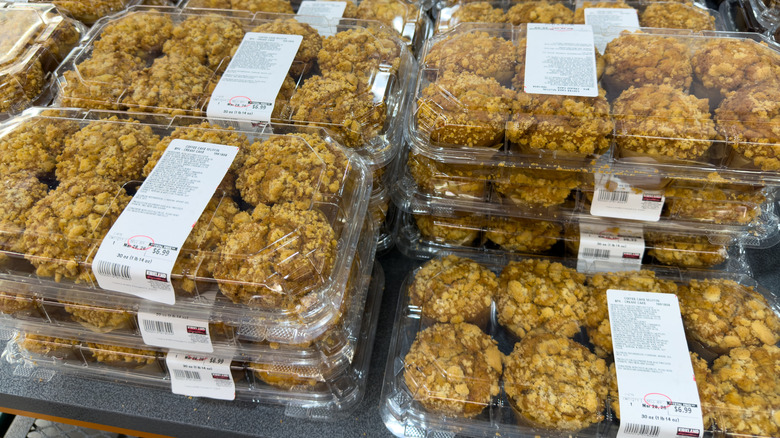
This so-called "shrinkflation" isn't exactly new. I'm old enough to remember when the bags of coffee on a supermarket shelf were a full pound, not the 12 ounces they've been for a long time (and some are smaller than that, now). The same practice shows up in in-store bakeries, with some outlets either making their baked goods smaller or changing how many come in the package to make the change less obvious. Costco famously (or notoriously) did both when it shrank its store-baked muffins.
In fairness, it needs to be said that the cost of some ingredients has skyrocketed in recent years, and bakeries have had to make some hard decisions in order to control their costs. Chocolate prices, for example, have been at or near record highs for the past few years, and even mundane products like wheat and sugar have seen huge, unpredictable spikes in recent years. "Shrinkflation," however maddening, has been a way to manage costs without making baked goods utterly unaffordable.
In-store bakeries don't have the same costs to cover
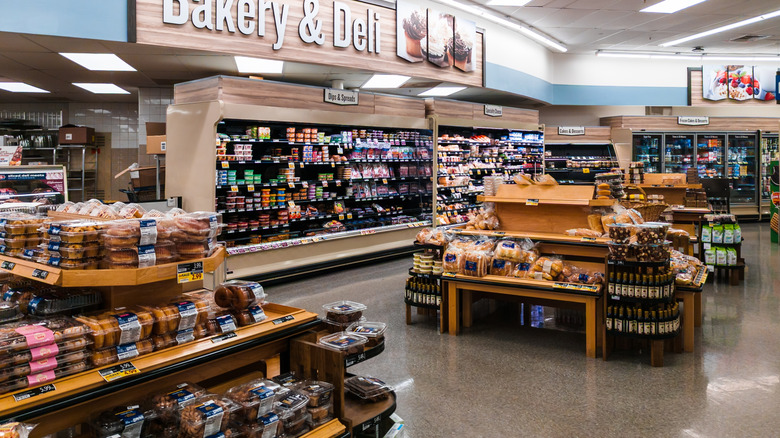
Having been around the business for a while, and having operated a couple of restaurants of my own, I can tell you that managing "overhead" is one of the big keys to survival. An independent bakery needs to sell enough baked goods to cover the cost of every square inch of its space, whether it's owned or leased. Then there's the cost of things like property taxes, utilities, and HVAC (and boy, do bakeries need air conditioning in the summertime!).
That's one of the biggest advantages that an in-store bakery has over an independent baker. The bakery itself takes up just one relatively small corner of the store, and its impact on the store's expenses is equally modest. Yes, the ovens require a fair amount of gas or electricity, but it's a drop in the bucket as a percentage of the store's overall expenses.
Seriously, think about it for a moment. Visualize the size of your local supermarket, and then the size of the bakery itself. Not the whole bakery section, with its shelves of alluring product, but the actual kitchen part where the baking happens. Does it take up 1/20th of the floor space? Maybe 1/40th? The actual numbers will vary between stores, but typically the bakery is a pretty small fraction of the total, and its contribution to the store's overhead is correspondingly modest.
They don't need to (necessarily) turn a profit
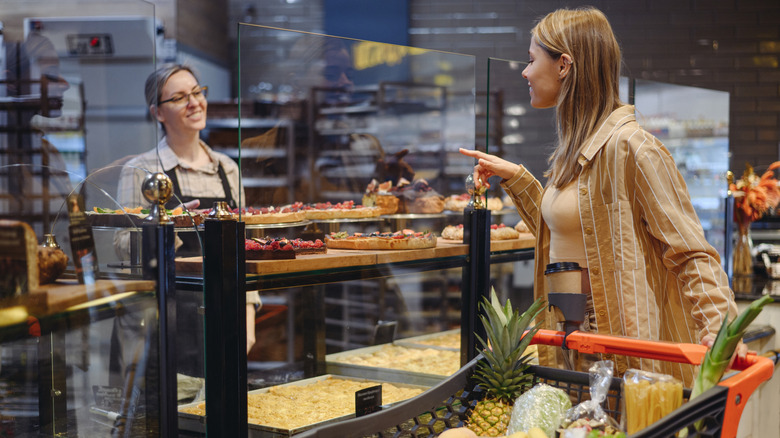
So far, I've explained several reasons why in-store bakeries can keep their prices low, some related to the baked goods themselves and some related to the nuts and bolts of operating a food service business. But this may be the biggest one of all: In-store bakeries don't actually need to turn a profit.
Don't get me wrong, many of them actually turn pretty healthy profits that boost their parent chains' bottom lines. You can bet that management would prefer that they at least break even, but that's not strictly necessary because having an in-store bakery helps the supermarket's bottom line in a number of ways.
The first, of course, is just giving customers another reason to shop at this particular store. The grocery market is competitive, and fresh-baked goods are a draw for customers. Psychology plays into it too: The sights and smells of an in-store bakery help create a comforting ambience, which helps keep shoppers in a pleasant mood that lends itself to impulse purchases. Also, if a store's bakery has one or two products that make it stand out from other nearby supermarkets' offerings, they become a driver for customer loyalty, which is the overall goal for any grocery chain.
Psychological tricks can make prices seem lower than they are
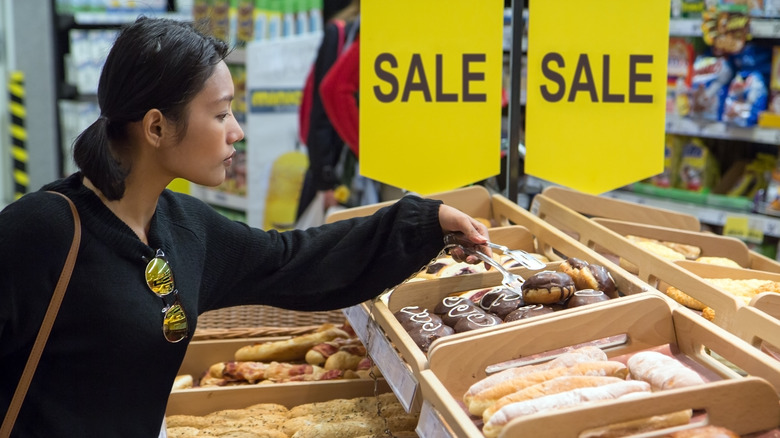
I'm going to throw out one more thought, which technically doesn't quite fit with the others. So far, I've only talked about how grocery store bakeries can keep prices down, but the perception of low prices is also important.
If you're interested in food and dining, you probably already know that restaurants use a variety of menu tricks to encourage you to spend more (it's referred to as "menu engineering"). Supermarket chains are just as adept at managing shoppers' psychology to create the perception of value, and those techniques work just as well in the bakery as they do in the canned foods or breakfast cereal aisles.
This doesn't mean low prices are always an illusion, because shoppers are always sensitive to the price of popular staples like bread. But supermarkets can draw on a whole arsenal of tricks that encourage you to buy products, which fatten their bottom line. One is "price anchoring," displaying a higher-priced item next to the high-margin treat the store really wants to sell, which makes it look like a cheaper, more attractive option. Other ploys you'll see include limited-time specials that create urgency ("Friday and Saturday only!"), or offers linked to the chain's loyalty program, where your bakery purchases are offset by points, offers, or some other reward. That combination of a few genuinely low, strategically chosen prices, paired with clever marketing tricks, can really bring in value-conscious shoppers.