

You're Using Dry Rub The Wrong Way On Ribs, And It's Costing You Big Flavor
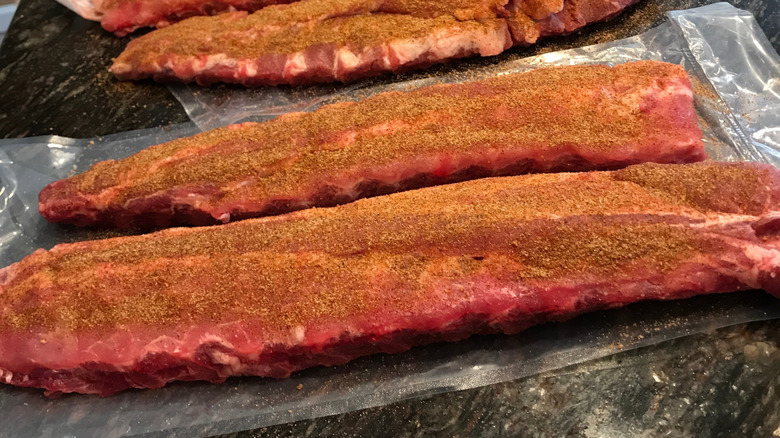
The idea that anything worth doing is worth doing right may not have started with seasoning a rack of ribs — but it fits just as well. Dry rubs are popular for those who love barbecue and smoking meat, as they offer a simple, tactile, and customizable way to add flavor to whatever you're cooking. As straightforward as applying a dry rub may be, if we're committed to doing things the right way, it's worth avoiding an all-too common pitfall.
One error that's commonly made is applying your dry rub to the general surface of a rack of ribs, but missing all the nooks and crannies. This can lead to uneven flavoring of your ribs, with some portions beautifully coated with flavorsome rub — and others woefully lacking. Remember that each rib is a piece you eat individually, so you don't want to have any "duds" that seem to have gotten missed.
One of the best tips when cooking beef ribs is to remove the membrane from the underside, since this can form a barrier for seasoning and rubs. Less membrane, more nooks and crannies. Similarly, pat the ribs dry before you even reach for the rub so that your salt, sugar, and spices can adhere to the surface better and form a tasty bark. When it's time to apply the rub, work it into every visible space on the ribs, including the edges and into any small features.
It's more about application and less about amount of rub
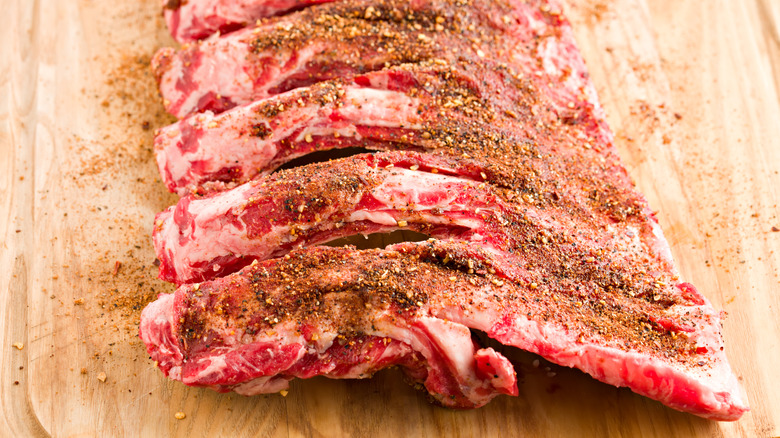
Remember, doing ribs right isn't about applying more dry rub, but about being thorough. In fact, overdoing the dry rub can actually be detrimental, as celebrity chef and third-generation owner of Bear Creek Smokehouse, Robbie Shoults told Tasting Table, "Ribs have plenty of surface area for a dry rub to stick to, so you'll want to be careful not to overdo it." Applying a moderate amount of rub — not an ultra-thick coat — can help you avoid over-salting, over-seasoning, getting an over-caramelized crust, as well as a sandy texture of built-up spices.
A useful strategy is to salt your ribs before you apply the dry rub, since salt will work into the meat cells in a way that sugar and spices can't through processes of osmosis and diffusion. Once absorbed by the meat, salt helps to change the texture by tenderizing it, although this can take several hours. Because sugar and spices mostly stay on the surface of your meat, they primarily contribute to the crust's flavor. For best results, apply salt (0.5% to 0.8% of the meat's weight is a useful ratio), let the meat sit for an hour or so (or until you see liquid beading on the surface), and then work the rub into every little feature of the meat. You can then let the rub sit on the ribs (while stored in the refrigerator) for 12 hours, though some BBQ enthusiasts online say they let the meat absorb the rub's flavor for up to 24 hours.