

Using An Old Wood Pallet To Grow Strawberries Is A Move The Pros Use. Here's How To Do It
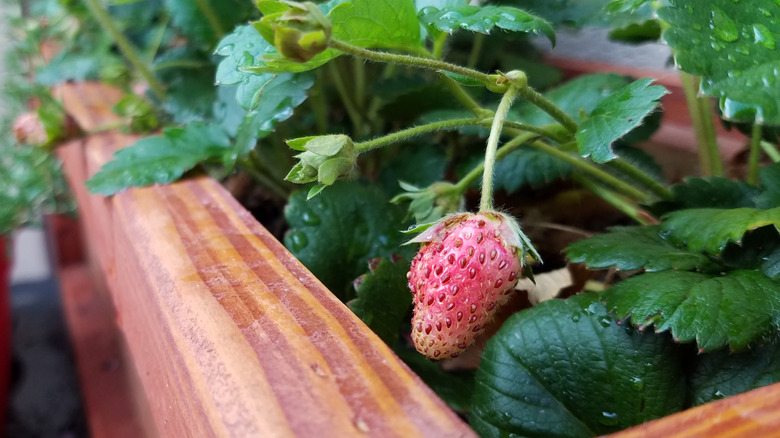
Growing strawberries is no easy feat. They look pretty and taste delicious, but all those runners and leaves can get extremely unruly no matter how careful you are. However, there are ways to tidy strawberry patches up — and if you can get your hands on a wooden pallet, you can actually create a gorgeous, functional piece for your garden.
You can build a pallet planter for growing the sweetest, juiciest strawberries a few different ways. Simply fill the pallet with soil and seedlings right on the ground, or line it and stand the pallet up against a wall for a different effect. If you want to get especially crafty, you can also cut the wooden frame into pieces and build a rectangular planter with its own walls.
To try it, simply cut the palette into three pieces and lay each on the ground. Remove the top layer of planks and keep them to the side. Then, take the middle piece (which has no sides) and screw the two ends to it with the thinner parts pointing upward. It should look like a box without a lid. Use the extra planks you removed earlier to close in the sides.
Planting strawberries in a homemade planter
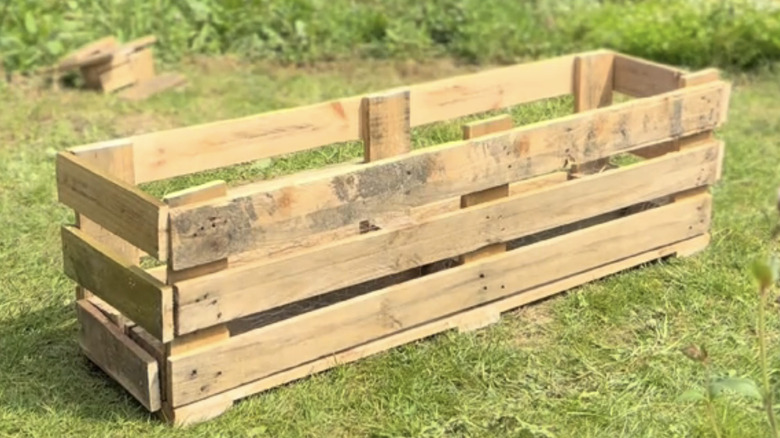
It may take a little vision, but you'll see everything coming together once the pieces are cut. It's easier to do the assembly with the planter upside down on the ground. You can also use any leftover pieces of wood or blocks you might have to create feet for the planter — or just lay it on some bricks. Make sure to pull out or flatten any loose nails or screws.
When the planter is ready, simply line it before filling with potting mix and planting your strawberries — growing strawberries from the fruit is easier than you think. For a lining, you can use either plastic, straw, a bedsheet, or anything that will hold the soil inside. The strawberries will eventually start to bloom between the spaces of the planks and flow over the top.
If you're using an old pallet, just make sure that it hasn't been treated with chemicals and it's free of any rot. Check that there's adequate space between the planks for the plants too. Of course, you can use palettes to make other types of planters as well. Once you tap into your DIY skills, the options are endless. Even a wine rack can be transformed into a functional herb garden — and that project involves a lot less sawing.