

What's The Difference Between A Pub And A Tavern?
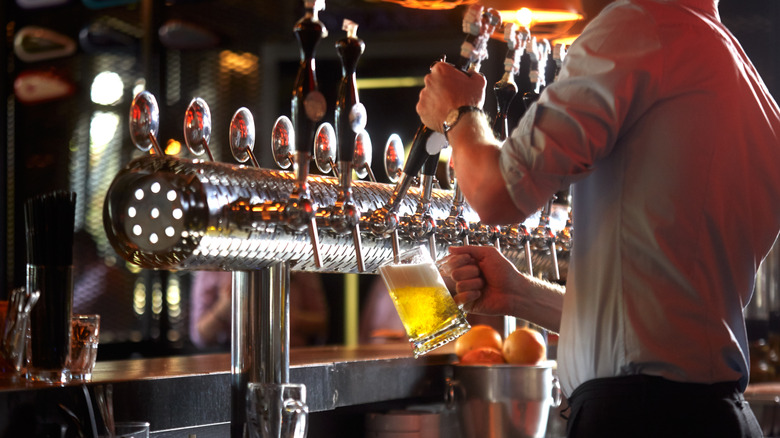
Certain words are evocative — when you hear the word "tavern," do you think of the Prancing Pony from "The Lord of the Rings," where hobbits were delighted to discover that beer can be served in pints? Or does the word pub bring to mind the rat-infested Paddy's Pub of "It's Always Sunny in Philadelphia" infamy? More to the point, what is the precise distinction between a pub and a tavern, given that these terms are often used interchangeably? Tasting Table put the question to Nick Kokonas, owner, operator, and steward of the Belmont Tavern in Chicago, Illinois, who explained that "pubs will typically have full food menus with typical bar food," whereas taverns "will usually have snacks available but may not have a full kitchen."
Though this is largely true today, historically it was not always the case. The etymological root of "tavern" is the Latin word "taberna," which in ancient Rome could refer to a small shop or stall, but in Roman Britain often meant somewhere that served food and wine. By the 16th century, the food and wine served by taverns was generally better than what could be found in alehouses, which offered only minimal options to a poorer clientele.
Over the centuries, the alehouse was replaced by the pub — an abbreviation of "public house" — which gradually began to serve a wider range of food as well as drink. Despite this, the culinary fare of traditional British pubs did not always enjoy the best reputation. This perception has changed significantly, however, thanks largely to the rise of the gastropub since the early 1990s, which offers food of far higher quality than the stereotypically unappealing pub grub of yesteryear.
Food aside, the role played by pubs and taverns is 'wildly similar'
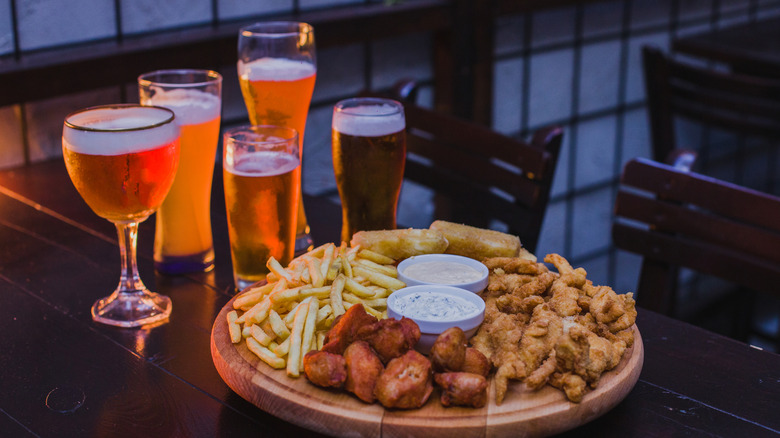
When speaking of pub food, Nick Kokonas suggested you think of "Pub Burgers, Fish and Chips, etc.," which are certainly examples that have achieved international popularity. Yet the dining options a pub-goer can expect will vary greatly depending on what country they are in. In Scotland, for example, pub food can include particularly Caledonian dishes such as haggis, scotch pie, or the seafood soup cullen skink. If you found yourself in a German beer hall, on the other hand, you might expect soft pretzels, bratwurst with sauerkraut, or crispy fried schnitzel.
Conversely, taverns are more likely to stock pre-packaged snacks that require no preparation or refrigeration, such as nuts, potato chips, pork rinds or scratchings, or — if they are very old-fashioned — pickled eggs. Beyond the food, some feel that what truly separates pubs and taverns are the vibes. "A pub is where you go to make friends," Kokonas said, but a tavern "is where you go to get in a drinking contest with your mortal enemy," and while a pub's strength may lie in "the foundation, walls, and artisan woodwork," the strength of a tavern relies instead "on the tenacity of the owner's liver."
Speaking more seriously, Kokonas suggested that the cultural roles played by modern pubs and taverns are "wildly similar," and said that both provide "a laid-back atmosphere catering to common blue-collar folks with draft beer, good spirits, and propensity for jovial times. Both are public houses which are considered third spaces where well-lubed patrons tell fishing stories and argue about mundane things on a regular basis."