

How To Prevent Mold From Growing In The Nooks And Crannies Of Your Fridge

Mold is nothing short of a kitchen nuisance — and we're not just talking about moldy food. Mold can pop up anywhere moisture is present. This isn't just on your fruit or leftovers; it's also in the hard-to-reach spots that give you a headache, like your dishwasher and, disgustingly enough, your refrigerator. You know, the appliance that you trust to keep food fresh.
Mold loves to grow in all of the nooks and crannies of your fridge, which are the spots that you may forget to clean often. This is where moisture and spores accumulate, and, since they may not be easily visible, buildup is inevitable. The best way to prevent mold from growing in these spots is to make sure that you clean them often.
The gaskets, drain channels, and drip trays should really be cleaned weekly with a mixture of vinegar and water (or an all-purpose cleaner) and a soft cloth. Make sure that you clean up any of that residual moisture, too, as you don't want to help mold settle back in these spots after you've cleaned them. You can also keep mold at bay by keeping your fridge properly chilled (use a fridge thermometer to check this) and by avoiding overstocking it, as excess "stuff" can alter the airflow and encourage spores to proliferate.
Other tips for a cleaner, mold-free fridge
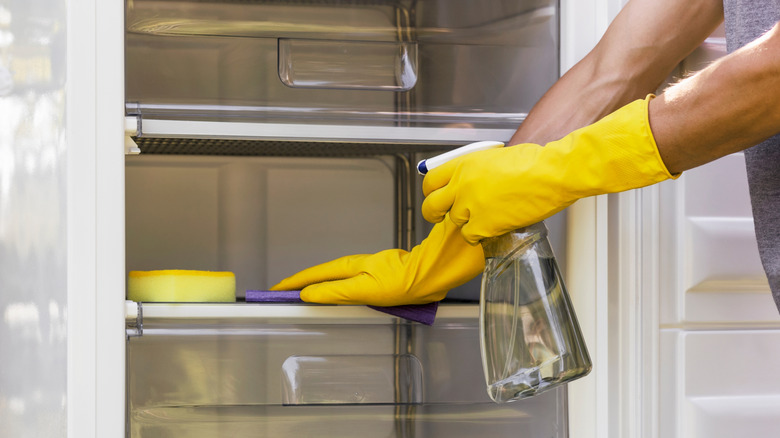
There are many other do's and don'ts of cleaning your fridge that you should keep in mind. The first is to remove all of the food in your fridge as you're doing your deep cleans. Anyone who cleans their kitchen counters on the regular knows that it's virtually impossible to get all the crumbs and residue off of them without moving things around — and the same logic can be applied to your fridge. Doing so will allow you to deep-clean your refrigerator drawers — another popular spot for mold to hang out.
Ideally, you'll want to clean your fridge completely at least once a month. Besides tackling mold, this is also an easy way to inspect your fridge and ensure that there are no tears or breaks in the drain line or worn gaskets, which can cause issues later on. Some folks will also swear by keeping a container of baking soda in their fridge to help deodorize and neutralize unpleasant odors as well. While this may not impact mold directly, it will surely help your fridge at least smell better.