

If You Find A Bird Egg In Your Vegetable Garden, Here's What You Need To Do Next
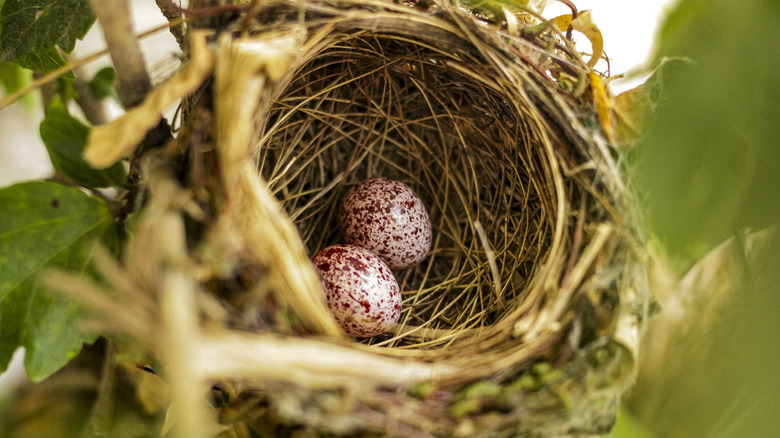
Spring is in full swing, and whether you're starting a garden for the first time or are an old pro, everyone could use a refresher on the best basic gardening tips. However, not all of these have to do with soil types or watering frequency — sometimes it's about how to care for an outdoor space and exist in harmony with nature. This includes knowing how to handle finding bird nests or eggs in your garden. Missteps have consequences, but these missteps are also easy to avoid with the right information.
We spoke to Robyn Bailey, certified wildlife biologist and NestWatch Project Leader at the Cornell Lab of Ornithology, who explains just what we need to know if this happens. "The first thing to know when you encounter a wild bird's nest is that, just like the birds themselves, their nests and eggs are legally protected," Bailey explains. "Therefore, you should not attempt to relocate the nest, or any eggs or young in it, because this would essentially cause the nest to fail; the parents would not find the moved nest and would not recognize it as their own."
According to the U.S. Migratory Bird Treaty Act of 1918, if you remove a nest or egg, you could be fined up to $15,000 and/or jailed for up to six months. In short, it's vital that you leave nests and eggs as they are. "The only exception is domestic fowl eggs," Bailey adds. "If your chicken, or other domestic fowl, lays an egg in the garden, of course that is fine to remove."
Adjust your gardening and never move nests or eggs
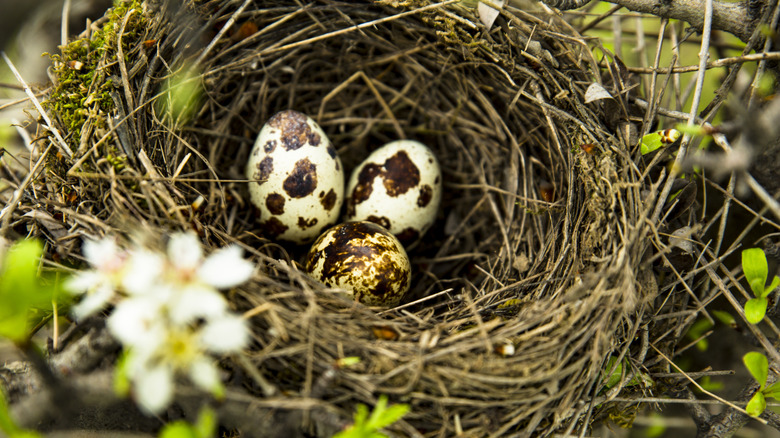
Different birds build their nests in different places. It may be frustrating to find a nest or egg in your garden, but remember the priority is to protect the birds. While you may employ natural solutions to keep squirrels out of your garden, birds can actually help with seed dispersal, pollination, and other pest control. They're also lovely to have around — many gardeners look for ways to attract bluebirds or other species. Moving an egg isn't worth the legal risk, nor the risk of that egg being rejected by its mother.
If you're worried about food-safety issues from eggs hatching near produce you're growing, Bailey has a simple solution. "You may prefer not to harvest any veggies in the 'fertilizer' zone, and you may also wish to extend the additional courtesy of giving them some space and not working too close to the nest, if possible," she recommends. Even if you think a lone egg has been abandoned, the mother could return at any time. The only course of action is no action at all, except for possibly creating a boundary for the egg.
"While you should not touch the eggs or nest, you can place a little marker to help you remember where it is so you can avoid disturbing it," Bailey adds. "And of course, if you'd like to document this nest for science, there's an app for that." The wildlife biologist suggests downloading the official NestWatch app. She notes, "You can submit observations and photos of the nest for scientists to use in studies of nesting birds!"