

Attract Bluebirds To Your Yard With This Fast-Growing Berry Bush
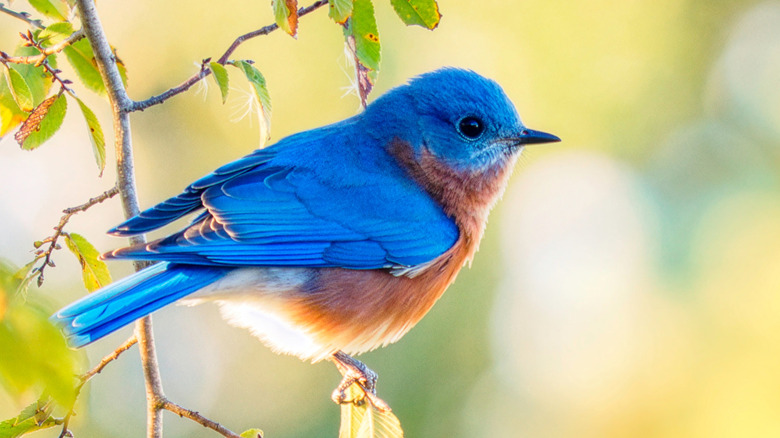
We all have our own ideas about what makes a perfect garden, but most will agree it should be a harmonious and mutually beneficial environment for both flora and fauna. Few sights exemplify this better than that of a bluebird feasting on the fruits of a blackberry bush you have grown and cultivated with your own hands. This isn't just a beautiful spectacle, however — attracting these delicate songbirds has advantages for you and your garden as well.
Bluebirds, along with similar species like sparrows and indigo buntings, adore wild berries as much as renowned Noma Chef René Redzepi, and particularly rely on them for food during winter, when there are fewer insects for them to feed upon, and through doing so, help to distribute the plant's seeds. In the warmer months, bluebirds will also eat the kinds of insects that can pose a threat to a blackberry bush, helping to protect your garden's ecosystem.
Before adding a blackberry bush, however, observe a few precautions. Blackberry bushes are perennials (meaning they grow fruit each year without replanting), but if you want yours to thrive, pick a spot where the bush can get plenty of sunlight and has lots of room to grow. Before planting, clear the area of any weeds, ensure the soil is well-drained, and check its pH levels — between 5.5 and 6.5 is what you should be aiming for. Make sure the type of blackberry plant you have chosen is not invasive — if wildlife distributes their seeds more widely, species like cutleaf and Himalayan blackberry can grow into dense thickets that can adversely affect native plant-life. Once planted, prune it between late fall and early spring, as overgrown bushes are prone to disease and poor air circulation, meaning they will produce less fruit.
Avoid pesticides if you want to keep bluebirds happy
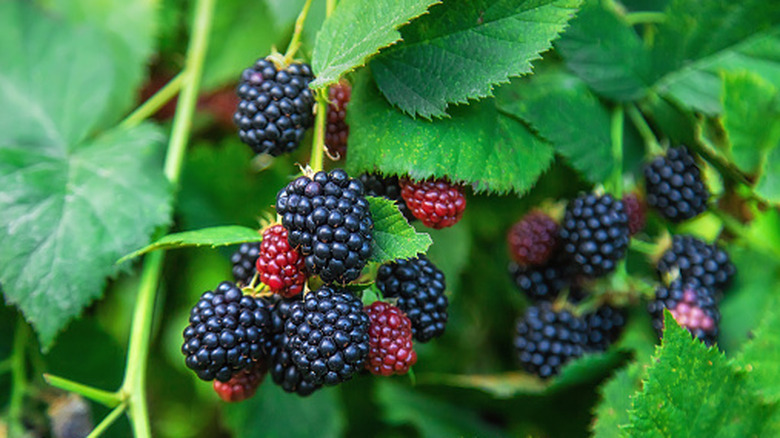
So, once your blackberry bush is planted, healthy, and fruitful with its bounty, when can you expect the bluebirds to appear, and what kind will they be? That depends on where you are. In the United States, there are three types of bluebird — Mountain bluebirds, Western bluebirds, and Eastern bluebirds. If you're in the South, you can expect to see Eastern bluebirds all year round, but while they are partial migrants, some Eastern bluebirds do stay behind in colder regions during the winter, so planting fruit-bearing shrubs like a blackberry bush is a good way to provide for them in the chillier months. To guarantee this vital food supply is untainted, avoid using chemical pesticides and use only organic alternatives (though the birds will do an excellent job taking care of the bugs by themselves). If you really want to go above and beyond for your local bluebirds, you could install a Peterson nest box, a specialized bird box that has been credited with saving the Eastern bluebird from extinction.
Of course, there's no reason the bluebirds should the only ones to benefit from all your hard work — so long as you leave enough for them, there's nothing stopping you from harvesting the spoils of your labor. While there really is nothing like the taste and satisfaction of homemade jam or a freshly baked pie, once you have easy access to fresh blackberries, you may find yourself moving beyond these standard options and embracing the many culinary applications to which blackberries can be put. These include providing a tart-yet-sweet counter-balance to a gamey venison burger, or a fruity complement to the richness of a roast chicken.