

7 Discontinued Juice Boxes We Would Love To Have Back

We may receive a commission on purchases made from links.
Back in 1963, Ruben Rausing created Tetra Pak, and in the process, he changed school lunch boxes forever. His invention, a type of sterile, aseptic, layered carton that could be used to store liquid, was initially designed for milk, but it was groundbreaking for the American juice market. Kids could finally take the drink to school without the risk of spoilage, and so the juice industry boomed.
Rausing didn't know it at the time, but back in the 1960s, he was paving the way for the invention of some of the most iconic and beloved children's (and adult's) drinks. Join us as we take a scroll through juice box history and take a look at some of the drinks we would love to get back. We won't give you too much of a spoiler, but the first one on our list is bright green and promoted by a slimy ghost. Any guesses?
Ecto Cooler
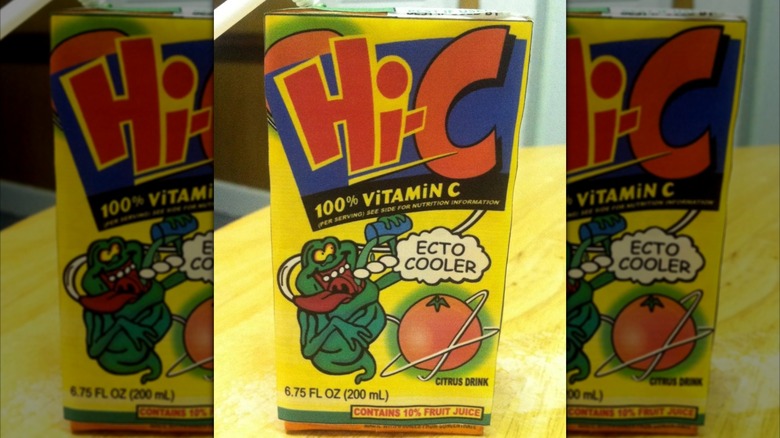
If you were a kid in the 1980s or 1990s, you probably remember Ecto Cooler. Launched just before the turn of the decade in 1989, the bright green, citrus-flavored drink from Hi-C dominated the juice box category for years. It was a favorite of teenage stoners and school kids alike, loved for its fluorescent color, citrusy flavor, and iconic packaging. The juice boxes, of course, were initially released to coincide with the TV series "The Real Ghostbusters" and the movie "Ghostbusters II," and featured Slimer, the legendary Ectoplasm ghost from the franchise.
But Ecto Cooler wasn't just for fans of Ghostbusters. The drink had staying power all of its own. It wasn't discontinued until the 1990s, despite the fact that, after 1989, there wasn't another Ghostbusters movie released until 2016.
Ecto Cooler has been rebranded and brought back several times over the years. In the 2000s, the same recipe was repackaged and sold under a new name: Shoutin' Orange Tangergreen (at least, that's what fans think anyway). But people didn't fall in love with it in the same way. It turns out, Slimer was the key to Ecto Cooler's charm. Still, while Hi-C brought back Ecto Cooler for the 2016 and 2021 Ghostbusters movies, it is yet to make a permanent return. Fans are hoping it's only a matter of time.
Various Hi-C flavors
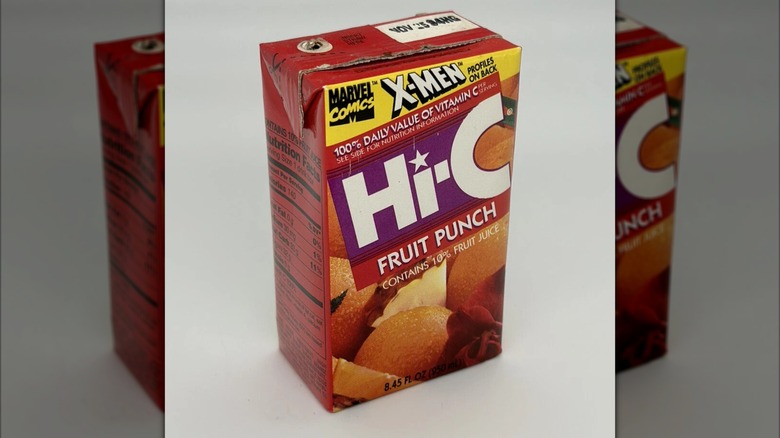
There's no doubt that Ecto Cooler was one of Hi-C's most iconic flavors, but over the years, many beloved Hi-C drinks have come and gone. Even the flavor that it all started with is no longer around, at least not in the same format.
In 1946, Texan shopkeeper Niles Foster created the first Hi-C Orange by combining ingredients like orange puree, floral oils, and vitamin C powder in a large vat. He canned the mixture and sold it under the name Hi-C. People loved it, and by the late 1950s, Foster's creation had been purchased by the beloved orange juice brand Minute Maid and was being sold in grocery stores across the U.S. Over the decades, many flavors followed, like Citrus Cooler (the alleged precursor to Ecto Cooler), Florida Punch, and Grape. Like the original, they were sold in cans. In fact, Hi-C didn't switch to juice boxes until the 1980s.
Alongside Ecto Cooler in the 1990s, kids could get their hands on Hi-C flavors like Cherry, Orange Drink, and Double Fruit Cooler, and they were often a staple at birthday parties. Some say that the Double Fruit Cooler was particularly good, while others were all about the cherry (especially when it had been frozen). Today, there are many Hi-C flavors on the shelves, including Orange Lavaburst and Boppin' Strawberry, but many fans say they don't match up to the discontinued flavors of the 20th century. Some even miss the can format and believe that the metallic taste actually enhanced the drink.
Super Mario Power Punch
If you were a kid in the 1990s, chances are you remember having an Ecto Cooler in one hand, and a Nintendo controller in the other hand. In fact, by 1990, 70% of American households with children aged between eight and 15 owned a Nintendo games console, according to data from The New York Times. And one of the most popular games, of course, was Super Mario Bros.
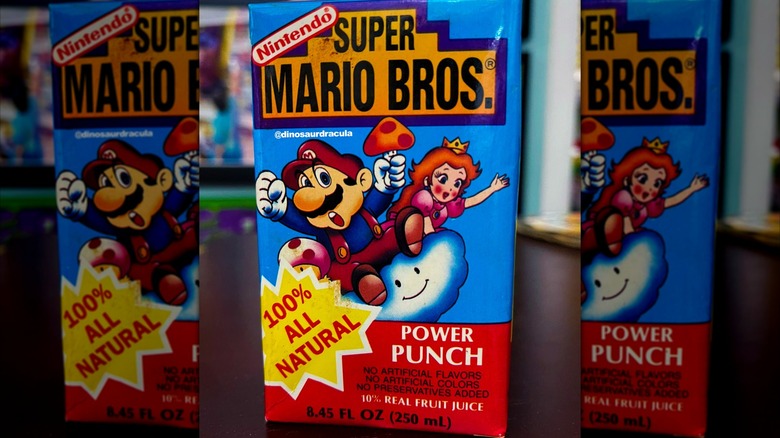
One way to let everyone know you were playing the game of the moment (Super Mario Bros. 3 was released in 1990, in case you need a reminder) was to brag about it in the school playground. Another way? Just play it cool and let your juice box do the talking. In the '90s, Nintendo launched its own Super Mario Bros. Power Punch juice boxes. The boxes featured some of the games' iconic characters on the front, like Mario himself, of course, and Princess Peach, and were made with 10% real fruit juice.
You had to be lucky to get your hands on a Power Punch box, though. Those who remember drinking them say they were tasty, but pretty rare. But this wasn't the end of Mario's juice box career. In the early 2000s, Hi-C launched a new range of Nintendo-themed juice boxes, again featuring popular Mario characters. Time for another round? We vote yes.
BoKu
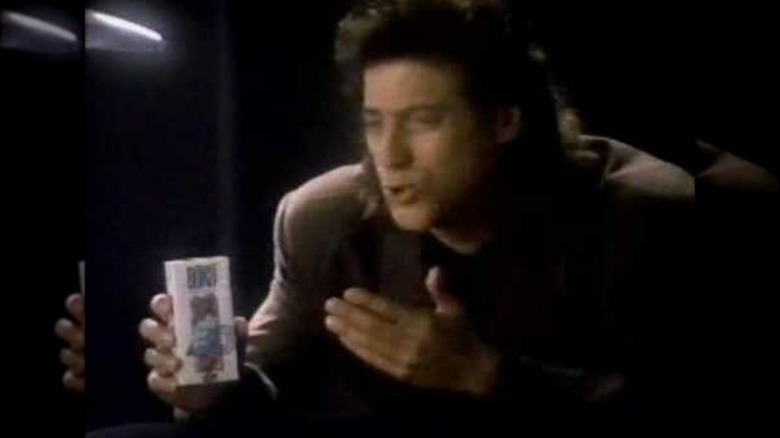
While school kids were hanging out drinking Ecto Cooler and various other Hi-C concoctions, their parents were sipping on BoKu. In the same year that those bright green, fruity, Slimer-branded juice boxes started doing the rounds at recess, the adults wanted in. Well, Canadian company McCain thought they did, anyway, so, in 1989, it launched a new, mature, strawless juice box brand: BoKu.
BoKu was supposed to be the epitome of sophistication. The name was inspired by the French word "beaucoup," and the flavors were supposed to be more refined. Think: black cherry white grape, white grape raspberry, and orange peach. They were also normal grown-up colors — no fluorescent greens in sight. With the help of American actor and comedian Richard Lewis, who made some truly iconic commercials for BoKu in the early '90s, the concept of a grown-up juice box actually took off for a few years. But it wasn't meant to be, and BoKu was retired by the mid-1990s.
Still, despite its short run, many people remember it fondly and enjoyed its subtle, not-too-sweet flavor. While it was supposed to be for adults, kids loved it, too (it was fruit juice, at the end of the day). In fact, many remember thinking that drinking grape juice was the grown-up thing to do, and would even take BoKu to school to show off in front of their peers. We'd love to see BoKu back again, but it would require re-runs of Lewis' original commercials, of course.
Fruitopia
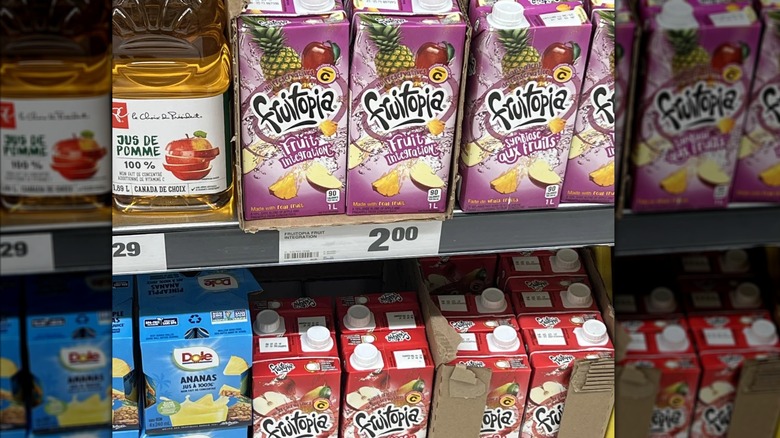
BoKu wasn't alone. In the 1990s, several other companies were trying to market juice to adults as well as kids. In 1994, for example, soda giant Coca-Cola launched Fruitopia in a bid to appeal to new-age 30-somethings and kids with health-conscious parents. The drink was different from Coca-Cola in many ways. It was fruity, it wasn't carbonated, and its flavors were branded with hippie-sounding names like Strawberry Passion Awareness and Citrus Consciousness.
Fruitopia was sold in box and bottle formats from stores and vending machines, and many kids remember begging their parents for it in the 1990s. Most loved it because it was so sickly sweet. It might have been marketed as a healthier alternative to soda, but it was still chock-full of sugar. "I can still feel my teeth hurting from [Fruitopia]," wrote one Redditor. "But seriously, these were so good."
Fruitopia is still available in Canada, but in the U.S., it's long gone. In fact, alongside many other popular drinks, it disappeared from store shelves way back in the early 2000s. Want to feel your teeth itch again? Many people do. In fact, at the time of writing, there is a Change.org petition with more than 1,720 signatures demanding that Coca-Cola bring Fruitopia back to the American market.
Five Alive
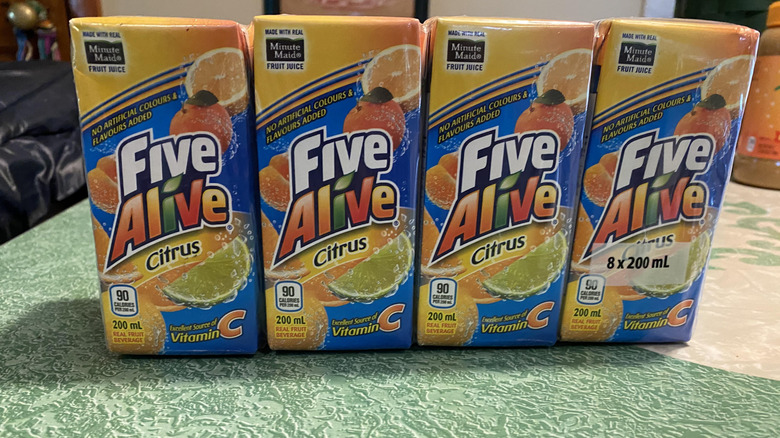
What do Ecto Cooler, Fruitopia, and Five Alive have in common? We'll help you out: They're the kind of drinks you miss the second you see them. Launched in the 1970s by Minute Maid, Five Alive was, as the name suggests, made with a blend of five different juices. The classic Citrus flavor, for example, contained a mix of orange, lemon, grapefruit, tangerine, and lime. The drink was popular in the U.S., and in the 1980s, you could buy it in small juice boxes. They were ideal for kids to drink at school, at sports matches, or during family day trips.
Many Americans remember drinking Five Alive with fondness. Many say it was ultra-refreshing while being ultra-acidic, and some maintain it was even better than Sunny D. Five Alive is still available in some markets, including Canada, but it has been discontinued in the U.S. for some time. That said, its days might be limited. In 2026, Minute Maid announced it was discontinuing its frozen Five Alive juice blend from concentrate. Here's hoping the other varieties stick around for a little longer, for nostalgia purposes.
Bart Simpson Juice
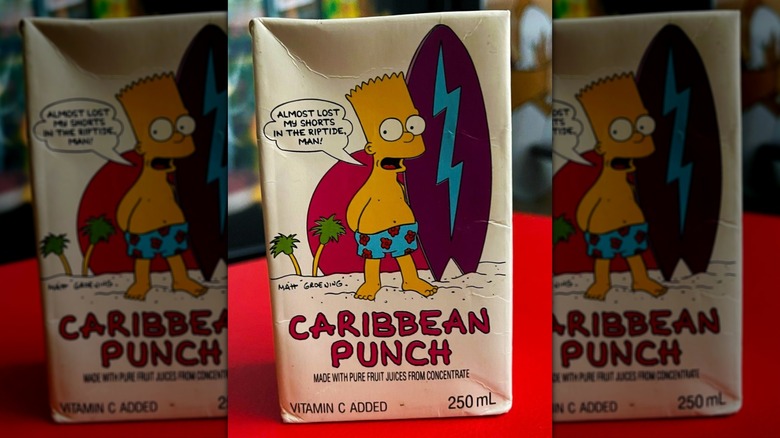
Today, "The Simpsons" is iconic. The animated series has been on the air for more than 35 years, and America (and the rest of the world) has fallen head over heels for the bright yellow Simpson family and the rest of Springfield. But ask anyone who grew up in the 1990s, and they'll say that the cartoon was in its golden era during that decade. And one character who seemed to capture viewers like no other? Bart, of course. In fact, Bart was so loved, some fans of the show refer to this period of time as "Bartmania." The troublemaker inspired a range of his own merchandise, including, you guessed it, his own juice box line.
Bart Simpson juice was introduced back in 1991, and one of the popular flavors in the line was Caribbean Punch. The front of the box showed a picture of Bart on the beach, in his shorts, with a surfboard. A speech bubble reads: "Almost lost my shorts in the riptide, man!" Many people loved the juice boxes because of the fruity taste, but mainly because they had Bart on the front. As one Facebook commenter declared: "Back then, anything that had the Simpsons logo on it [rocked]." Arguably, it still does today. Time for Bartmania round two? We'd like to start with a sip of Caribbean Punch and then we'll throw on "Itchy and Scratchy: The Movie."