

The Serving Trick That Keeps Saucy Dishes From Turning Soggy Quick
When trying to create restaurant-quality meals, home cooks must face a hard truth: Cooking is only half the battle. If you neglect the plating and serving of your dishes, they'll fall flat, especially recipes that involve a generous helping of sauce — one minute, the dish is perfect, and the next, it's soggy, sloppy, and second-rate. To find out how to serve saucy dishes like a pro, Tasting Table asked chef John Politte, founder and host of the YouTube channel "It's Only Food," for his top tips.
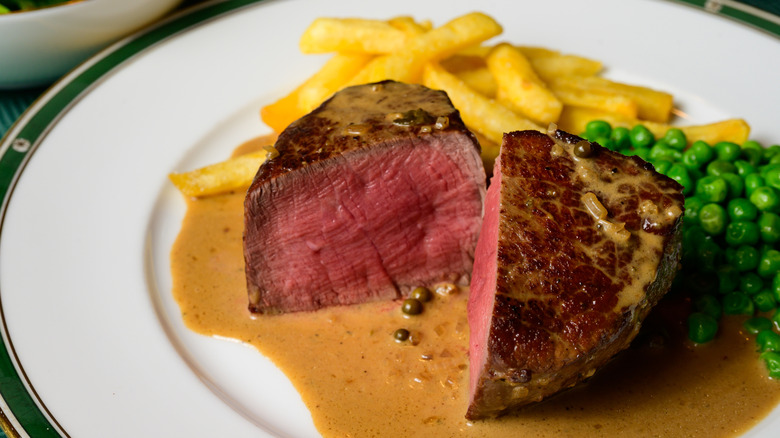
Whether you're cooking fried food like chicken fried steak with gravy or simple seared ahi tuna with lemon dressing, your inclination might be to pour the sauce over the finished dish. However, unless you eat it immediately, this will soften crispy crusts, wilt vegetables, and generally sog things up. Politte instead recommends adding sauce to the plate, then arranging everything else on top, which "prevents the protein from sitting in liquid and absorbing excess moisture," he explained.
Politte's approach helps your protein "maintain its texture and ensures that the dish stays appealing and flavorful rather than mushy." He added that by serving sauces this way, "you give diners control over how much sauce each bite gets," making the dish more balanced and enjoyable. Plus, this plating trick adds personality to your meals, especially if you use restaurant-worthy tips for plating sauces at home.
More tips from a pro chef on how to serve saucy dishes
If you're juggling several dishes as part of a multi-course meal, you'll need extra insurance against sogginess. To stop the clock from ticking as soon as your food touches the sauce, "try serving components separately so diners can combine them at the table," Politte suggested. Whether you serve a boat of béarnaise alongside steak or let your guests spoon the tomatoes onto classic bruschetta themselves, this method prolongs the life of your dishes and lets everyone enjoy them at peak quality.
The way you cook your ingredients also matters. The crispier or sturdier they are to begin with, the more slowly they'll absorb moisture. "Toasting bread, pan-searing proteins, or roasting vegetables ... will create a firmer surface and help them hold up better," Politte said. Using sauces that are less watery also slows down sogginess. If your condiments aren't thick to begin with, Politte recommends making a rich glaze or reduction by cooking it down over time.
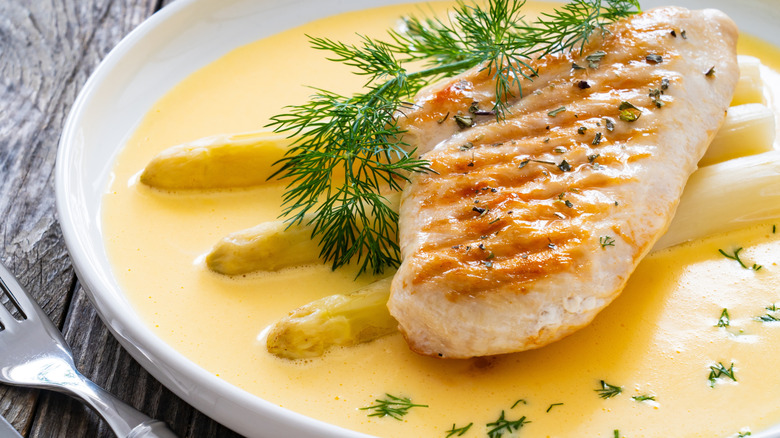
As a final plating tip, you can "layer ingredients so the sauce doesn't directly sit on delicate items," Politte said. Start by adding your sauce to the plate; lay down a buffer like a bed of mashed potatoes, pile of pasta, or even some asparagus spears; and top it off with the items that you want to keep crisp. Layering dishes like this ensures that saucy doesn't mean soggy, creating an attractive yet practical presentation.