

Got A Little Extra Sugar? Make Your Garden A Buffet For Hummingbirds With One Easy Step
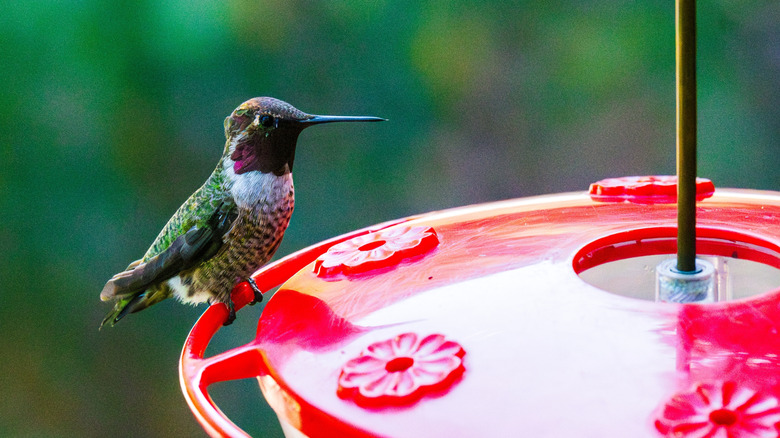
In the wild, hummingbirds eat tree sap and nectar from flowers, as well as flying insects like gnats. Because not all areas have abundant access to the types of plants and flowers that produce nectar for hummingbirds, many people like to help out by placing hummingbird feeders in their backyards. You can attract hummingbirds to your yard by planting flowers and fruits that attract birds, and by making your own hummingbird nectar. All you need to turn your own garden into a buffet for hummingbirds is some white sugar, water, and a hummingbird feeder.
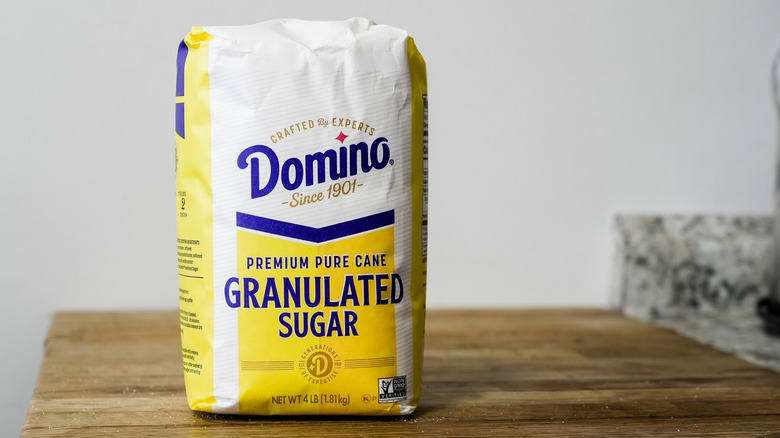
To make hummingbird feed that is as close as possible to the nectar that the birds consume naturally, only use refined white sugar and water. Do not add anything else, especially not red dye, which can be harmful to hummingbirds. Only use white sugar, not brown sugar, powdered sugar, honey, agave syrup, or corn syrup. The ideal ratio for your ingredients is one part sugar and four parts water (tap water is fine). Mix the ingredients thoroughly until the sugar is dissolved. After filling your feeder, extra sugar water can be kept in a sealed container in your fridge for up to a week.
The best place to put a hummingbird feeder is a shady spot that is quiet. Hanging it near a tree is ideal, but keep it away from windows. You can also place it near rosemary, which is a fragrant hanging herb that is a hummingbird magnet. You should clean and refill the feeder every other day or if it gets moldy. Pour out any leftover sugar water and wash the feeder thoroughly using hot water, hydrogen peroxide or diluted white vinegar, and a toothbrush. After cleaning, refill it with fresh nectar.
Other tips for using sugar water for a hummingbird garden
The type of hummingbird feeder you use will play a huge factor in how easy it is for the birds to access, and whether it is protected from other nectar-loving birds and insects. The best hummingbird feeder materials are glass or food safe, BPA-free plastic. The best feeder colors to attract hummingbirds are red, purple, and deep orange or yellow.
When choosing a feeder, pay attention to its ports, or the holes through which the bird will access the nectar. If the holes are too big, they will attract insects and other birds and mammals. Too-small ports will be hard for birds to feed through and may actually discourage them from using your feeder. The ideal choice is a feeder with covers over the ports, called bee guards, which snap onto the ports to keep bees and wasps out. If you live in a hot climate, wrapping aluminum foil around your hummingbird feeder is a smart idea to deter insects, slow evaporation, and protect the nectar from getting too hot (and spoiling too soon).
Vacuum feeders, like this First Nature Hummingbird Flower Feeder, dispense sugar water when the hummingbird starts feeding from the port. They are affordable, easy to clean and use, and available in many different sizes, colors, and styles. However, they can start leaking, which means they will attract wasps, bees, flies, and ants. Saucer feeders, like the Aspects HummZinger, use a bowl of nectar that the birds feed on through ports, which mimics the natural feeding style of the birds. They are more stable, less likely to leak, and harder for other birds or animals to get into.