

10 Rotisserie Chicken Red Flags To Watch Out For At The Grocery Store
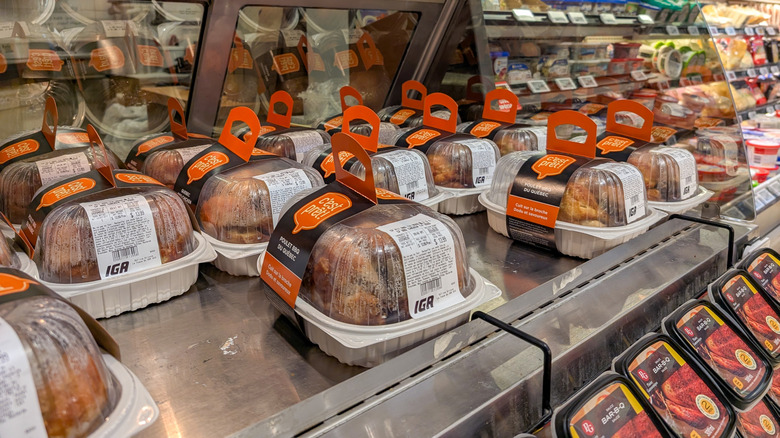
You know those times when you need a quick dinner but don't want to spend money on takeout? We've been there before. You can always grab a prepared sandwich from the deli or snag your family a frozen meal from the freezer section, but a rotisserie chicken is one of our favorite solutions. It's often inexpensive (sometimes even cheaper than a whole uncooked chicken), and since it's already cooked, you just have to choose a side dish to enjoy alongside the bird — though we won't judge if you just want to dig into that chicken all on its own and call it a night.
Unfortunately, it's possible to get a bad rotisserie chicken, which can ruin your dinner plans. That's why it's so important to watch out for the most glaring rotisserie chicken red flags. We've consulted experts, including Destini Moody, RD, CSSD, LD, a board-certified specialist in sports dietetics at Flex Therapist CEUs; Brian Theis, recipe developer and cookbook author of "The Infinite Feast"; and Mark McShane, chef and food safety expert at Level 3 Food Hygiene Certificate, to help us identify these red flags so we're never disappointed by another bad rotisserie chicken again. By knowing what to avoid, you can better ensure that your rotisserie chicken-based meals turn out as delicious as possible.
The chicken feels lukewarm
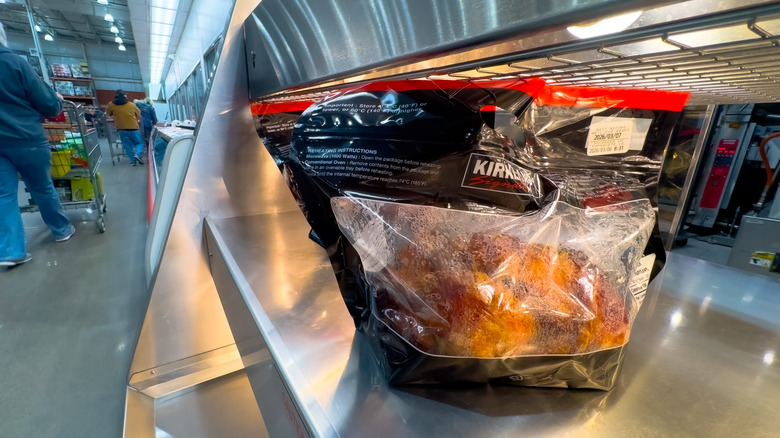
Most of the time, when you're buying a rotisserie chicken, it's already going to be hot. In fact, this is one of the main selling points of grocery store rotisserie chicken — you don't even have to heat it up when you get it home. But there may be times when you pick up a rotisserie chicken and realize that it's more lukewarm than hot. That's generally not a good sign, according to Destini Moody of Flex Therapist CEUs. "The first thing you need to pay attention to is the temperature," says Moody. "Ask yourself if the container feels lukewarm. If so, you need to skip it."
This is because if the temperature of the chicken drops too low, dangerous bacteria can start to grow quickly. This can happen at surprisingly high temperatures — under 140 degrees Fahrenheit. At that point, food, including chicken, is said to be in the "danger zone." Therefore, eating lukewarm rotisserie chicken can be risky from a health perspective. But even if you don't get sick from chicken that's been sitting out at too low a temperature for too long, that lukewarm temp is an indication that it's probably not as fresh as you want it to be. Choose a piping-hot chicken for a better, fresher flavor.
The packaging isn't clean
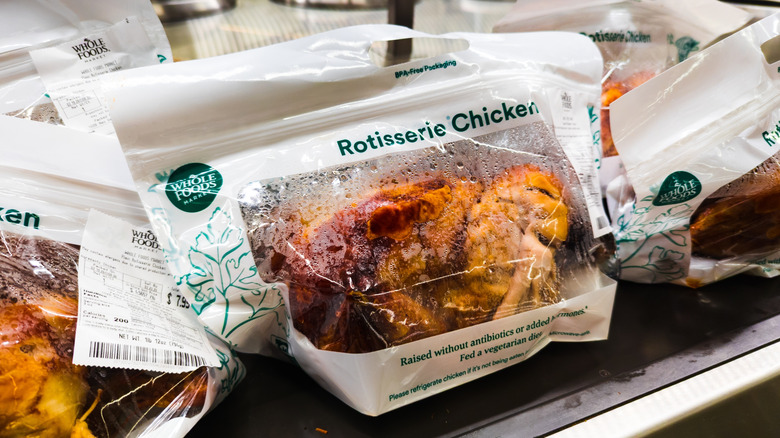
Sure, you need to look at the chicken itself to determine whether it looks good to eat or not, but did you know that the rotisserie chicken's packaging can also give you some information about whether you're getting the best possible bird? According to Mark McShane of Level 3 Food Hygiene Certificate, the packaging can indicate the quality of food you can expect to find.
"If there is residue smeared across the top or bottom of the container or if it has signs of excessive contact, then I question how well this was handled," says Shane. If the packaging is dirty, then the chicken might have been rustled around by one too many people trying to select the best one, or it could have been dropped on the floor and put back. Ultimately, you're better off trying to find a chicken that looks like it's been handled the least amount as possible.
It seems light for its size
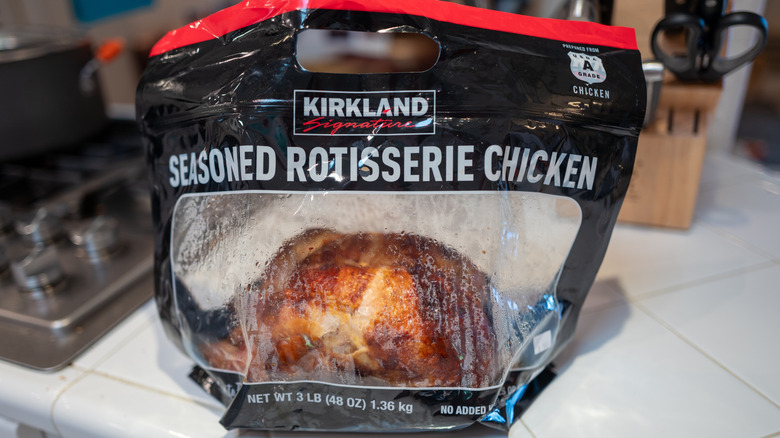
One thing that a lot of rotisserie chicken buyers don't necessarily look at is the weight of the chicken. You may pay attention to its overall size, but assessing its weight is yet another way of determining whether the specific chicken you're choosing is going to taste as good as possible. That's because a chicken that weighs less than you might assume based on its size might be overcooked. Poultry loses liquid during the cooking process, and that loss results in a lighter weight.
While it's not technically dangerous to eat a rotisserie chicken that's been overcooked, it's not going to have the best texture or flavor. Chances are, it's going to taste dried out, and may even have a stringy texture to it. You might not get those luscious juices that you expect when you buy a rotisserie chicken. While weight may not be your first consideration when you're picking out which chicken to buy, it's just another clue that can lead you to a better selection.
It's too dark or burned
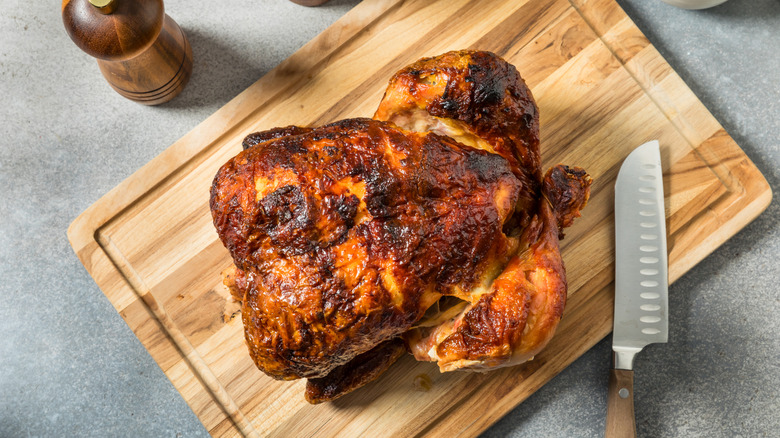
When you roast a chicken at home, how do you know when it's done? Ideally, you'll want to use a good-quality meat thermometer to check that it's at a safe temperature, but the color of the skin is probably your first indication that your bird is almost done. So it makes sense that color would be a solid indicator of whether you're getting a good rotisserie chicken. "You want a chicken that is evenly golden, not dark or burned in places," says Brian Theis of "The Infinite Feast."
Obviously, the skin isn't going to taste good if it's too dark. Sure, we love crispy chicken skin, but if it actually looks burned, it's likely to have a bitter, acrid taste to it. Plus, dark skin can be an indicator that the chicken was overcooked. Again, this can lead to a dry, stringy texture that's not going to be very appetizing.
The skin is very pale
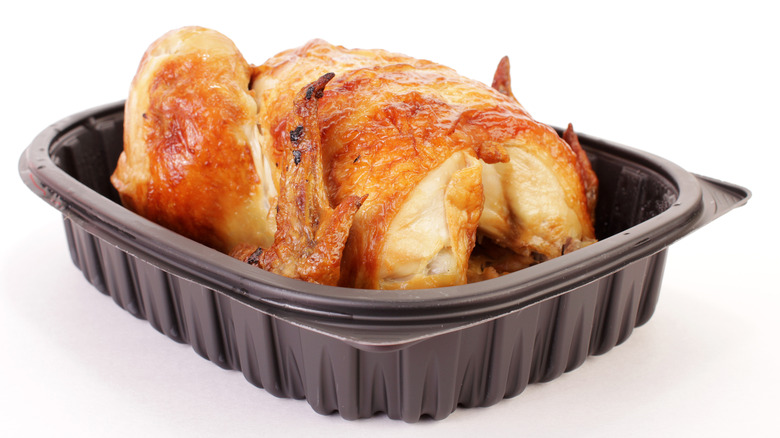
As much as you'll want to avoid rotisserie chicken skin that looks too dark, it also makes sense to avoid chicken that appears too pale as well. In fact, this could even be a bigger problem than burnt skin, since it could be an indicator that you're getting a chicken that's been undercooked. This isn't something to take lightly, since eating undercooked chicken could lead to serious food poisoning. Remember, the internal temperature of chicken should reach 165 degrees Fahrenheit before it's ready to eat. Any temperature under that benchmark and you're running the risk of illness.
Of course, just because the skin of a rotisserie chicken is pale doesn't necessarily mean that you're definitely getting undercooked chicken. Even if it has reached the proper temperature, that lack of beautiful, golden skin may mean you'll be eating soggy chicken and is missing out on that crispy textural element that makes rotisserie chicken shine. At that point, you might as well just grab a pack of plain chicken breasts instead.
You notice a strange smell
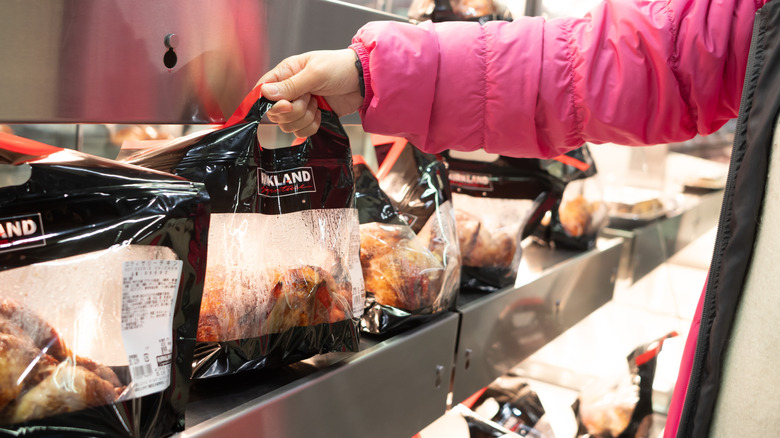
If you're like us, when you're trying to determine if food you've had in your fridge for a few days is still good to eat, you give it a good sniff. You can apply this same principle to buying prepared food at the grocery store, especially when it comes to meat-based items like rotisserie chicken. In fact, this might just be one of the best ways to catch a rotisserie chicken red flag. "Smell can often be an indicator that something is off," says Destini Moody.
You should smell a savory aroma, along with fragrant herbs and spices, when you take a whiff of a fresh rotisserie chicken. If you smell more unpleasant aromas, your rotisserie chicken may have gone bad. According to Moody, "if it smells sour or you think it does not smell as it should, the safest option is not to buy it."
There's too much liquid in the container
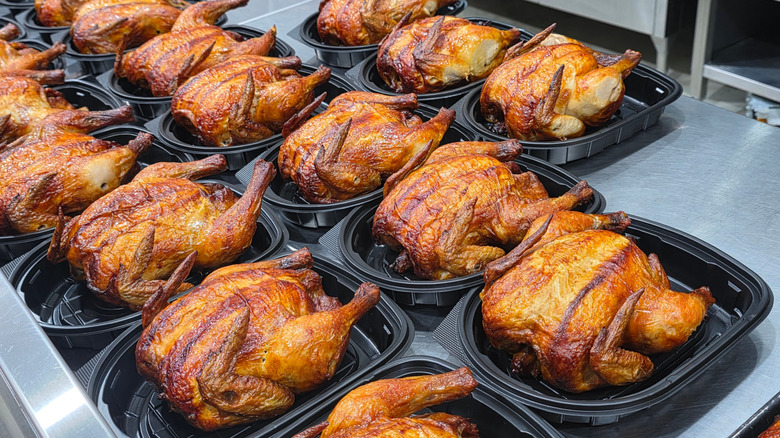
When you open up a container of rotisserie chicken — whether it's stored in a plastic container or a bag — you're going to see some liquid in the bottom. A small amount of liquid is normal, and it can be used in a variety of ways in the kitchen, so you shouldn't throw it out. That being said, there can definitely be too much liquid in your rotisserie chicken container, and that's a major warning sign that you shouldn't ignore.
"A minimal amount of clear or light-golden juices are acceptable," says Mark McShane. "However, an abundance of cloudy, oily liquids or a gelatinous and dark-grayish substance indicates the chicken may have been stored and cooled down for extended periods of time." According to McShane, this is a red flag in regard to both quality and safety, so you should avoid buying any rotisserie chicken that has a lot of liquid in the bottom of the container. Be sure to take a peek before adding it to your cart.
The chicken is dried out
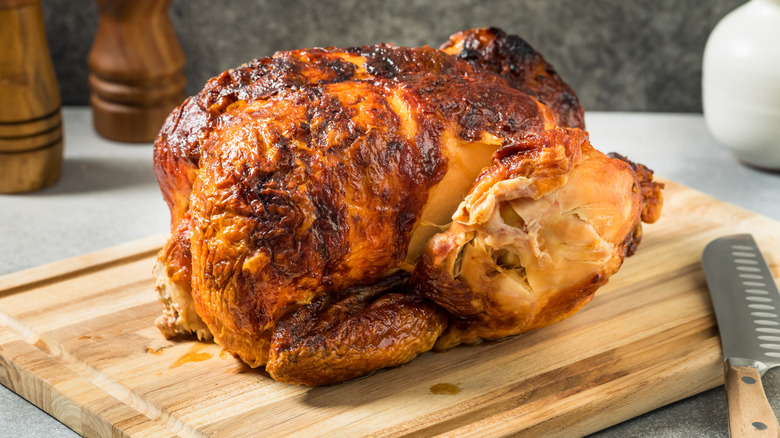
We've covered a lot about safety concerns when it comes to buying grocery store rotisserie chicken, but some red flags are more about its quality. While these red flags may not indicate the potential that the chicken is going to make you sick, they're still good reasons to avoid a chicken you see at the store. A visibly dried-out chicken is one of those signs. As long as the chicken is kept at the proper temperature, it should be safe to eat, but if it's been kept at a high temp for a long time, then the texture and overall flavor is likely to suffer. It can also indicate that it's been sitting there for a while, which lets you know that you're not getting the freshest possible meat.
"A fresh rotisserie chicken should appear plump and have moisture not be dried-out or tight to the bone," says Mark McShane. Look for dark skin, a shriveled appearance, and overall tightness. If you notice these red flags, you're better off opting for a different bird.
The cook time was more than three hours ago
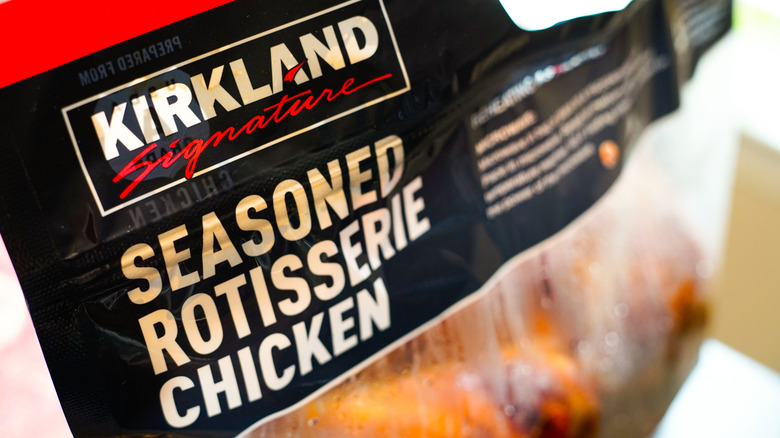
You might have noticed that some grocery stores have a sticker on their rotisserie chickens listing the cook time. We love when a store provides us with this information, as it allows us to choose the freshest chicken possible. Obviously, you'd want to grab a chicken that has a cook time as close to the time you're grocery shopping as possible, but the deli may not be putting out fresh rotisserie chickens all day long. That's why Brian Theis suggests a specific cutoff time.
"Check for a cook time if [it] is included," he says. "Anything over three hours [is] probably no good, it's been under the lamps too long and may be dried out." Besides not being the freshest possible bird, older chicken is less appealing than ones that just came out of the oven.
There's no cook time listed
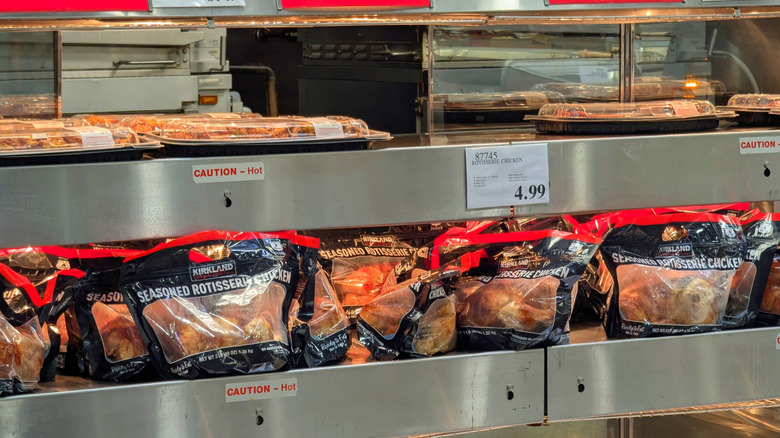
Paying attention to the cook time is a good idea to ensure that you're getting a rotisserie chicken that hasn't been sitting out for too long, but at some grocery stores, you might run into another problem: There's no cook time listed at all. This can make it tricky to determine whether you're getting a fresh bird or not. If this is the case at your local grocery store, your first step should be to ask someone working at the deli. They might be able to tell you when the last batch of rotisserie chickens was put out.
Mark McShane says that if he can't get that information from a staff member, he'll be more cautious about what he's buying. "Once a product sits outside of refrigeration for longer than two hours, regardless of what temperature it has maintained at, both quality and safety begin to decline," he says. Therefore, a rotisserie chicken that doesn't offer this information either on the package or through verbal confirmation from the staff could be a food quality or safety red flag.