

Greek-Style Lamb Shanks Recipe
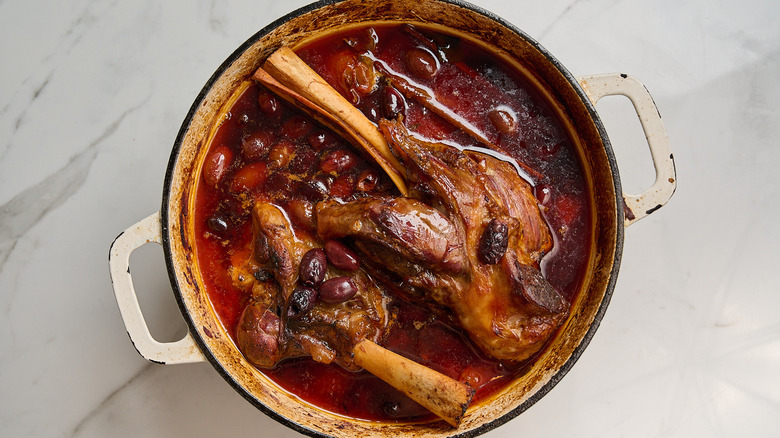
There's something special about slow-roasted, braised meat that you can taste in every bite. A method reserved for cuts of meat that are too lean to sear, braising meat at low heat infuses it with flavor and breaks down the tough connective tissue, leading to a meltingly tender meat and a thick, rich broth. It's a texture and flavor that is only possible to achieve by working slowly, with low heat and long cook times that lead to impressive results. It's a method that works perfectly for affordable cuts of meat like lamb shanks, which would otherwise be too tough to eat on their own. It's also a method that invites bold and unique flavors, which the long cook time transforms into a harmonious sauce.
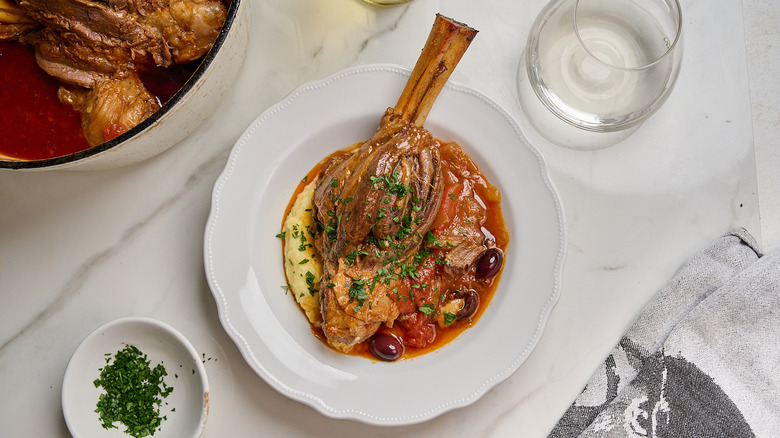
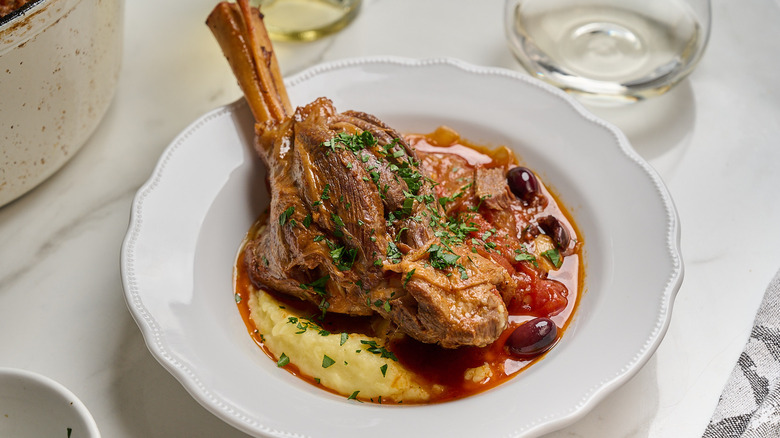
This Greek-style lamb shank recipe, written with Michelle McGlinn, combines the robust flavor of lamb with bold, Mediterranean flavors like tomato, wine, lemon, garlic, cinnamon, cumin, oregano, and olives. Incensed by the sweet flavor of cinnamon and the bright flavor of lemon, the lamb becomes rich and buttery, masking the particularly gamey flavor of the lean cut. This is a great, stew-like dish to serve with mashed potatoes in the winter or orzo in the summer, and it's a beginner-friendly introduction to cooking lamb that is impressive in both its stunning presentation and layered flavor.
Gathering the ingredients to make Greek-style lamb shanks
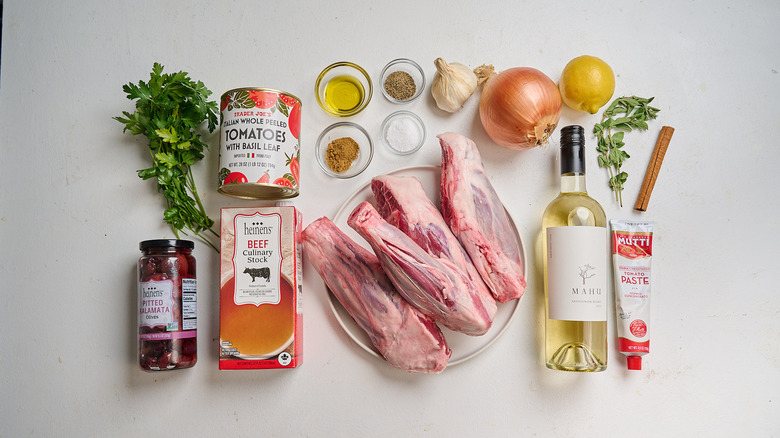
The first ingredient you will need to find for this recipe is lamb shanks. When looking for lamb shanks in the store, you will likely come across both the foreshank and the hind shank, which are both usable options for this dish. The foreshank, which is just above the knee in the front leg, is the one that has the bone extended out of the meat and offers a stunning presentation after braising. It's also different from the leg of the lamb, which is larger and more tender and requires a different cooking method.
Once you have four lamb foreshanks picked out, you'll also need salt, pepper, olive oil, onion, garlic, tomato paste, dry white wine (such as sauvignon blanc), a large can of peeled tomatoes, lemon, a cinnamon stick, oregano, cumin, beef broth, kalamata olives, and parsley.
Step 1: Heat up the oven
Preheat the oven to 350 F.
Step 2: Season the lamb shanks
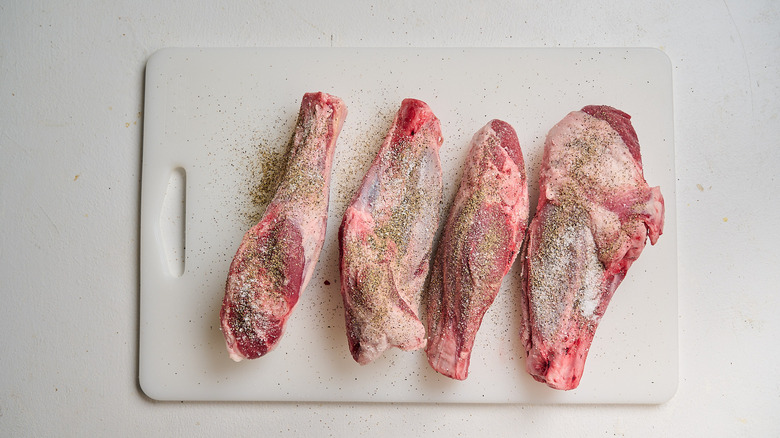
Season the lamb shanks on all sides with salt and pepper.
Step 3: Heat olive oil in a pot
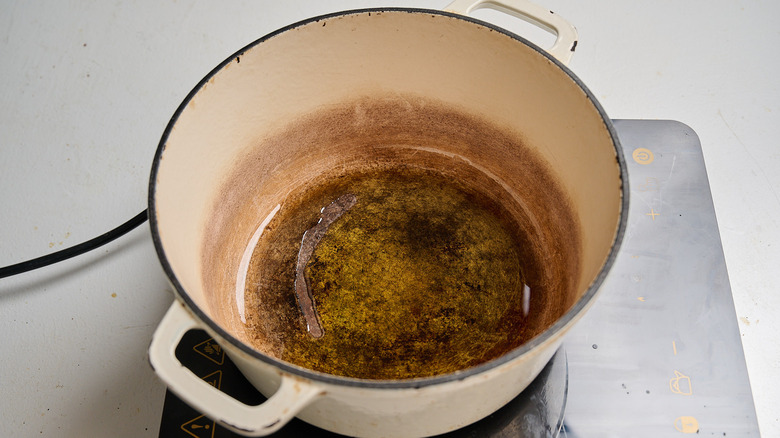
Heat the olive oil in a Dutch oven over medium heat.
Step 4: Sear the lamb shanks
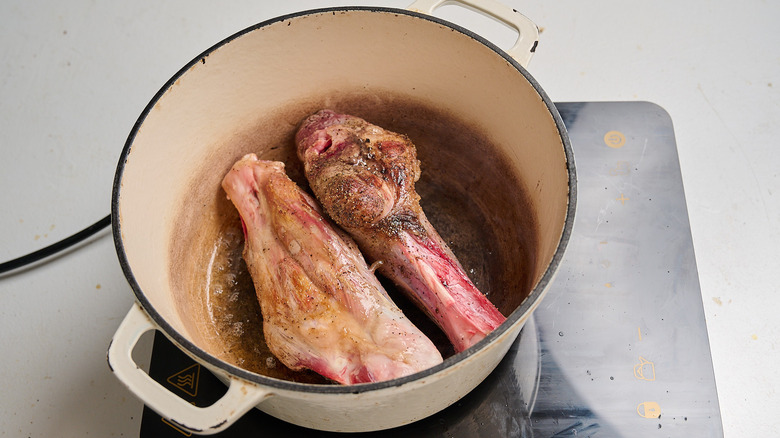
Add the lamb shanks and sear on all sides until browned, working in batches as needed. Remove and reserve on a plate.
Step 5: Soften the aromatics
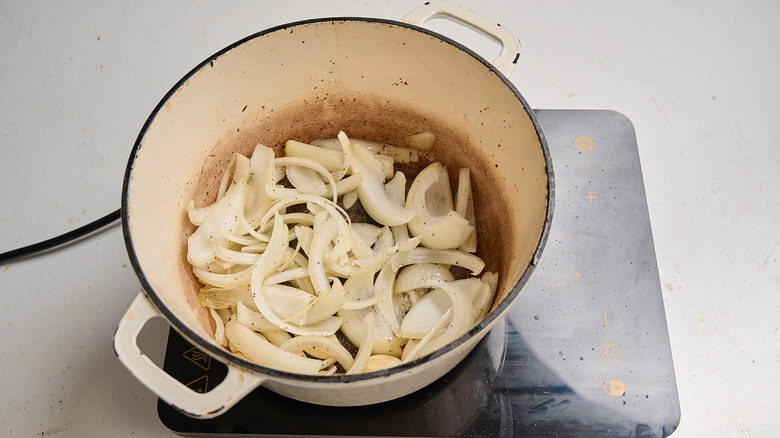
Add the onion and garlic and cook until the onion slices are softened, about 5 minutes.
Step 6: Stir in the tomato paste
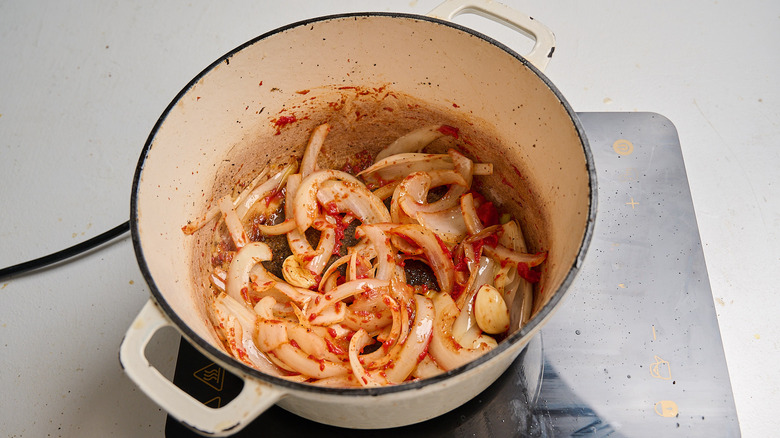
Add the tomato paste and stir to combine, cooking until the tomato begins to stick to the bottom of the pot, about 5 minutes longer.
Step 7: Deglaze and add tomatoes
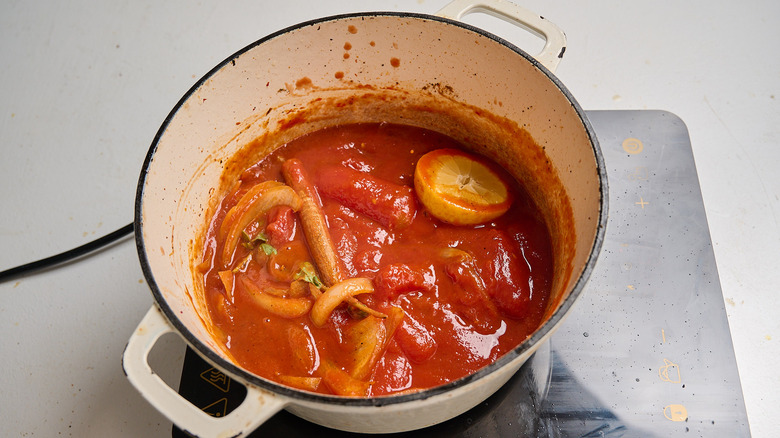
Deglaze with the white wine, stirring to combine. Add the tomatoes, lemon, cinnamon stick, oregano, and cumin and stir.
Step 8: Submerge the lamb in broth
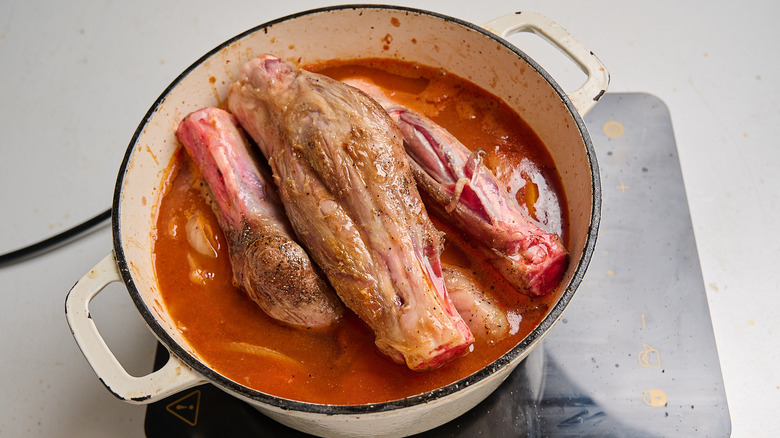
Return the lamb shanks to the pot, then cover with beef broth, submerging the lamb as much as possible.
Step 9: Cover and cook
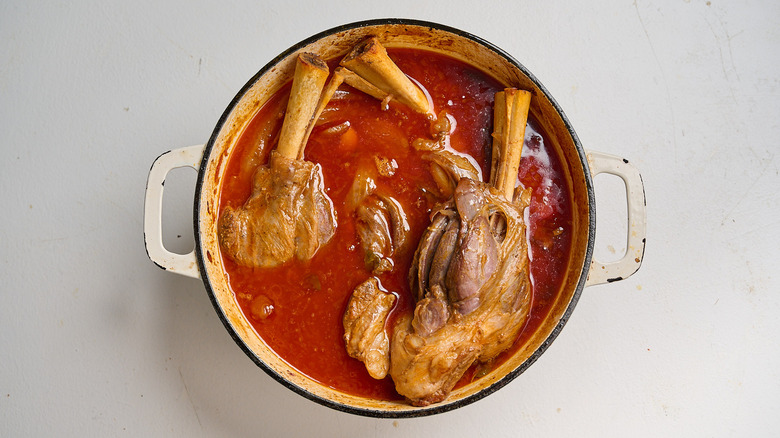
Cover the pot and add it to the oven. Cook for 1 ½ hours.
Step 10: Add olives and continue cooking
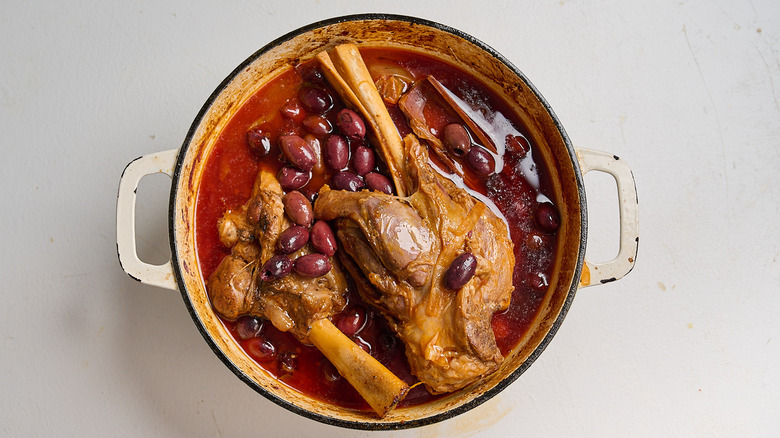
Uncover the pot, add the olives, and cook for 30 to 40 minutes longer, or until the lamb is fork-tender.
Step 11: Serve the lamb shanks
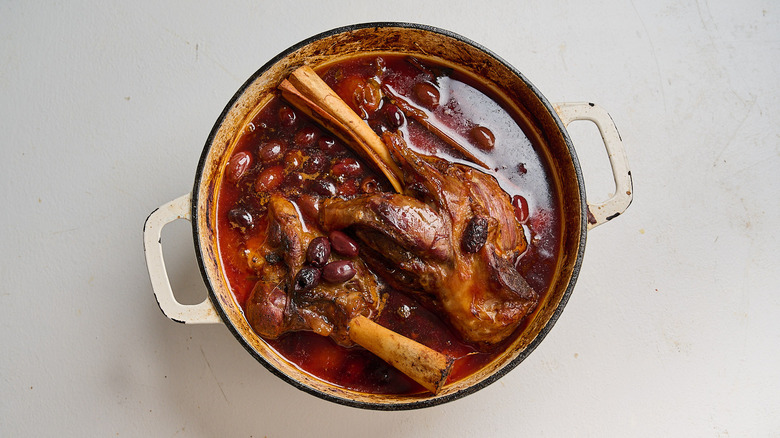
To serve, remove the lemon, cinnamon, and oregano stems from the pot and garnish with parsley.
What can I serve with lamb shanks?
Greek-Style Lamb Shanks Recipe
This Greek-style lamb shank recipe combines meltingly-tender lamb with bold, Mediterranean flavors like tomato, wine, lemon, garlic, olives, and spices.
Ingredients
- 4 (1/2 - 1 pound) lamb shanks
- 1 teaspoon salt
- 1 teaspoon pepper
- 2 tablespoons olive oil
- 1 yellow onion, sliced
- 4 cloves garlic, peeled and smashed
- 2 tablespoons tomato paste
- ½ cup dry white wine
- 1 (28-ounce) can whole peeled tomatoes
- ½ lemon
- 1 cinnamon stick
- 2 sprigs fresh oregano
- 1 teaspoon cumin
- 2 cups beef broth
- 1 cup kalamata olives
- ¼ cup finely chopped parsley
Directions
- Preheat the oven to 350 F.
- Season the lamb shanks on all sides with salt and pepper.
- Heat the olive oil in a Dutch oven over medium heat.
- Add the lamb shanks and sear on all sides until browned, working in batches as needed. Remove and reserve on a plate.
- Add the onion and garlic and cook until the onion slices are softened, about 5 minutes.
- Add the tomato paste and stir to combine, cooking until the tomato begins to stick to the bottom of the pot, about 5 minutes longer.
- Deglaze with the white wine, stirring to combine. Add the tomatoes, lemon, cinnamon stick, oregano, and cumin and stir.
- Return the lamb shanks to the pot, then cover with beef broth, submerging the lamb as much as possible.
- Cover the pot and add it to the oven. Cook for 1 ½ hours.
- Uncover the pot, add the olives, and cook for 30 to 40 minutes longer, or until the lamb is fork-tender.
- To serve, remove the lemon, cinnamon, and oregano stems from the pot and garnish with parsley.
Nutrition
| Calories per Serving | 774 |
| Total Fat | 57.3 g |
| Saturated Fat | 23.6 g |
| Trans Fat | 0.0 g |
| Cholesterol | 224.5 mg |
| Total Carbohydrates | 19.7 g |
| Dietary Fiber | 6.7 g |
| Total Sugars | 8.7 g |
| Sodium | 1,620.1 mg |
| Protein | 68.9 g |

Can I make this recipe with beef instead of lamb?
Lamb shanks are known for their gamey flavor, which means that they taste more earthy, grassy, and robust than a standard cut of beef. You could also describe the flavor as metallic or musky, which is why some people don't like the taste of lamb. While this recipe is designed to work well with the intense flavors of the foreshank, there's no reason to force yourself to like lamb if you don't — you can simply use another cut of meat instead.
If you don't like lamb, you can swap it out of this recipe and use beef short ribs instead. The short rib is a similarly lean, bone-in cut that, like lamb shanks, must be cooked low and slow in order to break down the tough connective tissue. You'll actually follow the recipe nearly exactly, first searing the beef and then covering it with tomatoes and broth and braising it for hours. Because beef takes a little bit longer to cook than lamb, add 30 minutes to the initial cook time, and braise it for 2 hours before removing the lid and cooking it for another 30 to 40 minutes. If the beef isn't falling off the bone after that, continue cooking until the beef is fork-tender.
What can I do if the lamb shanks are too big for the pot?
Lamb shanks are most commonly found at about ½ pound or a little over that per piece, and as such are a fairly affordable cut; however, lamb shanks can be up to 1 ½ pounds per piece, sometimes even including part of the shoulder. If your store sells lamb shanks that are double that, you might find this recipe a little cumbersome to make in one Dutch oven. If yours are large, don't worry — they'll cook the same, taste great, and feed more people, but you'll need to use a few tricks to cook them perfectly.
First, sear each shank, working in batches or using a larger, flatter skillet to sear them faster. Don't skip the sear, which contributes to the lamb's final golden-brown color after braising and coats the pot with meaty flavor. When ready to add all of the shanks to the pot, begin with the largest on the bottom, then nestle the smaller ones around it, with the smallest on top. You may not be able to submerge the one on top at all, and that's okay — covered, it will cook in the steam of the pot, but it's important that you rotate the shanks halfway through. Remove the pot from the oven, remove the lamb shanks, and switch their order, allowing the pieces that weren't submerged a turn in the braising liquid. The good news? Lamb shanks shrink as they cook, so you'll get some of that space back.