

Tarragon: What Is It And How To Cook With It
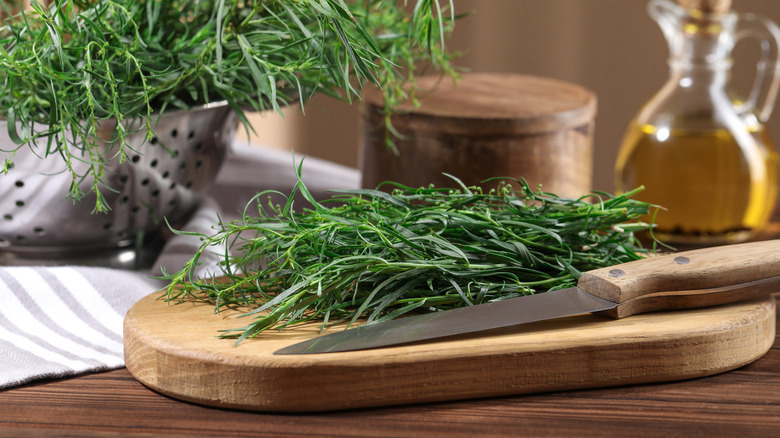
If tarragon isn't already a staple in your kitchen, there are plenty of reasons why it should be. Often associated with French cuisine, this herb has long been prized by chefs for its distinctive aroma. However, tarragon remains somewhat of a mystery to many home cooks, with more familiar herbs like basil, parsley, and rosemary stealing the spotlight.
Tarragon is exceptionally versatile, coming in fresh and dried forms, and offering a delicate yet complex flavor that can enhance everything from chicken and fish to dressings and sauces. This fragrant herb is the perfect tool for adding a touch of refinement to a dish, whether you're whipping up a quick weeknight dinner or crafting an elegant dinner party menu.
In a quest to put tarragon firmly on your radar, we're exploring everything there is to know about this often-overlooked herb. This handy guide covers its unique flavor profile, culinary uses, storage tips, and even some potential health benefits. So, if you've been curious about trying tarragon or simply want to make better use of this herb in your cooking, you're in the right place.
What is tarragon?
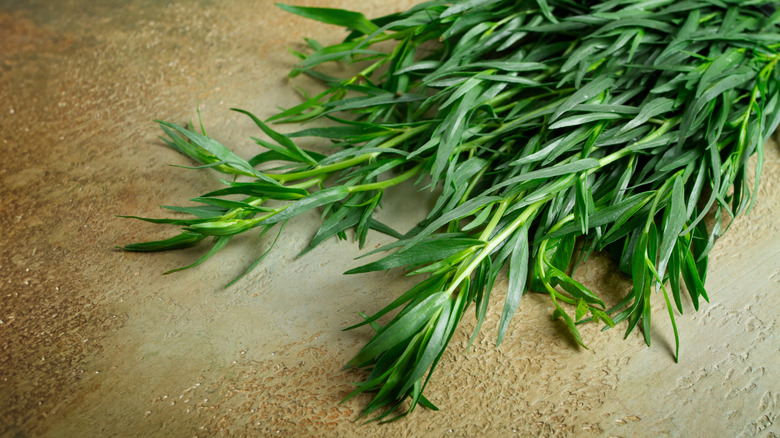
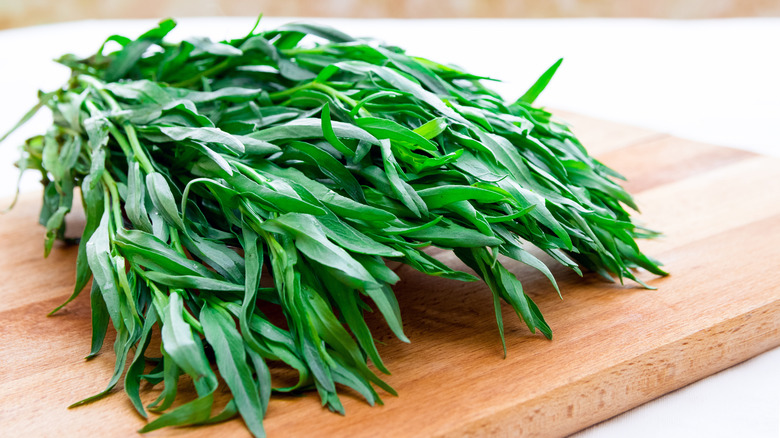
In terms of appearance, tarragon shares some similarities with rosemary, thanks to its long, slender leaves that grow along a central stem. However, tarragon's leaves are broader, softer, and shinier, while rosemary is far more rigid and needle-like. The overall look is more delicate and grassy — a fitting reflection of the herb's more mellow flavor.
The most widely used variety of tarragon is French tarragon, which goes by the botanical name Artemisia dracunculus. Russian tarragon (Artemisia dracunculoides) is much more subtle in flavor and generally considered less desirable in the kitchen.
Used fresh or dried, tarragon brings a distinctive aromatic note to your cooking, building herbaceous depth and adding freshness without overpowering the flavors of other ingredients. It also plays a key role in the classic French blend "fines herbs," which sees the tarragon combined with parsley, chervil, and chives to create a fragrant mix that works beautifully as a garnish for proteins and salads.
What does tarragon taste like?
Tarragon has a subtle yet distinctive flavor, boasting a delicate balance of sweetness, grassiness, and notes of vanilla, citrus, and aniseed. But, if you're not a fan of licorice-like flavors, don't be put off. The overall taste is far milder and more refined than you might expect, adding a gentle aromatic lift rather than an overpowering hit of sweetness.
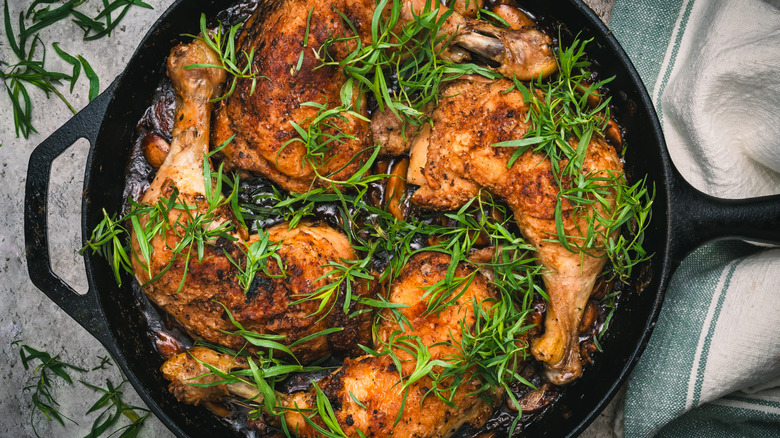
Used correctly, tarragon won't dominate your dish, but instead work to balance and enhance the other savory elements. It pairs especially well with chicken, fish, eggs, and creamy sauces, where its bright, mellow profile does an excellent job of cutting through the richness. Lemon is another ideal accompaniment to tarragon, with the juice and zest amplifying the herb's citrusy notes beautifully. Equally ideal as a fresh finishing touch, or incorporated earlier to let its flavors unfold, tarragon is sure to inject a little je ne sais quoi into your cooking.
Fresh vs. dried tarragon
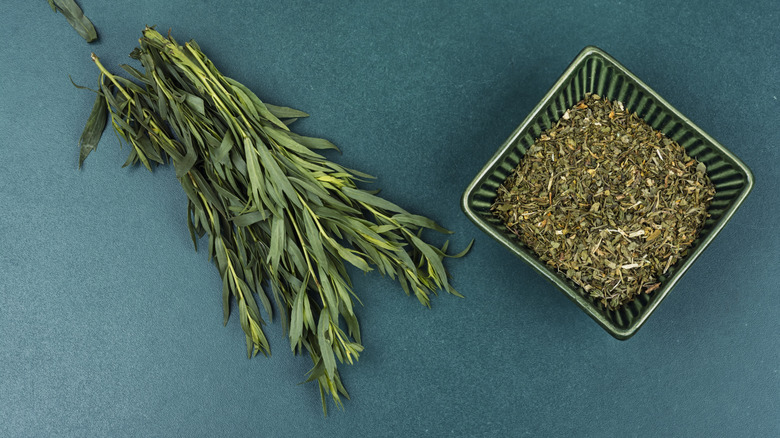
Both fresh and dried tarragon have their place in the kitchen, but each will deliver slightly different results in terms of flavor and intensity. Fresh tarragon is generally considered the superior choice, with a brightness and subtlety that dried versions can't quite replicate. Its soft, sweet aroma makes it an ideal addition to zesty dressings, and the leafy sprigs work great as a garnish, too. However, it's best to avoid cooking fresh tarragon for long periods, as it can develop a bitter taste. To use fresh tarragon, rinse it well and gently pat it dry. The leaves can be stripped from the stem by running your fingers down its length. Then, they're ready for scattering, chopping, or blending.
Dried tarragon, on the other hand, offers a more robust flavor and lacks the delicate appeal of its fresh counterpart. But it serves as a convenient, fuss-free option, requiring zero prep and boasting a longer shelf life. It also holds up better in dishes that require longer cooking times. If you're substituting one for the other, a good rule of thumb is to use around 1 teaspoon of dried tarragon for every 1 tablespoon of fresh.
How to cook with tarragon
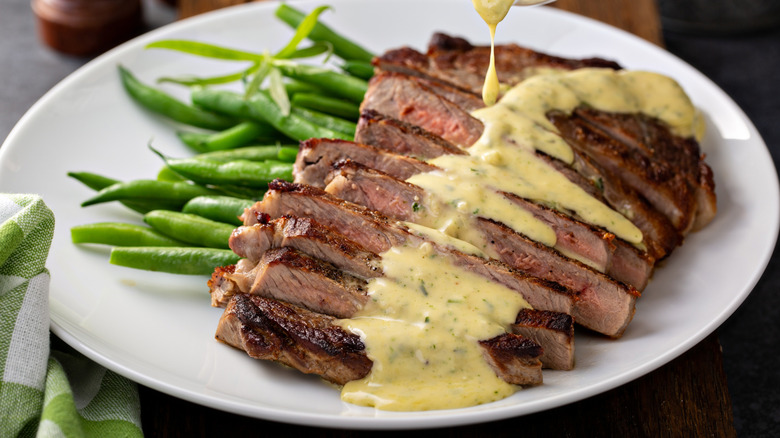
If you're looking to amp up the sophistication factor of a dish, tarragon can help. Its anise-like flavor fits seamlessly into a whole host of savory recipes, adding brightness and depth in a wonderfully understated way, which makes things feel that bit more special. One of tarragon's most famous roles is in a classic French Béarnaise sauce. Here, the fresh, finely chopped leaves add heaps of herbaceous complexity to the rich base of egg yolks, butter, and vinegar. The resulting silky mixture serves as a luxurious topping for steak, seafood, and roasted veggies.
Tarragon also pairs exceptionally well with eggs, where the herb's delicate sweetness works to balance the richness of the yolks. Try scattering the fresh, chopped leaves over an omelette or frittata, or incorporating them into an egg salad for a subtle aromatic boost. The herb's unique profile works great in a chicken salad too, whether you're blending fresh tarragon into a classic lemon-Dijon dressing or scattering it over each bowlful before serving.
A cozy homemade soup will also benefit from a herbaceous lift. Sprinkle in dried tarragon along with other seasonings as you saute the veggie base, or add fresh tarragon to the pot towards the end of cooking. It shines alongside aromatics like shallots, lemon, and garlic, and works particularly well in a hearty lentil soup, introducing a hint of grassy sweetness that makes for a delicious contrast to the mild, earthy notes of the legumes.
Tarragon health benefits
Tarragon's distinctive flavor isn't its only selling point. The herb has also been linked to a range of potential health benefits, so there's even more reason to make it a regular feature in your home cooking. Despite being low in calories, tarragon contains beneficial nutrients like manganese, which supports metabolism and bone health, as well as iron, which plays an important role in red blood cell formation. It's also an excellent source of antioxidants, which help to protect the body's cells from free radical damage.
Some studies suggest that consuming tarragon may help the body to use glucose more effectively. In a small trial, participants who took tarragon supplements before meals showed improvements in insulin sensitivity, indicating that it could play a role in keeping blood sugar levels stable. Other research has highlighted tarragon's potential anti-inflammatory and pain-relieving properties, though these studies have largely been conducted on animals.
Many herbal remedies feature tarragon too, especially those that aim to support digestion and sleep. Some people enjoy brewing the herb in hot water to create a calming tea, while others use tarragon essential oil as part of aromatherapy practices, where its soothing scent serves as a fragrant stress reliever.
Where to buy tarragon
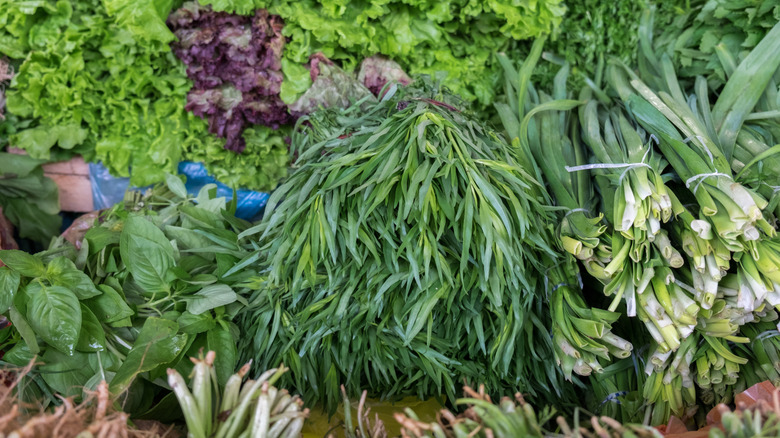
You'll find fresh tarragon in the chilled herbs section of many large grocery stores, usually packaged in small plastic sleeves or tubs alongside other favorites like basil, parsley, and chives. However, if you're struggling to find the fresh variety, dried tarragon is a reliable, shelf-stable alternative. This is generally more widely available and easy to pick up in the spice aisle.
If you're looking to buy fresh tarragon in bulk or source the very best quality produce, consider visiting a local farmers' market or independent greengrocer. Herbs sold here are often fresher and more flavorful, and you might get a better deal, too. For larger quantities of dried tarragon, online stores are your best bet, with many offering the herb at a more competitive price per gram than standard supermarket jars.
When buying fresh tarragon, look for vibrant green leaves that appear perky rather than wilted, with no signs of yellowing. A pleasant, anise-like aroma is another good indicator of freshness, while bunches with visible sliminess or mold are best avoided.
Can you grow your own?
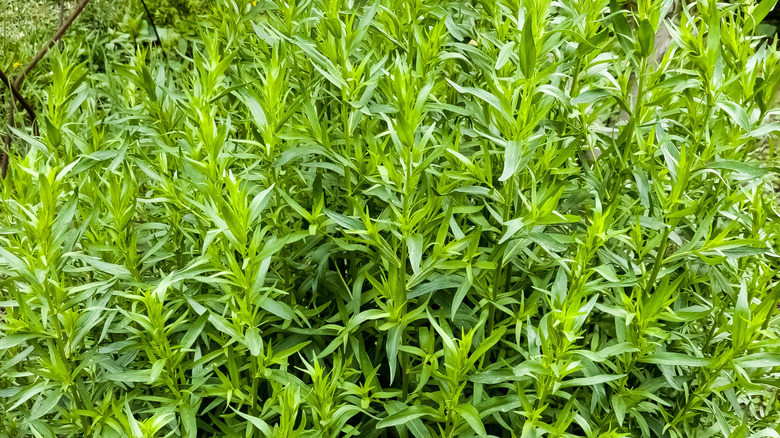
Growing your own tarragon is a rewarding way to enjoy the herb's fresh flavors. French tarragon is the most popular variety used in cooking, but it can't be grown from seeds; it produces sterile flowers and must instead be propagated with root cuttings. It's therefore easier to pick up a small plant from a garden center or purchase one online. Russian tarragon, while less flavorful, is much easier to grow from seeds and can still be a useful addition to your garden.
Tarragon grows in the form of a bushy, upright perennial in zones 4 and warmer. It thrives in well-drained soil and requires plenty of sun exposure. Russian tarragon seeds can be sown indoors or outdoors during springtime, while ready-grown tarragon plants can be transferred to a larger container or raised bed outside in early summer. This herb is relatively drought-resistant, but doesn't do well in cold, wet conditions. It's therefore best to move the plants to a greenhouse or other sheltered area during the winter if possible.
During the growing season, regularly harvesting from your tarragon plant will help it to flourish. Snip off individual stems or hand-pick leaves as needed, and use them in your cooking right away for unmatched freshness and flavor.
How to store tarragon
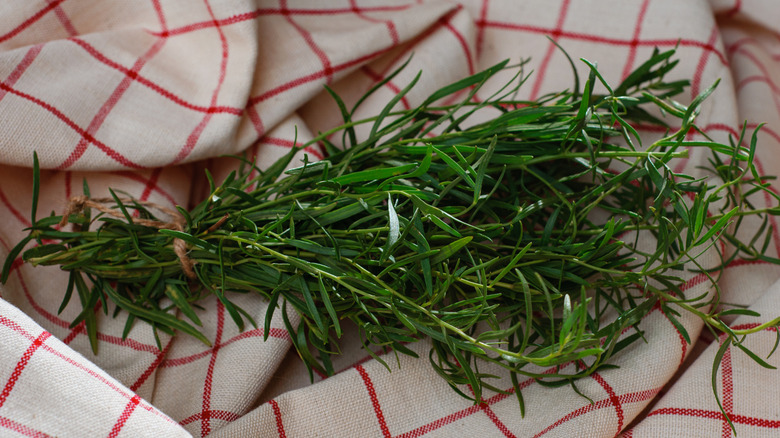
Proper storage is essential for preserving tarragon's freshness, and a few simple steps can help you make the most of this herb's delightful aromatic flavor. More perishable than its dried counterpart, fresh tarragon requires refrigeration. As with most delicate fresh herbs, the best approach is to gently wash the tarragon with cold water before drying it in a salad spinner. Then, you can trim the bottom of the stems and pop the bunch into a jar filled with a couple of inches of water. Stored in the fridge this way, it'll keep well for two to three weeks.
If you find yourself with a surplus of fresh tarragon, freezing is another great option. Just strip the leaves from the stems, spread them out onto a baking sheet, and place them in the freezer. Once the tarragon is frozen, transfer the leaves to a plastic food bag. You can store them in the freezer for up to six months, grabbing a handful here and there for use in sauces, stews, soups, or pastas.
Dried tarragon requires a little less attention. Store it in an airtight container in a cool, dark place, and it'll last for several months. Just keep in mind that while dried herbs don't expire in a traditional sense, their flavor does gradually diminish. So, dried tarragon will likely taste best when used within the first six to 12 months after purchase.
Best substitutes for tarragon
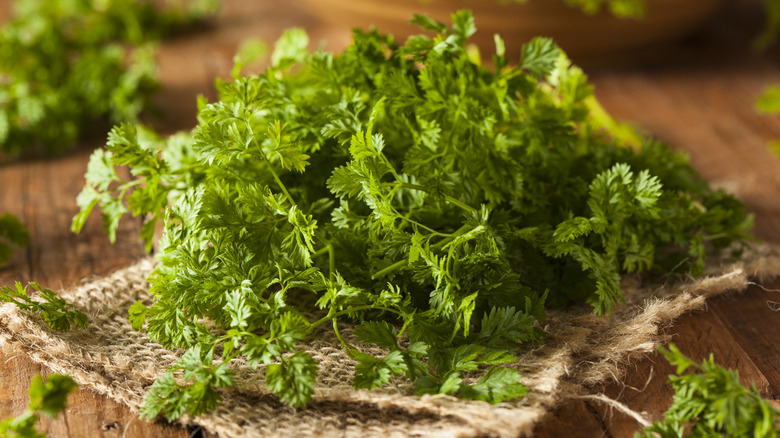
Tarragon's distinctive flavor can be hard to replicate, but several herbs and combinations come close when you're in a pinch. The idea is to aim for something with a hint of brightness and a touch of sweetness or anise-like character that'll lift your dish in a similar way.
One of the best stand-ins is fresh chervil, which is often described as a hybrid of tarragon, parsley, and chives. It's a little milder, but brings a mellow sweetness and layered complexity with hints of anise, much like fresh tarragon. Chervil can be substituted for tarragon in a one-to-one ratio, and works best in fresh dishes like dressings and salads. Dill and basil also make good alternatives. While they lack tarragon's subtlety, these herbs offer bright, citrusy notes that complement similar ingredients. Thai basil, which has a sweet, licorice-like taste, is a particularly good option.
If you're crafting a Béarnaise sauce but don't have tarragon to hand, an inventive approach is to combine chopped parsley with ground cinnamon. Just simmer the two ingredients in a small amount of water to extract their flavors, and use the mixture to finish the sauce. The parsley brings plenty of herbaceous freshness, while the cinnamon provides a subtle, aromatic warmth that mimics tarragon's unique depth surprisingly well.