

Why Meat Became A Must-Have For Boomer Dinners
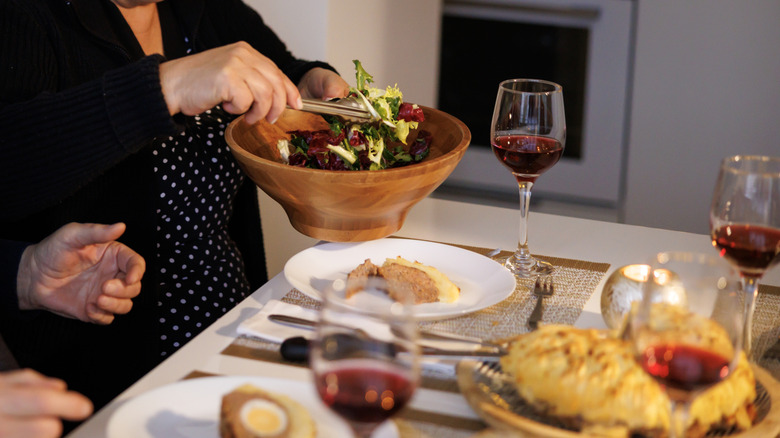
Those Baby Boomers are a unique generation, to be sure. After the bleak years of World War II, the United States had both a population surge and an enormous economic expansion, creating a new middle class that would have cultural repercussions for years to come. Even today, Boomers remain an influential generation — especially when it comes to the dinner table. As a surprise to exactly no one who grew up with Boomer parents, they really, really love their meat. And there's some very good reasons for why.
During the 1930s and '40s, meat was expensive and not always readily available. The Great Depression devastated families economically, so luxury goods like beef, chicken, or pork were saved for special occasions or only used in tiny portions to flavor vegetables and dried staples like beans. Right after that, WWII rolled around, where prized goods like coffee, sugar, and meat were once again rationed to make sure overseas troops had enough to eat.
For people who lived through these hard times (often called the Greatest Generation), meat came to symbolize prosperity and security. So it's no wonder that when the war stopped and people began having kids, families went a little crazy on the meats. There's quite a few outdated Boomer cooking habits, and going whole hog on, well, hogs is one of them. Serving generous portions of beloved Boomer dishes like beef stroganoff and meatloaf was one way for parents to express financial success and stability after years of being deprived. Salisbury steak literally became a status symbol.
Childhood eating habits are hard to break
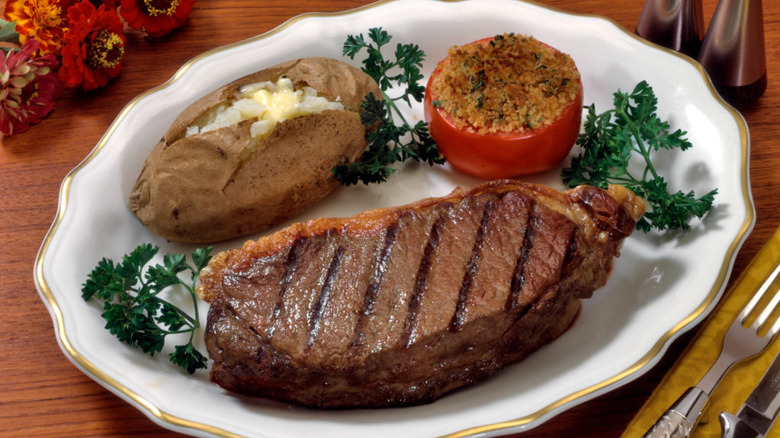
As families began to leave the cities in droves and move out to their suburban cookie cutter cul-de-sacs, this idealized version of the "All-American Family Dinner" centered around a hefty piece of protein, along with a side dish or two. Advertisement, TV programs, and even government guidelines pushed people to get on the meat train, normalizing huge hunks of meat as a part of a balanced, healthy diet. Food marketing also celebrated these protein-maxxing habits, pushing deliciously processed meats like Spam and bologna onto housewives stuck at home with their new TV sets.
Of course, not every generation is a monolith, and there were plenty of Baby Boomers who pushed back on the "meat and potatoes" mantra. As Boomers grew up and left their parent's homes, they began discovering the magic of plant-forward dishes and opting out of mainstream diets. Giving up meat became a key part of the hippie counterculture of the 1960s and '70s, before the '80s reared its ugly head and demanded conspicuous consumption once again.
Perhaps unsurprisingly, a 2023 study from Tulane University on meat consumption showed that Baby Boomer men were still the biggest consumers of red meat, a habit likely left over from a childhood of consuming iconic Boomer dinner recipes still loved today. The times, they are a-changin' though. So far, the upcoming generation of Gen Zers has the highest proportion of vegans, vegetarians, and flexitarians.