

Direct Vs Indirect: Which Heating Method Is Best For Grilling Vegetables
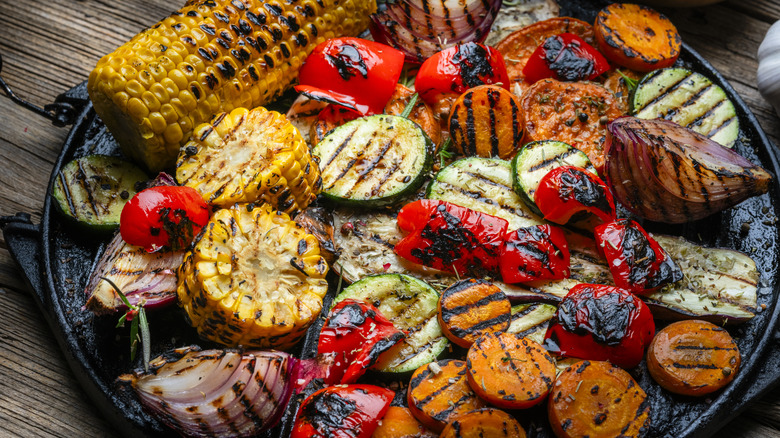
Grilling is a method that benefits veggies as much as it benefits meat, instilling smokiness, char, and a textured tenderness that's hard to recreate with other cooking methods. And we have countless grilled vegetable recipes to try out, no matter the grilling season. While meat is generally hearty enough to withstand direct heat over the grill, most vegetables are decidedly more delicate. Will they burn to a crisp over direct heat or should you take a more indirect approach?
The answer is that vegetables, like meat, need both direct and indirect heat for the best possible outcome. Direct heat, placing the veggies directly over the flame or hot coals, is needed to create those perfectly charred exterior grill marks that bring both smokiness and a slight crispy crust. However, you shouldn't grill vegetables entirely over high heat because the exterior will burn before the interior has time to cook. So, after searing both sides of your veggies for a few minutes, you'll want to transfer the veggies to indirect heating by placing them on the side of the grill that doesn't receive the full brunt of the heat source. Indirect heat softens the interior of the vegetable after you've charred the exterior. Of course, the time each veggie spends over indirect and direct heat depends on the type of vegetable in question as well as the thickness of the cut. The thickness matters more than you might think, so finding a thick and uniform cut is a crucial grilling tip.
More grilled vegetable tips and techniques
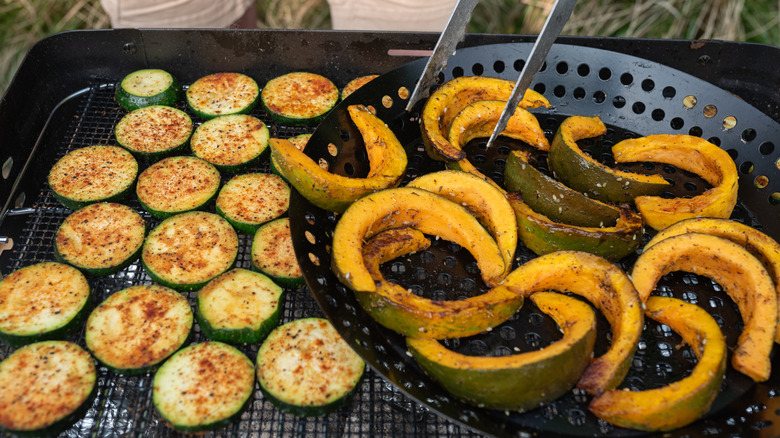
A combination of direct and indirect heat is crucial for successful grilled vegetables, but there are so many other techniques to further flavor and tenderize vegetables both before and during the grilling process. For vegetables with high water contents like zucchinis and eggplants, salting or dry bringing them will help tenderize them and draw out excess water. Wet brining cruciferous veggies like broccoli will also work wonders. Root veggies like carrots, potatoes, and beets will benefit from a parboil to minimize grilling over indirect heat. Even more delicate veggies like green beans will benefit from blanching so that you can quickly char them over direct heat and skip the indirect heat altogether. No matter which route you take, be sure to brush the grill grates with a high smoke point oil like avocado oil or canola oil before adding your vegetables. For that matter, the veggies themselves could do with a coating of oil, which will help them char but will also act as an adhesive for spices and seasonings.
Heat doesn't just happen over the grill. Residual heat from the veggies once you take them off the grill continues to cook them. So, if you take the vegetables off the grill while they're still a bit al dente, you can use their residual heat to finish them off. Simply place the veggies in a metal or glass bowl, cover them with foil or a top, and within minutes, they'll be perfectly tender.