

Why Store-Bought Yum Yum Sauce Might Not Taste Like What Restaurants Serve
We may receive a commission on purchases made from links.
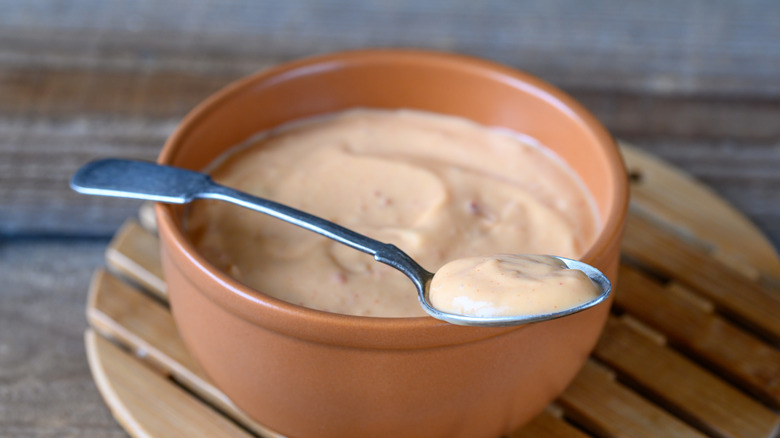
Even if they're all (arguably) pretty yummy, not all yum yum sauces are created equal. Yum yum sauce (aka white sauce or shrimp sauce) is a mayonnaise-based Japanese hibachi sauce. This creamy, tangy, orange-pink condiment comprises a mixture of mayonnaise, plus tomato paste (which creates the sauce's signature pinkish hue) and some combination of acids and seasonings. Sugar, garlic, hot sauce, salt, and pepper are common. Although, exact recipes vary — and foodies can tell.
A Reddit thread inquires why store-bought yum yum sauce never tastes like it does from a restaurant. The poster notes that the closest they can find is Terry Ho's, "but it's still just a smidge off." The thread's top comment notes that restaurants often make their own condiments from scratch, which saves money on food costs and also enables establishments to develop their own idiosyncratic proprietary recipes. Still, the point remains that store-bought yum yum and the condiment served tableside at hibachi restaurants are seldom exactly the same.
One TikTok shares a side-by-side taste-test of four different store-bought yum yum sauce brands, and notes that many of the brands they tried were too sweet. The taste-tester even likens one offering to sweet-and-sour sauce more than a classic hibachi yum yum. On the flip side, the video also includes a taste of the less-sweet G. Hughes Zero Sugar Yum Yum Sauce, but notes that this condiment was texturally on the thinner side and didn't have a lot of flavor. So, what's the deal?
Restaurants often make their own condiments from scratch
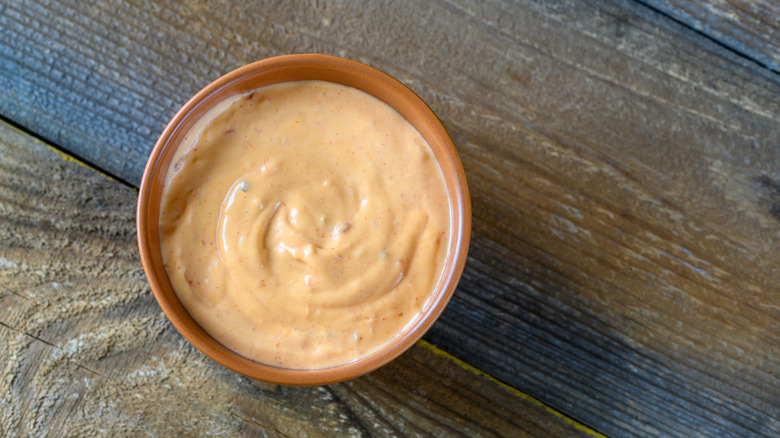
Let's take a closer look at a few popular store-bought yum yum sauce brands to break it down. Pioneer brand Terry Ho's Yum Yum Sauce, for starters, includes the foundational mayo, water, sugar, tomato paste, garlic, salt, and black pepper base. It also adds paprika and white pepper into the mix. Another popular brand, La Choy Yum Yum Sauce, follows a similar lineup. But, where Terry Ho's uses distilled vinegar and mustard seed to make its mayo, La Choy uses apple cider vinegar and no mustard seed. Also uniquely, La Choy further adds onion powder and Dijon mustard into the mix — nuanced differences that create distinct flavor profiles. Another restaurant-inspired, store-bought yum yum sauce offering by Bibibop Asian Grill adds soy sauce and butter, forgoes the mustard entirely, and uses hot sauce made from red jalapeno peppers instead of aged cayenne peppers, like Terry Ho's and La Choy.
Ultimately, maybe some folks are simply accustomed to the unique yum yum sauce they know from their favorite local hibachi joint. If a beloved, familiar restaurant uses sesame oil, for instance, in its version of the condiment — and store-bought versions typically omit sesame oil — then foodies expecting a certain taste might feel as though they're not really eating yum yum sauce if a key ingredient (like sesame oil) isn't present in the mix, or that the sauce is missing something.
Make your own yum yum sauce for maximum customizability
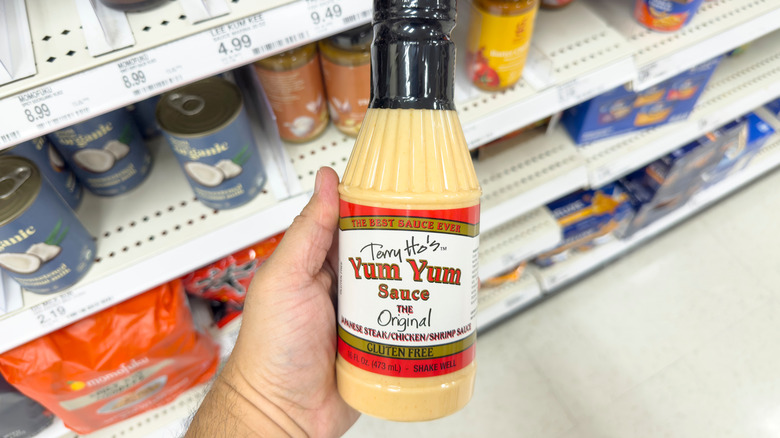
It's also worth noting that sauce pioneer Terry Ho's pokes a stark hole in the "store-bought yum yum doesn't taste the same" argument. The eponymous Ho is a multi-location restaurant owner, owning upwards of 20 eateries across the South, who began bottling and selling the widely-popular yum yum sauce sold at his restaurant Hibachi Express, which opened in Albany, Georgia, in 2003. As Ho himself tells Garden & Gun, "You'd have somebody fill a 32-ounce cup [with the sauce], and before they got out of the restaurant, they'd be pouring it onto their food. I thought, 'Wait a minute. Maybe we can bottle this thing.'" The condiment is now a grocery store staple nationwide. According to Ho, his signature condiment's roots are heavily influenced by the flavors beloved by his initial fanbase in the American South, fused with the mayo-based condiments ultra-popular in Japanese culinary tradition. All of this is to say, as its name suggests, "yum yum" sauce is designed to please. Enjoy it however you like it.
To get the closest to restaurant-style yum yum, commenters on one Facebook post recommend making your own version of the condiment at home (or else physically picking up a tub of the real-deal from your local hibachi joint). Here at Tasting Table, our homemade yum yum sauce recipe includes a fairly minimal lineup of mayonnaise, ketchup, rice vinegar, sugar, and sriracha — but feel free to customize as you please from there.