

Gumball Machines Used To Be The Forefront Of Every Grocery Store. Here's Why They Disappeared
We may receive a commission on purchases made from links.
An ode to you, you jawbreakingly-tough spheres of technicolor chewing gum. Gumball machines were once situated at the front area of seemingly-every drugstore, supermarket, shopping mall, and movie theatre in the U.S.. But, now, they've mostly disappeared. What happened?
The coarse concept of the vending machine dates back to ancient times, but to foodies today, gumball machines were a fixture of grocery trips during childhoods from the '50s through the early 2000s. The modern gumball machine has been sitting near storefronts since the 1910s, and by the middle of the century, kids at supermarkets nationwide were "qwazy" for Quisp cereal and eager to spin the machine knob for Double Bubble gumballs. No audience-engaging theatricality was spared; some taller gumball machines shot a single gumball down a spiraling slide, which eager consumers could view on its descent through the machine's glass pedestal base.
From a proprietary standpoint, gumball machines and coin-operated mechanical horse rides grabbed the attention of kids, tugging both at mom's skirt hem and at her wallet. Plus, parents were able to use the promise of the gumball machine on the way out of the supermarket to incentivize good behavior during the weekly grocery trip. A Reddit thread in r/70s asks, "Whatever happened to gumball machines? They were the highlight of my being dragged to the store." By the 1980s, gumball machines had reached their apex. However, to understand the decline of the gumball thereafter, it's worth noting that grocery shopping looked pretty different during the '80s.
Massive cultural decline in socializing in public
In the '80s, grocery shoppers could leisurely smoke a cigarette while they browsed, or play an arcade game, or flip through a wall of newly-released magazines. Furthering this unspoken invitation to "linger in public" (and spend all your pocket change), "mall culture" concurrently emerged in the '80s as folks hung around shopping centers on weekends and evenings after school. These malls were prime real estate for even more gumball machines. But, today, modern consumers do much of their shopping online — which extends to the grocery realm. Opting for curbside pickup negates the need to bribe junior with the promise of a gumball to behave as you shop.
Perhaps one of the biggest social influences on the decline of the gumball machine is the fact that the era of "hanging out" in public spaces is dead in America. This social (or lack thereof) trend began sometime around the 1990s, according to sociologist Robert Putnam's "Bowling Alone." Another Reddit post notes the prevalent sitcoms from the '90s ("Friends," "Seinfeld," "Cheers") and their abundance of scenes with "people in their mid-20s to 30s just kind of hanging out. Coffee shop[s], bars, parks, apartments," and inquires, "Has there been just a general decline of casual, unstructured 'hanging out'?" Indeed, messaging on social media has replaced knocking on a friend's door to see if they want to kick it. Where are you going to organically bump into a gumball machine during the course of your day?
Gumball machines raise concerns about germs
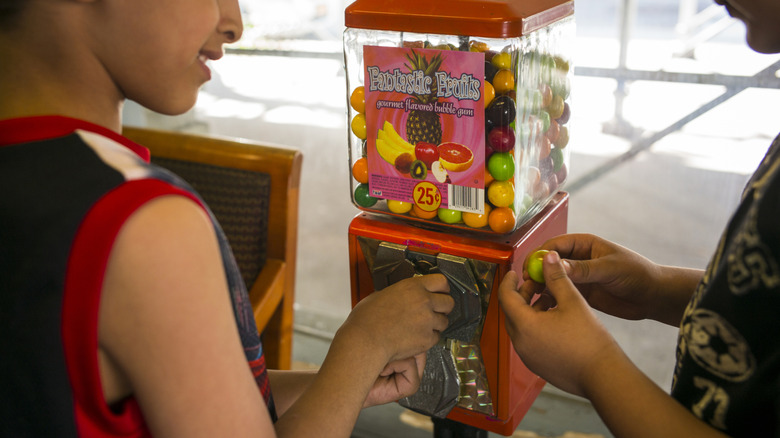
Other shifting consumer habits have led to the eventual fall of the gumball machine. Before debit card dominance and tap-to-pay, shoppers were buying groceries in cash — which meant loose quarters floating around a jeans or coat pocket. Beyond cashless society, a greater focus on health-consciousness led shoppers to two key conclusions: You really can't tell how long a gumball has been sitting in that machine, and the dispenser is almost certainly covered in germs. And, does that petri dish (we mean "gumball machine") get cleaned? Ever?
As inflation spiked and the purchasing power of the quarter fell lower and lower, gumball machines are no longer the profitable venture for store owners that they once were. Also, nowadays, purchasing a new machine part or even a quick repair means recruiting the help of a specialty gumball machine operator, which can get costly. The final nail in the coffin for gumball machines was the COVID-19 pandemic, which spelled increased health and hygiene concerns from which this communal gum-dispenser couldn't recover. The pandemic also pushed many Americans toward becoming "homebodies," inspiring even less desire to linger in public. Meanwhile, post-COVID price spikes make the cost of casually occupying public spaces largely unattainable (if you want to stand around, you've got to buy something).
Today, penny machines are seldom-spied, or else the fiercely protected ephemera of vintage shops and antique stores. To many, their "third place" is "on my smartphone," the groceries are getting delivered to the house — and, by extension, there's just a diminished need for gumball machines ... which are honestly kind of gross, when you think about it.