

Why Beef Tallow Isn't Ideal For Making Duck Confit
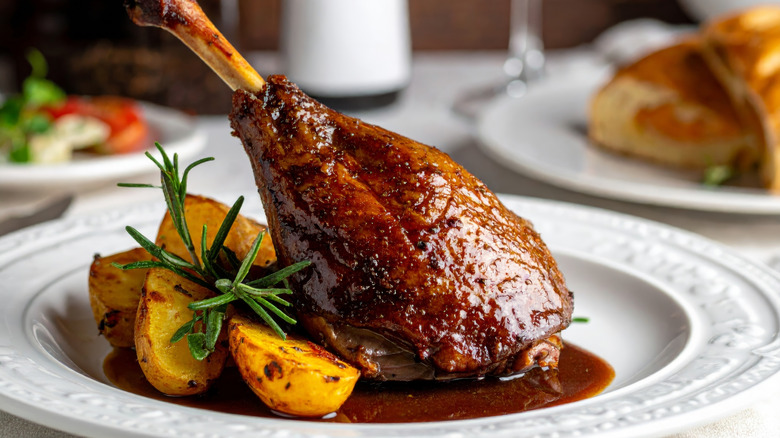
Duck Confit is a classic French dish that involves cooking the salt-cured duck in duck fat for a long time at very low temperatures. The result is delicious, moist meat that falls off the bone and melts in your mouth. The method was originally used in the pre-refrigeration era to preserve duck legs from spoiling, adding weight to the theory that necessity is the mother of invention. While the cooking process traditionally uses duck fat, substitutions are not unheard of.
Lard is considered an acceptable swap for the duck fat, as are olive oil and canola oil. But a seasoned chef told Tasting Table that he would stop short of using beef tallow to make duck confit. "Beef tallow would overpower the flavor of the duck," said chef de cuisine of Bresca in Washington, D.C., Garrett Brower. "Duck fat is ideal, but if unavailable I would recommend a neutral vegetable oil with some aromatics like thyme, black pepper, bay leaf, and onion brûlée."
Unlike chicken or turkey, which are fairly neutral, duck meat has an intense, gamey flavor that leans closer in profile to red meat than white. This is why some of the best ways to add flavor to roast duck feature sweet ingredients like oranges, honey, and pomegranate. This is also why throwing the intense, meaty flavor of beef tallow into the mix would be a mistake.
Key tips to get your confit right
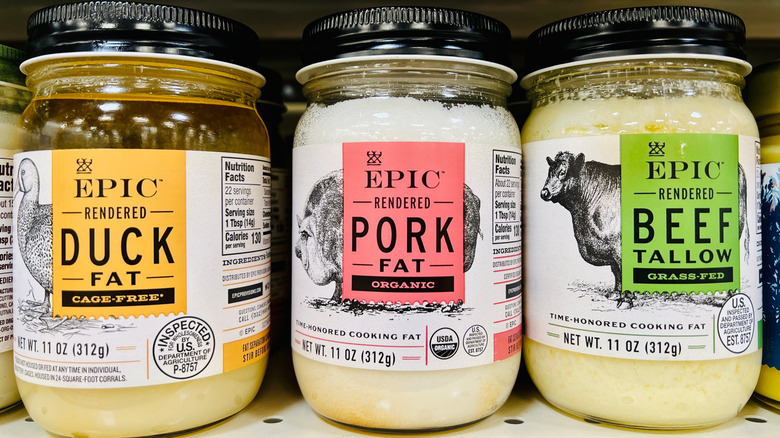
There are other big mistakes you can make with duck confit, including cooking the duck at too high a temperature or not curing the meat before cooking. But when done right, the result is spectacular. Having said that, the techniques involved aren't actually that complicated. The first step to making the best duck confit is curing the duck. The next step is to melt the fat with aromatics and slowly cook the duck meat, maintaining a temperature between 200 and 225 degrees Fahrenheit.
This process, which can take more than three hours, is how peasant food becomes fit for a king. The tallow lying in your refrigerator may not be the right fit for it, but it remains a versatile fat that adds character to many other dishes. In fact, you should consider leveling up frozen French fries with a dollop of beef tallow to serve as a side for your confit duck. Or if you're reveling in the low-and-slow zone, use the tallow to make perfect 15-hour potatoes instead.