

The Very First Thing To Learn About Your Kitchen Before Making A Countertop Garden
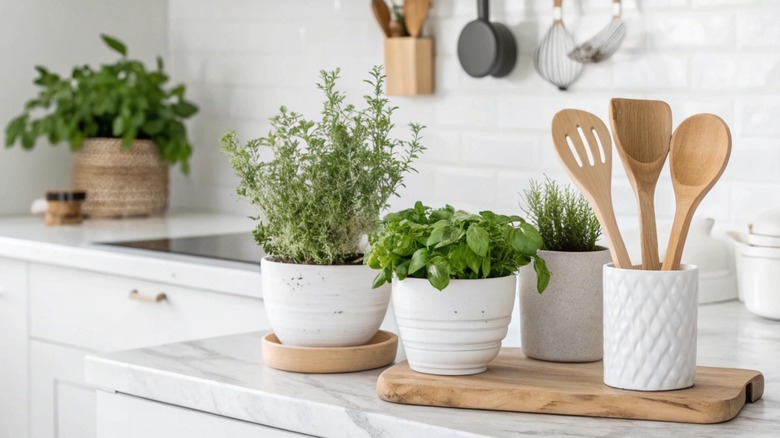
Anyone with a green thumb but no useable outdoor space will understand the appeal of building a countertop garden. With a few pots, and significantly less digging, you can have herbs and vegetables readily available in your kitchen. You might not be feeding the whole family with what you grow, but that fresh element can make all the difference in your cooking. Growing your herbs and vegetables indoors might also be the only option if you live in a cold climate or want fresh produce during winter. Where a countertop garden won't help you out is when it comes to light. Your plants might be protected from the elements, but they still need sunlight to grow, and by being inside they're getting a lot less of it.
Before buying any seeds or attempting to regrow kitchen scraps, you need to get a realistic idea of how much direct sunlight your countertop gets each day, as this will determine what you can grow. Windowsills (especially, south-facing) are often where you'll get the most sunlight, but don't overlook vertical space. Hanging plants or putting them on high shelves might help you catch more of those afternoon rays.
For kitchens that don't get any direct light, or if you have your heart set on something that requires a lot of sun, artificial lights will be essential. Your overhead lighting won't cut it here — you'll need something that emits the correct strength and spectrum of light.
Lighting requirements for your countertop garden plants
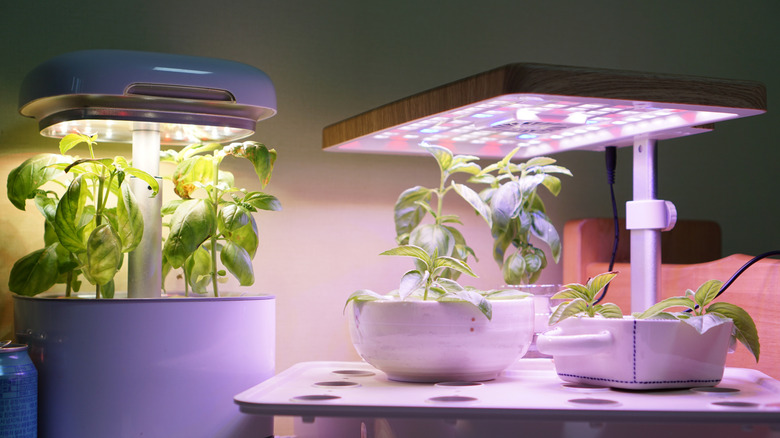
Once you have a good idea of how much light you're working with, you can decide on the best seeds to grow in your kitchen. Edible plants in general need more light than regular houseplants, but there are some that will tolerate low-light situations. Microgreens are the perfect choice for dim kitchens, and are also a good beginner option. They're packed full of nutrients, and some varieties only need a week or two from planting to first harvest. Herbs that would be grown in the shade outdoors such as mint and chives can transfer very well to a low-light indoor setting, too.
Leafy greens are another good option for a countertop garden if you have a more moderate amount of natural or artificial light to work with. Think: lettuce, arugula, kale, and spinach. Though these options can tolerate receiving very low amounts of direct light, they do better with indirect light, but need more of it — around 4 to 6 hours.
For fruiting vegetables such as tomatoes or chilis, you're going to need a very bright kitchen and possibly supplemental light. Both peppers and tomatoes need 6 to 8 hours of direct sun each day in order to develop fruit, but they thrive with more. If you're using grow lights, you'll need to be aware that they aren't as strong as sunlight, and these plants may need 14 to 16 hours of artificial light.