

Avoid These 9 Mistakes When You Buy Blueberries
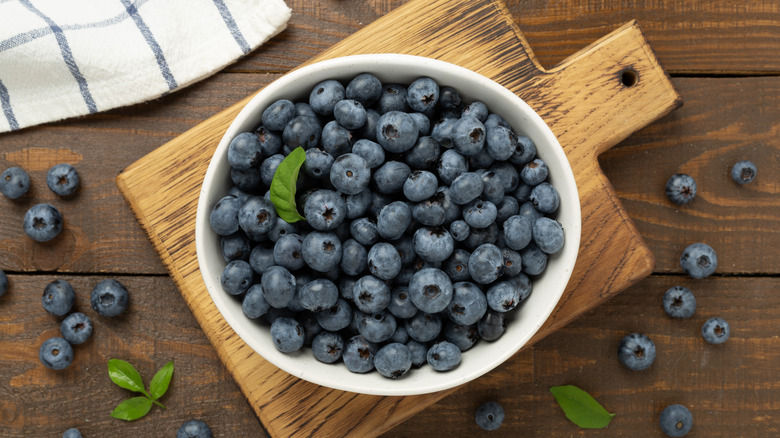
When the weather starts getting warmer, the trees turn bright and green, and you're looking for lighter, fresher foods to eat, you know that you're coming up on arguably the best produce season of the year. Many different fruits and vegetables come into season during the summer months, but blueberries happen to be one of our favorites. First of all, they're really good for you. They're high in antioxidants, and they're believed to improve memory. These berries are also low in calories and may be able to lower your blood pressure. But the main reason to love blueberries is a simpler one: They're juicy and delicious.
That being said, it can be a real bummer when you get a bad batch of blueberries. That's why we talked to four blueberry experts to learn about the mistakes you should avoid when buying them if you want to get the freshest, tastiest berries possible. Dr. Mario Hupfeld, food safety expert and co-founder and CTO at NEMIS Technologies; Florencia Cusumano, head chef at Butler bakeshop; Sapana Chandra, recipe developer and food blogger at Real + Vibrant and cookbook author of "Plant Power Bowls;" and Meaghan Ormsby, MS, RDN, wellness travel expert, and founder of The Nutrition Travel Exchange give us the 411 on some of the most common blueberry-buying mistakes so you can avoid them the next time you go produce shopping. Then, check out these summer berry recipes for new ideas for ways to use your fresh blueberries.
Assuming that bigger blueberries will taste better
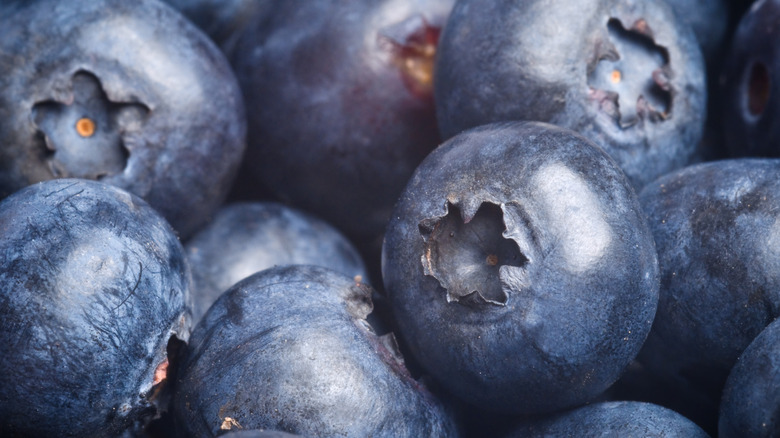
It can be difficult to guess which blueberries will taste best when you're looking at which ones to buy from the farmer's market or the grocery store. And since bigger berries might look juicier and more appealing, there are a lot of shoppers who may specifically opt for larger varieties simply because of that visual factor. However, that's not always the best way to do things when it comes to blueberries.
According to Florencia Cusumano of Butler, judging berries only by their size is a big mistake. "Bigger isn't better here," she says. "Oversized blueberries can be watery and dull in flavor, while smaller ones often carry a more concentrated sweetness." Sometimes, those smaller berries also have a lovely tang to them, which is appealing to those who tend to like blueberries for their tartness rather than their sweetness alone. And wild blueberries, which are often celebrated for having the most concentrated berry flavor, are usually really tiny. Don't assume that you're getting an inferior product just because the blueberries you're looking at are smaller in size.
Buying blueberries that have juice or moisture at the bottom of the container
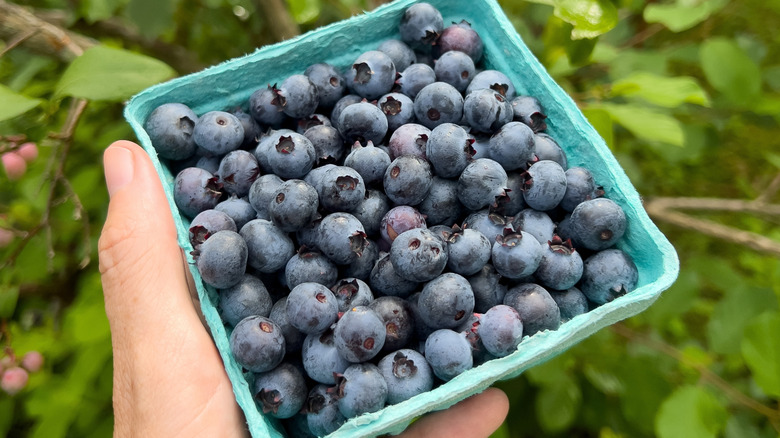
When you're shopping for blueberries, you're probably focused on the fruit itself. Of course, that's what you should look at first, but it's not the only indicator of the quality of blueberries you're getting. You should also take a close look at the containers the blueberries are sitting in. That's because opting for a container of blueberries that has moisture or juice at the bottom is a sign that you're not getting the freshest possible product.
When asked about red flags for the fruit, Dr. Mario Hupfeld of NEMIS Technologies replied that you don't want to see moisture in the blueberry container. "It gets worse if there's juice at the bottom, because that's where all the bits that start breaking down will often collect," Hupfeld says. Is the container leaking? Then that's a great sign you shouldn't buy it. But even if there's just juice pooling in the bottom of the container, you're probably better off finding other berries. "Always look at the bottom of the pack first," says Hupfeld.
Thinking that they'll get sweeter after getting them home
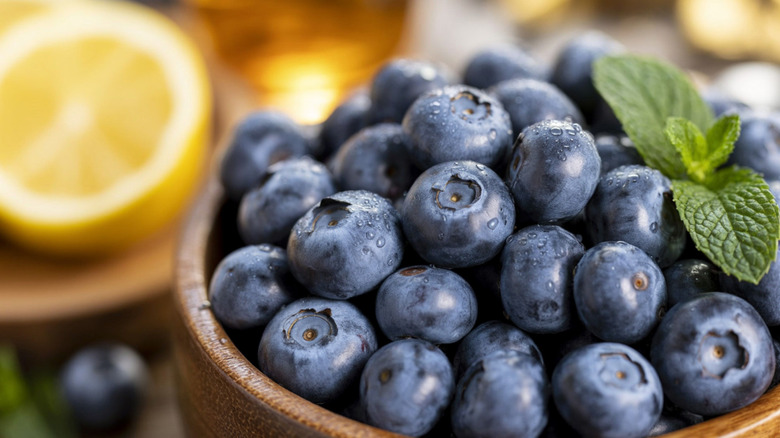
If you're an avocado lover, then you know how it feels to go to the grocery store at the beginning of the week to pick out avocados at varying levels of ripeness. Maybe you want one that will be ripe for tomorrow's meals, or you might want some that won't ripen for a few days, since you don't want them to go bad before you get around to eating them. But blueberries aren't the same kind of fruit as avocados, and treating them the same way is a mistake.
"When it comes to blueberries, shoppers often mistake them for a forgiving produce ingredient like avocados or bananas, and think that blueberries are something that will sweeten once you get home. They won't," says Florencia Cusumano. Instead, blueberries have to ripen before they're picked (and, interestingly, not all of the berries on a single plant necessarily reach ripeness concurrently). This is why it's important to pick solid blueberries from the jump. "Blueberries are what they are the moment you pick up that carton, so the first rule is simple. Pick the best blueberries at the store," says Cusumano. "If they look lackluster, they will taste that way too."
Not checking the container for mold
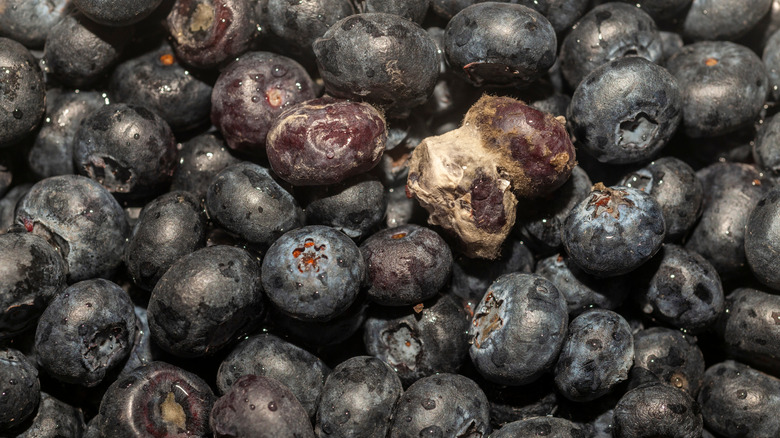
Real blueberry lovers know that, unfortunately, blueberries tend to go bad quickly. Keeping them dry is a good way to ensure that they last for longer than they otherwise would, and avoiding washing them until you're ready to eat the berries is also key. But unless you eat your berries relatively fast, there's a good chance that you've had a carton of them go moldy in your fridge before. This is always a huge bummer, especially considering how pricey blueberries can be.
But since blueberries often go moldy quickly, you could even make the mistake of buying a container of blueberries that's already started to mold. "Always inspect the bottom of the container for signs of mold," says Sapana Chandra of Real + Vibrant. Doing so could prevent you from spending money on blueberries that have already gone bad. However, if you notice that a few berries are moldy after you have already brought them home, you're not totally out of luck. If there are only a couple of moldy berries, you can pick them out and still enjoy the rest of the container.
Buying blueberries that are already wrinkled
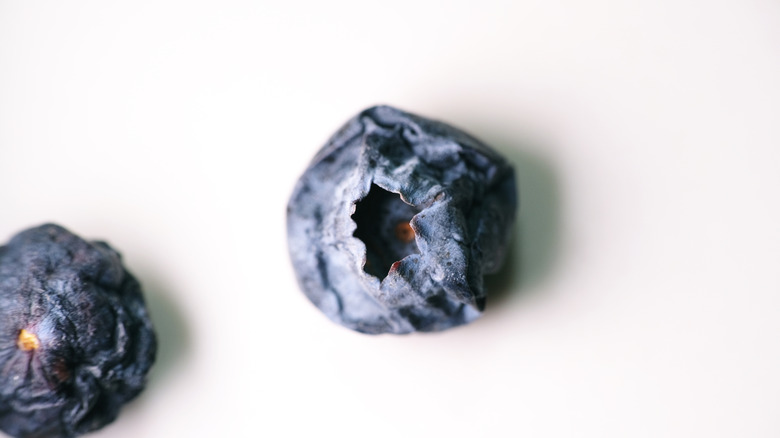
We already know that moldiness and moisture are both indications that you're getting berries that are less than fresh. But there are a few other major indicators that blueberries may not exactly be in their prime. One of those indicators is the quality of the blueberries' skin. If it's tight and smooth, that's a good sign. But if they're wrinkled? It's probably a mistake to buy them.
"Try to avoid choosing soft or wrinkled looking blueberries," says Meaghan Ormsby of The Nutrition Travel Exchange. "Wrinkled blueberries will be less juicy and soft blueberries are less fresh, so look for plump and firm blueberries." Now, are wrinkled blueberries going to hurt you? Probably not. Wrinkles in blueberry skin generally just mean that the berry has lost some moisture. But it's also an indicator that the berries are starting to go off, so make sure to look for mold and sliminess if you notice that they've started to shrivel. If you see those tell-tale signs of spoiling, then it's definitely time to toss them.
Going for blueberries that look shiny or polished
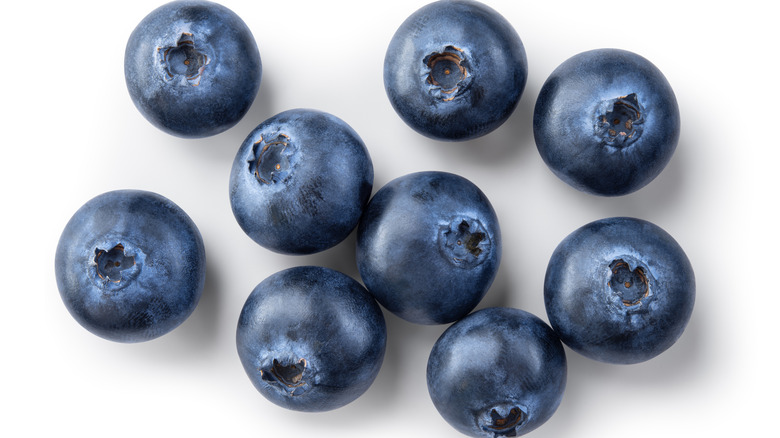
Everyone wants their fruit to look as appetizing as possible, and when you're looking for blueberries, you may be attracted to those that look kind of shiny. However, these actually aren't the freshest ones of the bunch, and opting for them over dustier-looking berries is a mistake.
"Fresh, high-quality blueberries have a very specific look and feel," explains Florencia Cusumano. "Look for a dusty, velvety blue with a natural silvery bloom." That bloom is actually a good sign. It's a sort of protective coating for the blueberries, preventing them from being damaged by UV rays. It also prevents the berries from shriveling due to the loss of moisture. Therefore, according to Cusumano, that dustiness is actually an indication that the berries are fresh and ready to be eaten and that they haven't been damaged during handling. "If the berries appear shiny or overly polished, they're likely older," she says.
Buying blueberries in containers that don't have any ventilation
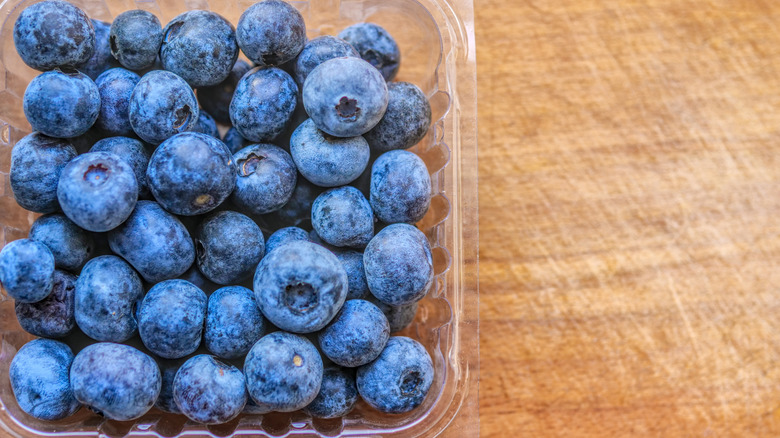
Food packaging can create visual appeal, especially when it comes to processed food products. But more often than not, with produce, food packaging needs to be functional. This is why you'll generally see blueberries being sold in containers that have plenty of holes or slits in them to allow for more air flow. Buying blueberries in containers that don't have any ventilation at all, then, can be a mistake.
"Choose blueberries in containers with ventilation holes, which allow excess moisture to escape and help keep the blueberries fresh longer," advises Sapana Chandra. If a blueberry container doesn't have any ventilation, there could be spoiled berries that you can't see at first glance. Choosing ventilated packaging is important when it comes to the packaging the blueberries are sold in, but it also matters when it comes to food storage in your own fridge. Make sure to keep your blueberries in the ventilated package they came in or transfer them to one that provides a similar level of airflow.
Opting for berries that smell sour
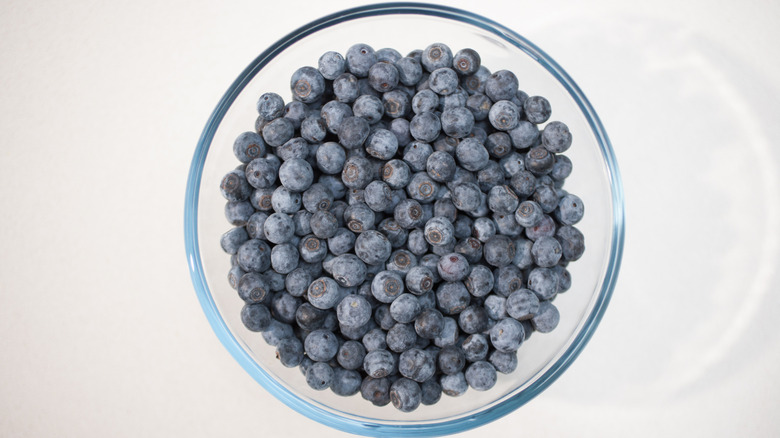
We've talked a lot about taking a careful look at the appearance of blueberries to determine whether they're fresh or not, but using your other senses is just as important. Smell can be a strong indicator that your blueberries are starting to go off, so it may be worth it to take a whiff. If you notice an unpleasant, sour smell in a container of blueberries — you know, like the smell you encounter when you've let something get a bit too ripe in the fridge — that's a good indicator that it's a mistake to buy them.
"Trust your nose," says Florencia Cusumano. "If there's any hint of mustiness when you open the lid, walk away." Often, that musty smell will accompany mold, moisture, wrinkling, or other signs of spoiling, so it's a good idea to use all of your senses at once. But smelling your blueberries will give you one more indicator about whether you're getting fresh produce or not. "Great blueberries smell clean and faintly sweet, but never sour," says Cusumano.
Assuming that you absolutely have to buy organic
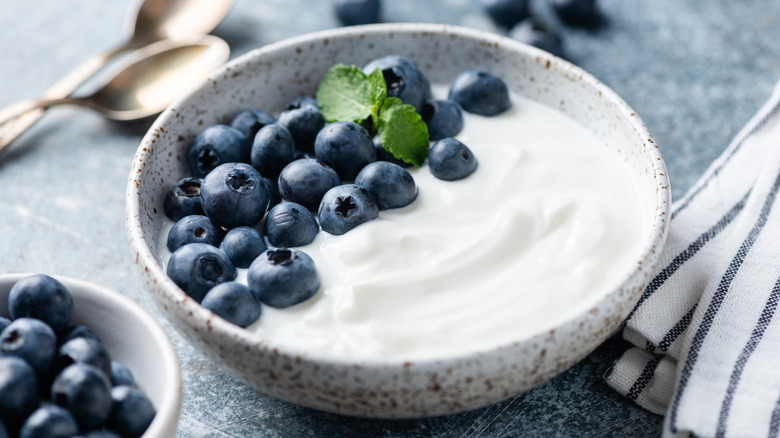
Many people worry about whether they need to buy organic produce, including blueberries, at the grocery store. Oftentimes, prices for organic blueberries are meaningfully higher than they are for conventionally grown berries, and since berries are already pricey, you may not want to spend that extra money. If you can find organic blueberries at a reasonable price, you may want to buy them. But according to Meaghan Ormsby, it's not totally necessary.
"Organic blueberries have lower pesticide residues, but both are regulated, considered safe to eat, and are extremely similar nutritionally," says Meaghan Ormsby. Blueberries are called out on the Environmental Working Group's "Dirty Dozen" list for 2026 of foods that tend to have higher levels of pesticide residues. While the group encourages consumers to opt for organic versions, some experts say that it's better to eat conventional berries than it is to eat none at all. "When it comes to organic versus non-organic, we can choose based on budget and preferences without it impacting nutritional content," Ormsby says.