

Next Time You Cook Fish, Add One Tablespoon Of This Spicy Paste Right Into The Skillet
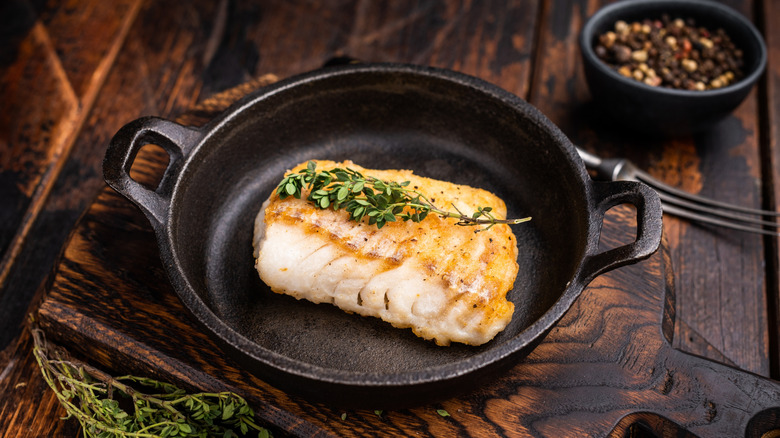
Fish is incredibly versatile as an ingredient. As long as you're willing to step out of your comfort zone, you can never run out of new ways to add spice to fish dishes, and maybe even branch beyond cuisines and introduce new ingredients to your repertoire. That's what recipe developer Michelle McGlinn did with Tasting Table's sweet and spicy skillet tilapia with coconut and gochujang recipe, and the result is nothing short of spectacular.
More than just pure heat, gochujang is spiciness done right. This Korean chili paste's got a distinctive umami funk that you only get from fermented condiments, or in this case, a fermented blend of soybeans, sticky rice, chili powder, malt, and salt. Within that depth, sweet and savory nuances intertwine, occasionally popping up between each tongue-tingling bite. Seeping into the tender flakes of tilapia, or any white fish, it envelops the dish with that unique complexity. The fish's own fresh sweetness still lingers underneath; the two contrasting flavor tones make for one well-rounded taste profile.
You might be wondering where exactly this condiment fits into a fish dish. For McGlinn, it comes in at nearly the end. It starts like usual, with a quick sear of the seasoned fish. Then, remove the fish and caramelize a tablespoon of gochujang, followed by a splash of coconut milk and other condiments. A quick stir and a five-minute simmer bring everything together. When you've got a luscious sauce bubbling in the pan, add the fish back in. What ends up on your dinner plate just a few minutes later is perfectly cooked fish filets, smothered in a spicy, sweet, and creamy sauce.
Never run out of ways to pair fish with gochujang
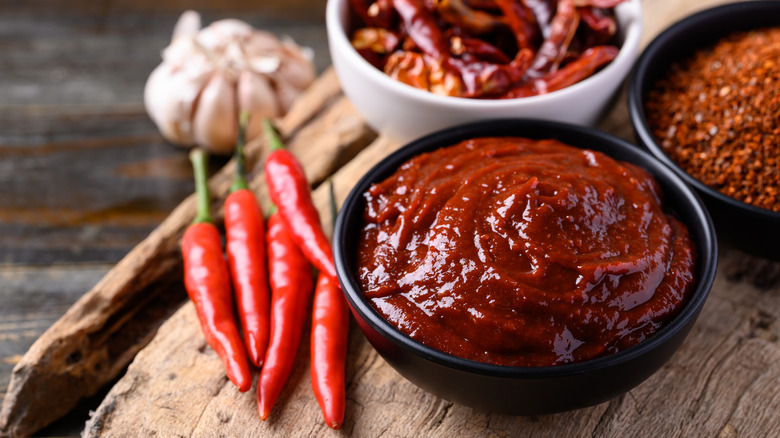
In fish dishes, gochujang is an excellent marinade; the proof is clear as day when you try it with white fish, such as cod and halibut. Just let them sit for about 30 minutes in the fridge in a gochujang marinade, which can just be one singular ingredient or mixed with other condiments like soy sauce, sesame oil, and garlic. Afterward, cook it however you like, from simply baking for 20 minutes to grilling until you see that delectable char crust lightly dusting the exterior.
On salmon, gochujang is fantastic as a finishing glaze. You can even whisk a bit of butter into it, for a rich base that the spicy paste cuts right through. Other times, you might enjoy this fish in a gochujang stew. Try it as a new twist for Thai curry, or reach back into Korean cuisine and find inspiration within a classic maeuntang (Korean fish stew). For the latter, you can also use fish common for the dish, such as monkfish, sea bass, or red snapper.
Even less expected yet equally enticing are gochujang fish burgers. When you make burgers, add one tablespoon of gochujang to the meat, and it's a guaranteed knockout at the cookout. Patties are always an option, but you can also switch things up with crispy battered filets or a gochujang-sauce-smothered cut, baked to tender perfection. Maybe even utilize leftovers from your skillet tilapia with coconut and gochujang dish, and enjoy this dish twice over, each time discovering a different kind of flavor wonder.