

Give Prime Rib A Pastrami-Inspired Crust For Bold Flavor
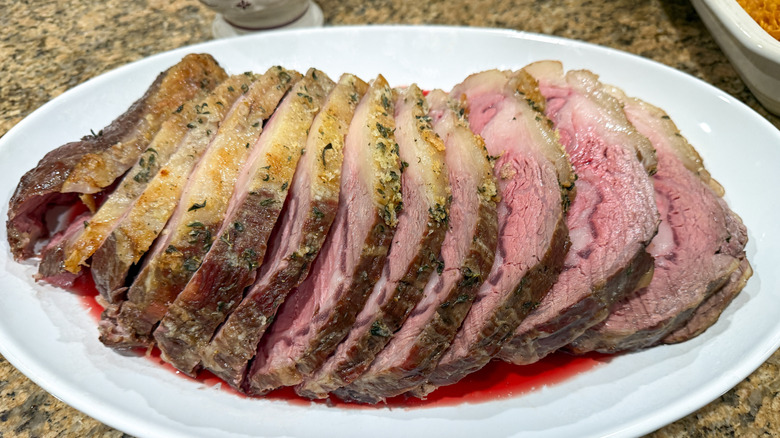
Preparing a prime rib roast can be quite the undertaking, especially if you're intending to serve it at a festive feast. Between choosing your preferred cooking method, flavors, and accompanying side dishes, there's a lot to keep in mind. When Tasting Table asked five chefs for the best seasonings for prime rib, Chef Ed Cotton, of Jack & Charlie's in New York, enthusiastically championed a dry rub made using classic pastrami seasonings.
Per Cotton, this mix of spices honors the legacy of how pastrami took over New York City and provides a complementary blend of flavors for a pleasing prime rib crust. Albeit composed of simple seasonings, the dry rub is effective in elevating a standard prime rib with familiar tastes and textures. The seasonings for Cotton's crust include such ingredients as mustard seeds, Spanish paprika, cloves, allspice, garlic powder, onion powder, brown sugar, whole coriander seeds, and dry English mustard.
Marrying sweet, savory, and umami notes together adds up to one bold and satisfying prime rib roast. If you want to try this method at home, start with a pastrami spice rub recipe, which calls for a bevy of pantry staple ingredients. With the ideal ingredients and a bit of time and patience, your prime rib will be the envy of your table.
Tips for using pastrami seasoning on your prime rib
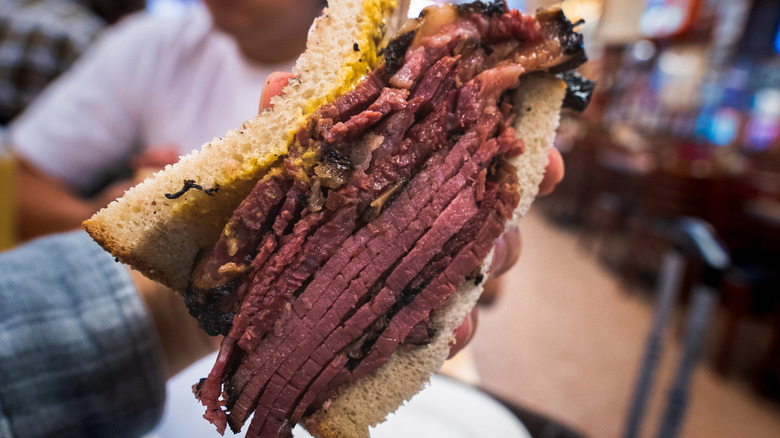
Whereas Chef Ed Cotton would coat his prime rib with the pastrami-flavored rub and let it sit, uncovered, in a refrigerator for between four and five days prior to roasting, you might not have as much time for your home-cooked roast. With that said, for the best flavor, you should aim to add dry rub to prime rib about an hour ahead of cooking it. Start by patting your roast dry before adding the pastrami seasoning mix. If you wish to use a binder, try a minimal amount of neutral-flavored oil, butter, or mayonnaise, the latter of which will create a thicker bark to the crust in the cooking process.
Some preferred methods of preparing prime rib include slow roasting or a reverse-sear. Any way you choose to cook your prime rib, make sure that it reaches an internal temperature between 120 and 160 degrees Fahrenheit, depending on your preferred level of doneness. The best way to confirm you've reached a safe temperature for consumption is with a meat thermometer.
You can even draw inspiration from the flavors of your pastrami seasoning to create side dishes to pair with your prime rib. For example, try whipping your potatoes with a portion of pungent horseradish mustard.