

Beefeater London Dry Gin: The Ultimate Bottle Guide
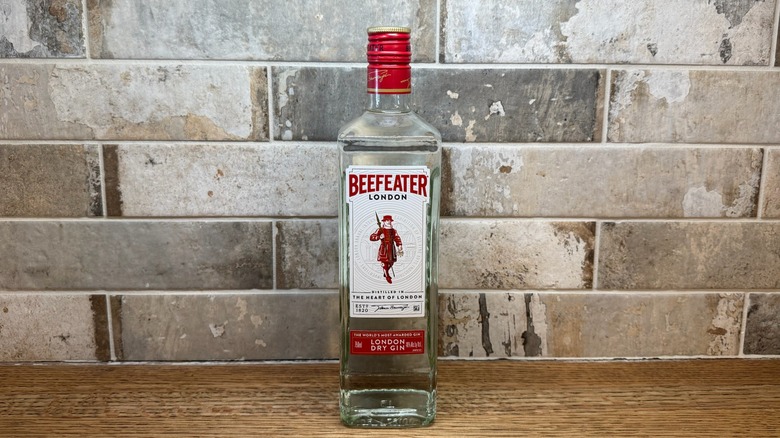
Most people are familiar with Beefeater London Dry Gin, especially because of its iconic bottle. With its tall, long shape, red accents, and an image of a British guard on the front, it's a very recognizable and popular brand of gin. This gin's history can be traced all the way back to 1820 in London, where the founder James Burrough created his soon-to-be-famous version of London dry gin. The Beefeater gin is made with nine different botanicals, with juniper at the forefront, along with Seville orange peel, lemon peel, licorice root, and others. These botanicals get steeped for 24 hours, creating the signature Beefeater taste.
Currently, Beefeater London Dry Gin has a 40% alcohol by volume in the U.S., but that hasn't always been the case. Originally, it was sold at 47%, and has slowly been lowered over the years. Still, you will find Beefeater behind the counter of most bars across the country, and it would be a shock to not be able to find a bottle at your local liquor store as well. If you want to learn more about Beefeater London Dry Gin, here's everything you need to know, including its history, how to drink it, and how it compares to other popular gins.
History of Beefeater London Dry Gin
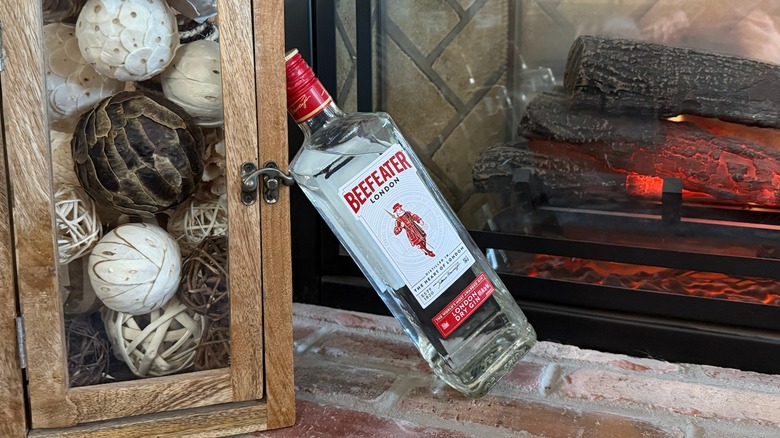
In 1863, in London, a pharmacist named James Burrough decided to buy a distillery in the center of London. With his experience as a chemist, Burrough would create various types of liquor and gin, experimenting with different ingredients. By 1876, he created the signature recipe of Beefeater London Dry Gin — the exact recipe that is still used to this very day.
Over the years, the actual location of where the Beefeater gin gets distilled has moved; however, it has never left the city of London. It's actually considered to be one of the only historic dry gins that is still made in London itself. The original distillery was located in the Chelsea district of London, and then it moved to a larger location in Lambeth in 1908. With its international demand and a need for even more space, Beefeater finally found its permanent home in 1958 at its current location in Kennington. Today, you can visit the distillery for a tour, where you can immerse yourself in the nearly 200 years of history that this gin brand holds.
What does Beefeater London Dry Gin taste like?
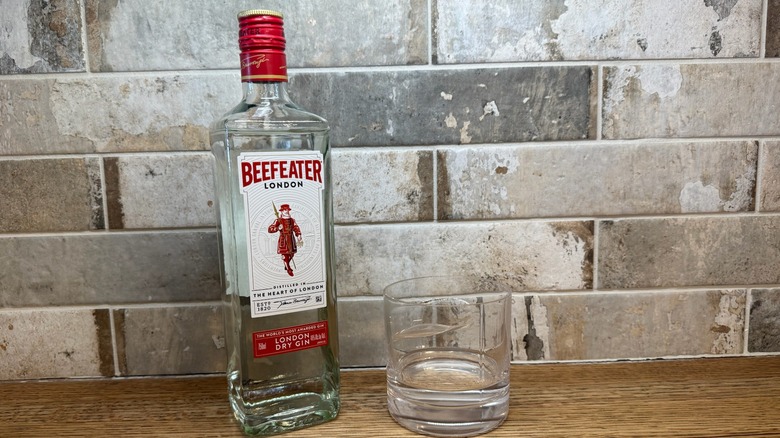
Just by smelling Beefeater London Dry Gin, you can tell that it's a very bright and robust gin. It has a strong citrus nose, most likely from the lemon and orange peel botanicals. Once you sip it, the same flavors burst first, but the finish is mild and smooth. At the forefront is juniper, which is a complex flavor in itself. It has both earthy and sweet, fruity notes combined. When drinking the gin neat, it has a slightly spicy and warm flavor that helps to settle all of the complex flavors.
When tasting the gin over ice, the brighter flavors actually become much more prominent. The citrus notes dance to center stage, and the warm spice becomes much more subtle. In a gin and tonic, which is a cocktail that is often used with Beefeater, the flavors of the gin match up harmoniously with the tonic. It becomes one brightly fizzy drink that has calming, earthy tones that land at the finish.
How is Beefeater London Dry Gin made?
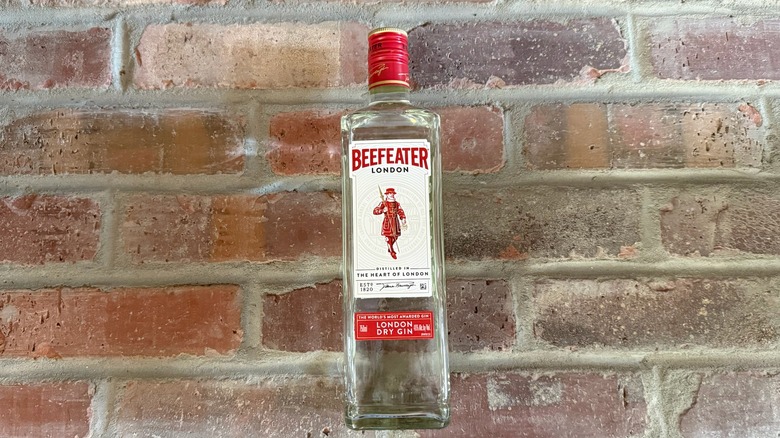
Beefeater London Dry Gin is first distilled just like other dry gins. The alcohol, which is made from grains in Beefeater's case, gets distilled to 96% ABV. Also, during the distillation process, all of the botanicals are added. This helps to give the gin its distinct flavor. Juniper is the main botanical, and the quality of the juniper is taken very seriously. We've even seen that up to 200 samples of juniper are tested at Beefeater each year, ensuring that the same quantity and style of juniper is continuously used for the brand, bottle after bottle.
Beyond juniper, there are eight other botanicals that are used as well: lemon peel, Seville orange peel, almond, angelica root, angelica seed, coriander seed, orris root, and licorice root. Before the botanicals are added to the alcohol, they are measured on large scales to ensure they are perfectly balanced. Then, they get steeped in a still for over 24 hours, which allows the flavor and character to shine through. After that, the mixture gets heated one more time, and the distillation is complete.
The entire process of making Beefeater is very strategic, specific, and always remains consistent. The aim is to make every bottle of Beefeater gin taste exactly the same, no matter where in the world you are drinking it. That way, customers always know exactly what to expect when picking up a bottle at the store or ordering a cocktail at the bar made with Beefeater.
How to drink Beefeater London Dry Gin
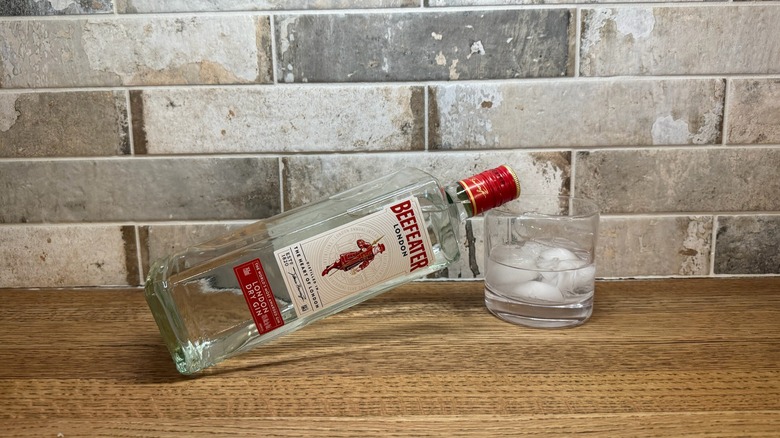
There are tons of different ways to enjoy Beefeater London Dry Gin. If you're not interested in cocktails, it can definitely be enjoyed straight or over ice. With multiple complex notes and a smooth finish, it's enjoyable to sip on for sure. Where the gin really shines, however, is in cocktails. First and foremost, there's the classic gin and tonic, which traditionally has one part gin and three parts tonic. Specifically with the Beefeater London Dry Gin, the bold and earthy flavors of the juniper matched with the bright citrus of the lemon and orange ultimately complement the bittersweet flavors of tonic.
While there are many classic gin cocktails that work great with Beefeater, one very popular option is a French 75. Similar to the gin's ability to pair with tonic so easily, it also works harmoniously with many types of Champagne. This cocktail is also made with an orange twist and lemon juice, which capitalizes on the botanicals already in the gin itself.
Beefeater vs Bombay Sapphire
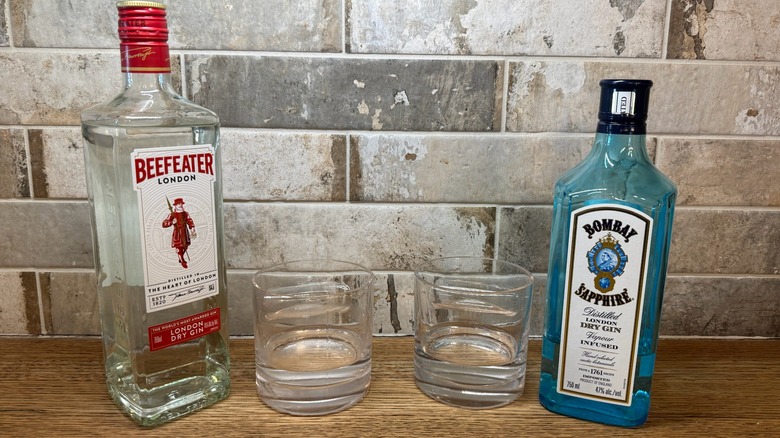
To first test Beefeater against Bombay Sapphire, I tried them neat side by side. Off the bat, Beefeater has a much stronger nose. When tasting, however, that's not the case. Bombay Sapphire has a very bold palate, and the juniper isn't as straightforward as it is with the Beefeater. Personally, I felt like the Bombay Sapphire tasted way too alcohol-forward. It does indeed have 47% ABV versus Beefeater's 40%. So, if you're looking for a stronger gin, definitely opt for the Bombay Sapphire.
Next up, I compared them both in a gin and tonic. As I explained in my original taste test, the Beefeater blends extremely well with tonic. It doesn't necessarily change the way the spirit is enjoyed; instead, it just adds a different layer. For the Bombay Sapphire, the gin is definitely more enjoyable in the tonic. I was able to taste notes of coriander and licorice that popped through, and could get a better sense of the actual flavors of the gin. Ultimately, Bombay Sapphire is great if you want a bolder, more interesting drink. The Beefeater is probably better enjoyed with a meal, as it's milder and smoother.
The bottles are sustainably made
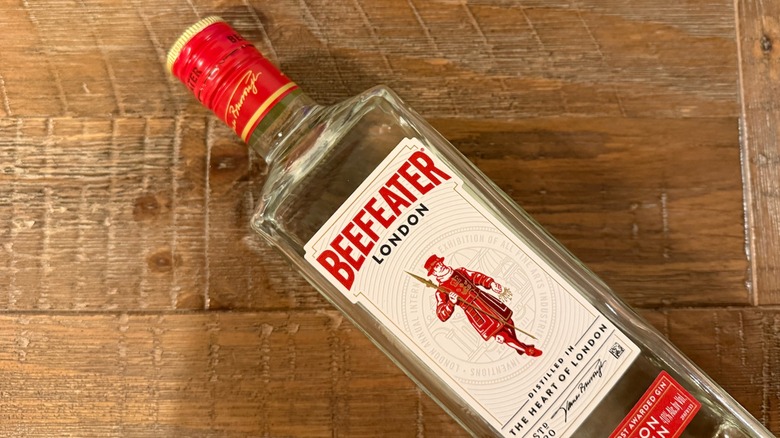
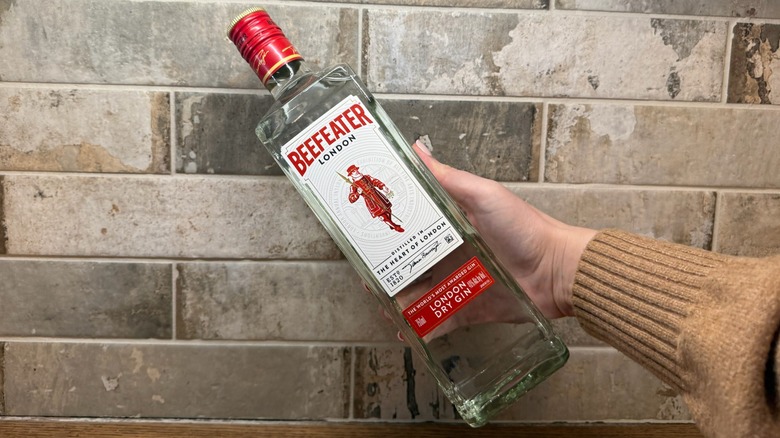
In an effort to be more environmentally conscious, Beefeater changed its bottle design in 2021 to be more sustainable. The bottle itself is now made from recycled glass. It still generally looks the same — a thin and tall bottle. However, the design is now more specific, resembling the bricks commonly seen in the city of London. It's also said that the bottle now has a better grip, which makes it easier for bartenders to use while on the job.
The red cap on top, which used to be made with plastic, is now made with aluminum. Lastly, the label used to be made with PVC, which is a synthetic plastic. Instead, the brand decided to use paper for the label moving forward. These small changes have saved up to 410 tons of plastic per year.
The gin is made in an old pickle factory
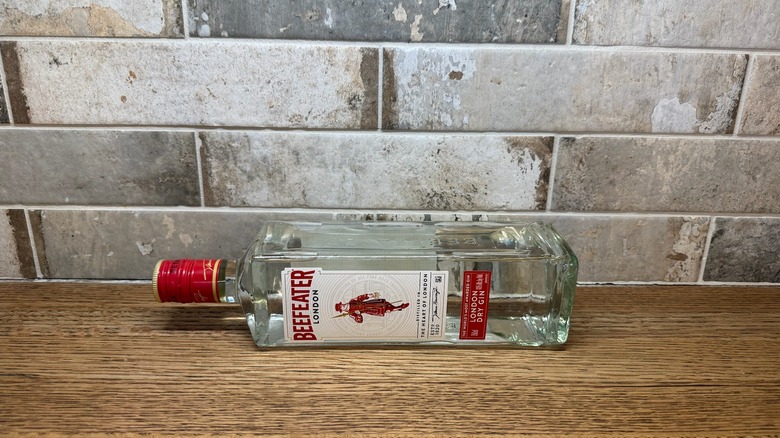
The current location for Beefeater London Dry Gin is at Montford Place Factory, located in Kennington, London. It has been the home of the Beefeater distillery since 1958, but before that, it belonged to a pickle factory. This factory was a place where jars and jars of pickles would be made throughout the early 20th century.
Unfortunately for Hayward, the factory was hit by a bomb during World War II in 1944. After years of the building's remains going unused, Beefeater was able to purchase the area and transform it into the distillery that can still be visited today. Now, the classic red brick facade stands strong as an ode to the past, keeping the area timeless. There is, however, a modern gray-colored addition that peeks out of the back — bringing the distillery very much into the present day.
The name of the brand was inspired by the guards of the Tower of London
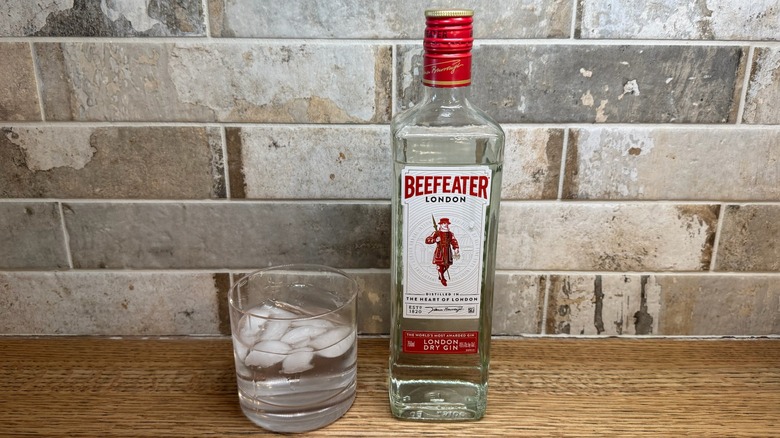
If you think about it, Beefeater sounds like quite an unusual name. Appropriate to its London origins, the name refers directly to the guards of the Tower of London. These guards, which are actually called Yeoman Warders, have been around since the reign of King Henry III in 1509. Back then, they protected the tower from potential jewel thieves while also guarding prisoners. They still exist today; however, they have a much less risky role than before. Now, you can receive a guided tour at the Tower of London from the guards themselves.
Now, where did they get the word Beefeater from Yeoman Warders? Well, it's said that the guards were among the few who were able to eat beef back in the 17th century. At the time, it was a very expensive type of meat, and because they were fed by the King, they were able to enjoy the delicacy. Forever immortalized by this famous gin, current-day Yeoman Warders are actually sent a bottle of Beefeater London Dry Gin for their birthday each year.
The distillery has five staff members
Since Beefeater is an internationally sold gin, one might think that the team to create the iconic beverage would be pretty large. Well, in the distillery, only five staff members are needed to complete the process. This team includes roles like the head distiller, the distillery operation technician, the facilities manager, and a head smeller who smells the gin.
The head distiller is an integral part of this team. For 30 years, this position was held by Desmond Payne, who is well-known in the gin world. He was even named to be a member of the Most Excellent Order of the British Empire. He has an exquisite sense of smell and made sure that each bottle of Beefeater gin was made exactly the same. He stepped down in 2025, and the role is now held by Adam Cocker. The rest of the team is very hands-on, even manually measuring the botanicals with an old-school scale. There are a lot of modern technologies that are used in the distillery as well, but this team of five remains integral to the creation of this gin.