

12 Whole Foods Bakery Breads, Ranked Worst To Best
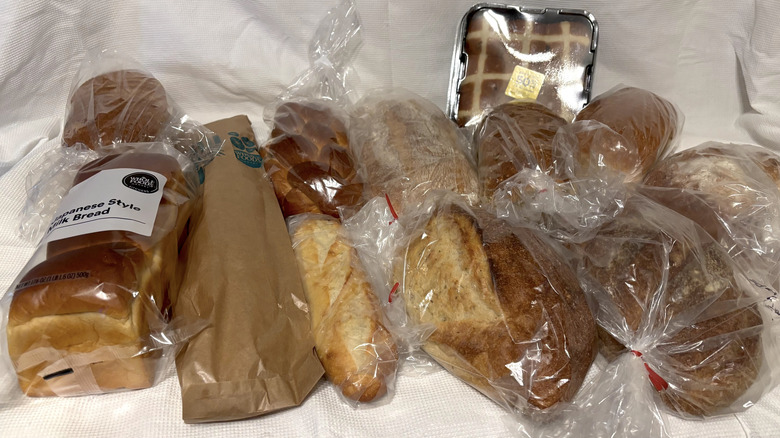
I'm all about the carbs. So when I saw what was on offer at Whole Foods, I was in heaven. Not only does it carry tons of pre-packaged options in the bread aisle, but also tons of proper bakery bread: fragrant, fresh loaves stacked on top of each other, just waiting for you to pluck them up and put them in a nice little bag. They are displayed beautifully in a glass-encased wooden cabinet, with a soft, golden light illuminating them.
These loaves looked beyond good, and I had to try them to see if they tasted as good as they looked — especially considering my high standards for bread. I come from a family of bread makers. From sweet loaves of banana nut and pumpkin bread to more traditional sourdoughs and yeasted breads, starters, gluten, and leavening were lessons taught to me at a young age, so it's fair to say that I know what good bread is.
I tried many of these Whole Foods offerings to decide which were worth grabbing and which were worth skipping. In order to rank these breads, I used my idea of "good bread," complete with warm, savory scents, a well-aerated interior that was soft yet firm, a crust that was golden brown and could snap between my teeth, and something I could have with my meal every day. While our opinions may differ, I tried to be as objective as possible when tasting and ranking these breads.
12. San Francisco sourdough
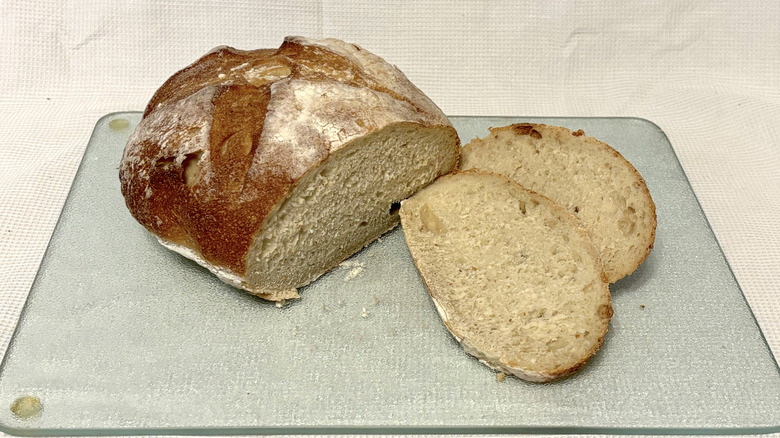
San Francisco is known for its sourdough, so much so that the two are nearly synonymous. Many people even believe that San Francisco is where sourdough started — but it is not. Some people think the bacteria cultivated in its climate is the secret ingredient that makes its sourdough so unique. And that something special is what I expected from the sourdough boule at Whole Foods — but that is not what I got.
The bread's crumb was very dense and not airy — which isn't what sourdough should be. The aroma was slightly sour, although it wasn't overwhelming. But something had gone wrong (or was wrong) with the loaf. It was very thick at the bottom, which led me to believe it was underbaked. I also wondered about the proofing method. The texture was tough and unappealingly gummy. And the sourness was relentless on my palate. I have seen and eaten some great San Francisco sourdough – and this wasn't it. It was not a hard choice to put last.
11. Country white loaf
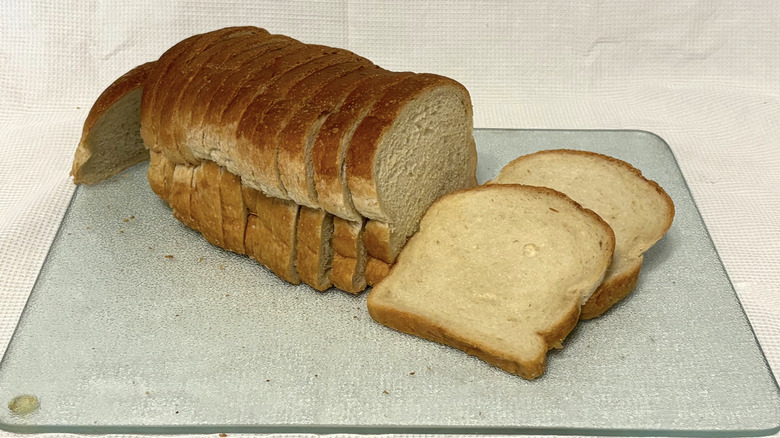
This loaf of bread looked like the most perfect loaf of homemade sandwich bread I had ever seen. It was very nostalgic, and I had very high expectations just from the appearance. The individual slices looked fluffy, and the loaf as a whole was bouncy. But when I tasted a slice, I didn't find it to be airy. After easily biting through it, I found that it became instantly gummy and had an extremely unpleasant texture.
This sliced white bread wasn't good, and using it to make a sandwich wouldn't save it. If I were given a sandwich made with this bread, I'd just eat the filling. It was either underbaked or underproofed; I'm not sure what went wrong here. The only thing that was better than the sourdough was that I didn't have to deal with a bad taste lingering in my mouth. The country white loaf didn't have much flavor at all, and I could easily wash it away.
10. French baguette
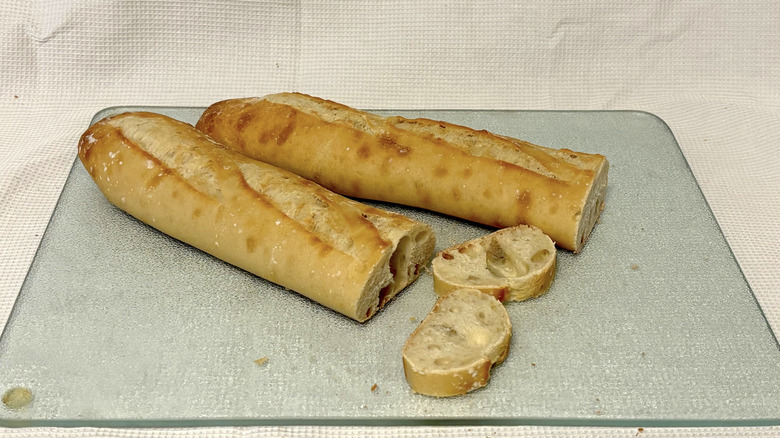
I am aware that the French take their baked goods rather seriously. But only recently did I learn of an apparent French saying: un jour sans pain, c'est un jour sans soleil — a day without bread is a day without sun. And the baguette specifically is so important that in 2022, the United Nations Educational, Scientific, and Cultural Organization (UNESCO) awarded the bread Intangible Cultural Heritage status. But I don't know if the one from Whole Foods is going to get any great accolades.
The baguette looked very nice: The outside had an array of golden hues, and the slices were airy and bubbly. It was a little tough to chew on, but that wouldn't necessarily be a bad thing if it came before dinner. After I finished chewing, I realized it became gummy, but it wasn't bad. It didn't seem poorly baked or proofed like the ones before, and since it would suffice as a butter carrier, I wouldn't turn it down. But I'm glad there were better ones ahead.
9. Rustic rye
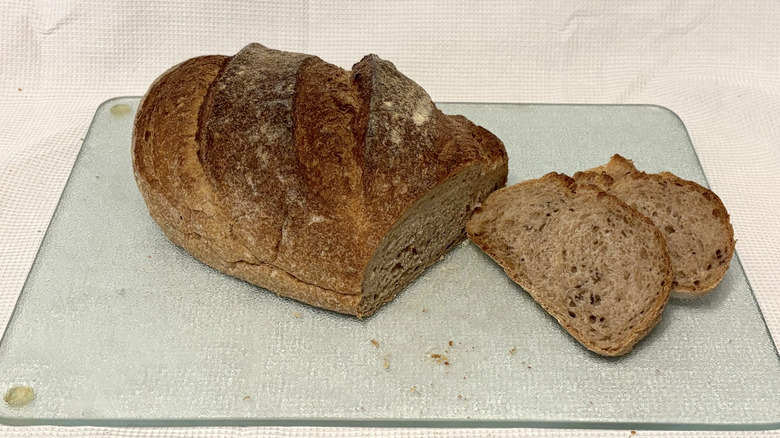
This rustic rye bread had a lovely, crusty exterior with visible caraway seeds sprinkled sparsely throughout. The scent of the bread was soft and just hinted at rye. Both the soft middle and crust had a beautiful color. It looked airy and contained plenty of pockets for butter. Although it was a sight to behold, I wasn't necessarily keen on its taste.
I'm not a fan of rye bread, as I don't like caraway seeds or the taste of fennel. But that ended up being a non-issue. It actually took quite a few moments for my palate to register the distinct flavor, and it was very well-balanced. Fans of rye would delight in its flavor — but not in the texture, as this bread became incredibly chewy, just like the baguette did. It was far too difficult to chew and leaned gluey toward the end, meaning it would ruin a corned beef sandwich. But the fact that it did have a pleasant flavor meant it ranked higher than the lowest-ranked breads.
8. Ciabatta
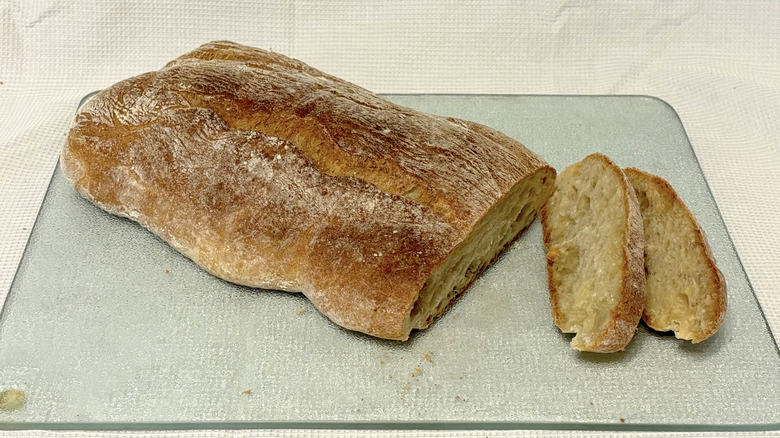
This ciabatta looked perfectly rustic and was lightly dusted with flour. But fool me once ... twice ... three times, based on the looks of this Whole Foods loaf. I knew better than to get my hopes up. Even as I cut away a hunk and was delighted to see large air pockets and the brown of the crust fading into the soft color of the middle, I kept myself in check. This could be another beautiful disaster.
I took as small a bite as possible and was happy to feel my teeth sink through the denseness of the bread, which only slight pressure pushing back from the crust. The pillowy interior stayed soft and airy, allowing me to go back for a second bite quicker than I could with the lower-ranked breads — and that made me happy. The flavor wasn't ostentatious, but I didn't want it to be. This bread was just doing its job. It was a hearty bread that could be served alongside a stew or used as the base of a hearty bruschetta. It wasn't fancy on its own, but it had a lot more to offer than the ones that came before it.
7. Braided challah
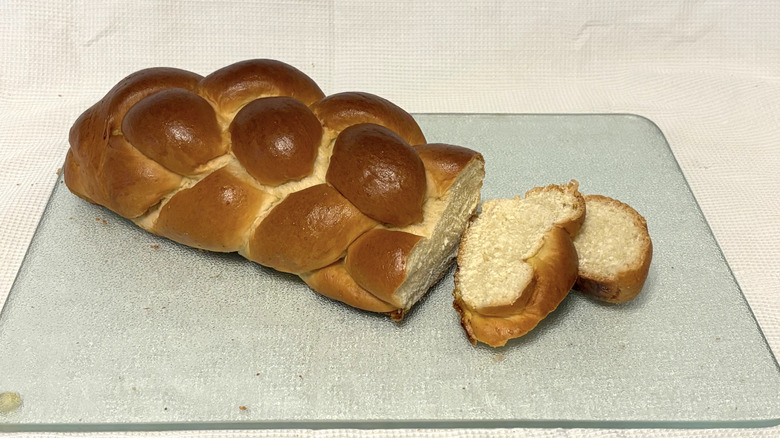
Challah is such a lovely bread, and this one was no different. It was expertly braided, with puffy brown mounds leading to lighter brown crossings. As I expected, the aroma of the bread was sweet and teasing. When I popped the first bite in my mouth, I was more than pleased by the taste, which was reminiscent of pound cake. The texture was appropriately dense and gave it a nice mouthful. It was almost the perfect bite.
But then I noticed a weird texture between my teeth. I took another bite and noticed it again and promptly spit it out. It felt, and kind of looked, like I had bitten through a piece of dried fruit. Upon closer examination, I found that it was the bottom of the bread that was causing the issue. The spots where the braids met appeared underbaked and were too moist, which caused pockets of poor texture.
I will be buying another loaf of this, which is something I can't say about any of the breads ranked lower than it — just to see if this occurrence was a one-off. If it's not, I'll just cut off the bottom crust and enjoy the rest — because it's delicious. But I wouldn't go out of my way to buy it from Whole Foods again.
6. Seeduction loaf
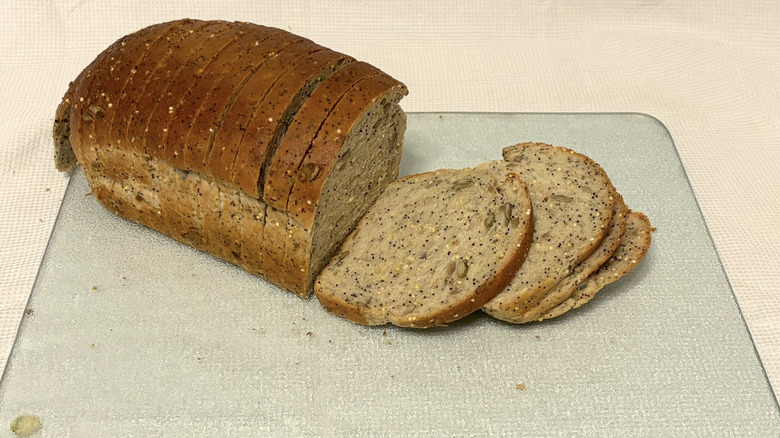
This loaf of bread looked very much like an everything bagel loaf, which I think would be the perfect sandwich bread. There were obvious poppy and sesame seeds, and some other kind of seed that I couldn't identify. Pumpkin and sunflower seeds were also well-distributed throughout the crust and soft middle. I shouldn't have been surprised by its crunch when I bit into it.
The entire bite of this bread, from start to finish, was crunchy. It was like eating a handful of seeded trail mix in terms of both taste and texture. I was surprised, to say the least, but the more I chewed, the more I found it to be quite playful. It didn't taste bad and was instead slightly earthy — a new and odd texture for bread. I wouldn't eat it daily as toast or sandwich bread, but if I visited a place that offered it, I would happily eat a slice. Unlike the lower-ranked breads, this loaf offered something that I had not experienced before and doubt I will again unless I seek it out specifically. Overall, it's something I enjoyed.
5. French demi baguette
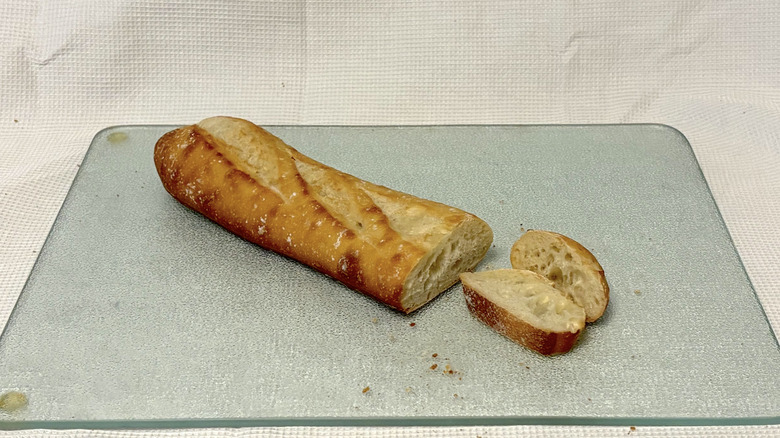
After tasting the full-sized version of this baguette, I didn't expect the smaller demi baguette to be much different, but I noticed several differences as soon as I cut it. The French demi baguette had a nice, webbed look, a solid structure, and air pockets throughout. When I bit into it, I found it was much softer than the full baguette. The crusty exterior was the only chewy obstacle to be had.
Of all the breads, I would say this is the most generic loaf that could be served at a table. But I would definitely go through a basket of it easily. It would be great toasted, buttered, or dipped in sauce. The mouthfeel and taste were just like good bread. It was the first loaf on my list to simply meet my expectations, and I can't believe that alone ranks it so high.
4. Honey wheat pan loaf
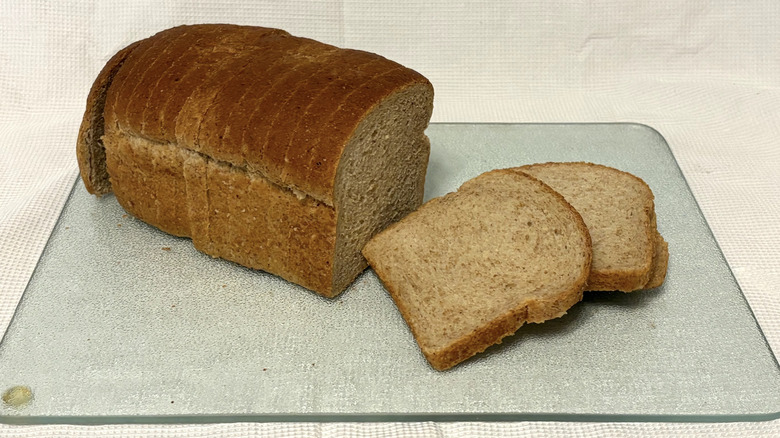
This honey wheat pan loaf looked exactly like the white country loaf's cousin. It was a beautiful sight to behold and looked slightly rustic, with flecks of whole grains scattered throughout the crust. The taste reminded me of Irish soda bread. It was earthy, fresh, felt seemingly substantial on the palate, and lacked moisture, but didn't come across as dry. Bits of grain caught between my teeth as I chewed, giving the texture some personality. I had to search for just the slightest sliver of sweetness, and I couldn't tell it was specifically from honey.
This wasn't an overly grainy piece of wheat bread, which I find is way too common. It was a nice, gentle wheat loaf. This bread had more flavor than the demi baguette, and I would definitely enjoy some before and during a meal. This would also be a great bread to make a sandwich with if you're looking for a white bread alternative. It could definitely stand up to some added moisture and plenty of fillings.
3. Hot cross buns
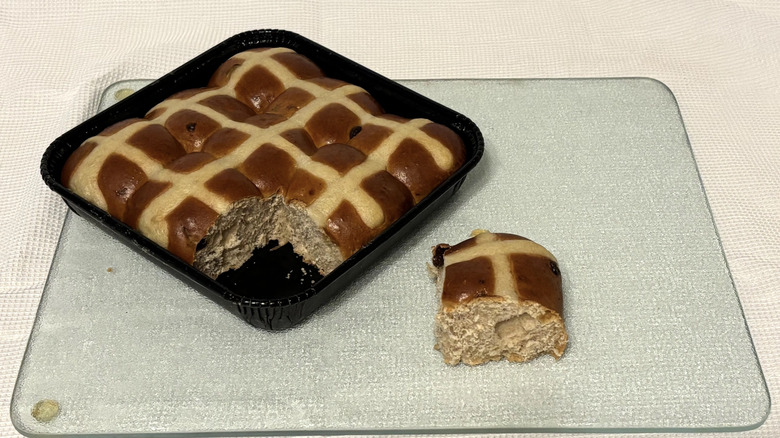
I've always been aware that hot cross buns were a seasonal item; my family usually had them around Easter. What I didn't know was the entire history, which is incredibly convoluted and goes back much further than you would think — all the way to the Tudor period.
These hot cross buns, which are only available during the spring at Whole Foods are quite delicious. They were much better than the ones ranked below them — by an impressively wide margin. They were packed with a lot of flavors, including notes of cloves, ginger, and cinnamon. While the spiciness never got too big or out of control, I got the rich, sweet warmth in every bite.
Their flavor and denseness would make them hard to eat before a meal. However, these dessert-type breads would be excellent served in a basket at the end of the meal.
2. Rosemary sourdough
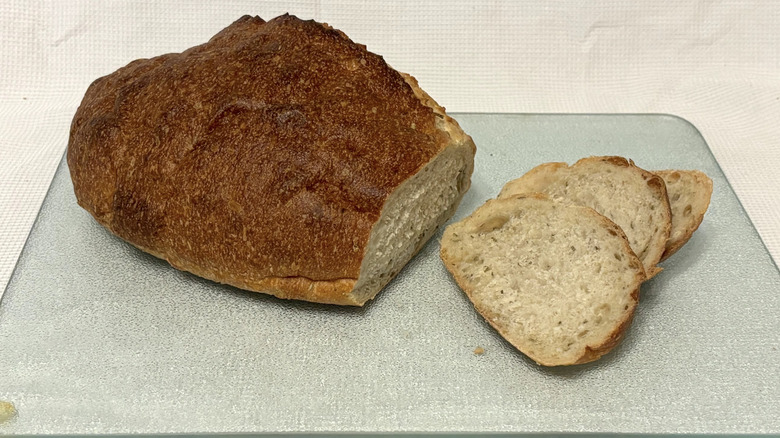
There were significant differences between the lower-ranked sourdough and this rosemary sourdough. This sourdough had a rich color, and sparse specks of rosemary shone through the crust and the soft-looking middle. The aroma was immediate, deliciously yeasty, and enticing, although it didn't have any hint of rosemary. Its perfect density won me over; unlike the lower-ranked breads, it was perfectly airy and delicate but strong, making it easy to enjoy during any point of a meal.
When I first tasted it, I noticed it took some time to locate the flavor of rosemary, but then it appeared. It was soft and almost alluring, like it was just flirting with my taste buds. The flavor grew with each subsequent bite but was never overwhelming. Instead, it was dialed back, savory, and surprisingly warm.
I could see myself nibbling on this before ordering a meal or having it alongside a soup or salad. The structure also means it would be perfect for sopping up sauce or juice or pairing with something like a pot roast.
1. Japanese milk bread
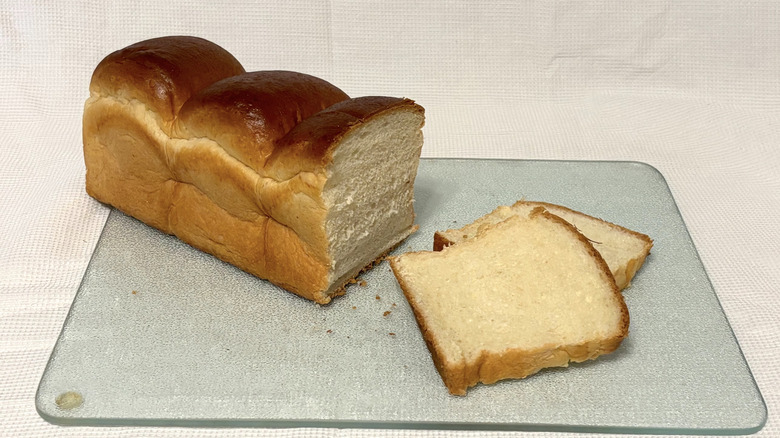
I don't hear much chatter regarding Whole Foods, but I had heard good things from multiple people about this Japanese milk bread. Shokupan, or milk loaf, is a staple Japanese bread with a long history. If this is the bread I would be having every day in Japan, then sign me up.
The first thing I noticed about this bread was the sweet aroma that wafted from the bag. It beat out the rosemary sourdough in terms of softness and was difficult to hold when cutting a slice. I was afraid I was going to smoosh it because it felt so pillowy. The first bite was luxurious. This bread both tasted and looked like laminated pastry. The texture was soft, but also almost magically firm. The more I ate, the more delicious it became. As each bite melted in my mouth, I could taste bread, butter, and sweetness.
Eat this before dinner? Forget dinner! I would eat this for dinner. It's the Goldilocks of bread.
Methodology
I don't have the time to make as much fresh bread as I would like, but I adore having bread with my dinner. It's what I grew up with. It feels and tastes like home. I wanted to have that same experience with one of the fresh bakery breads from Whole Foods. I wanted to love its taste and texture so much that I would invite it into my home and make it a special part of my family's meals.
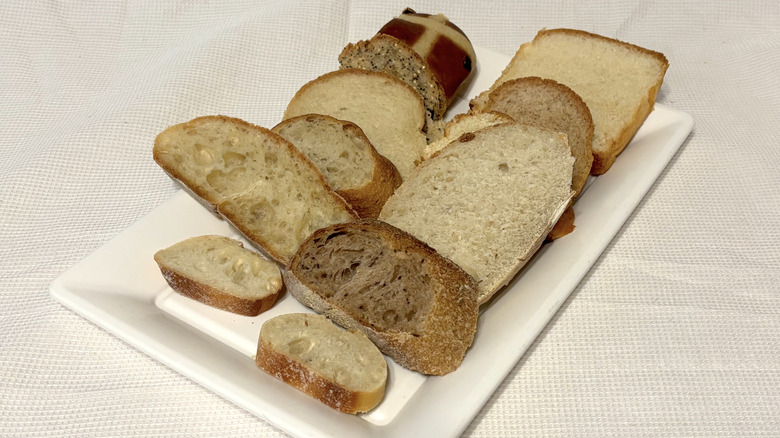
All the loaves looked quite stunning, to be honest. When I was getting these breads together at my local store, I really thought ranking them was going to be incredibly difficult. If they had tasted as good as they looked, it would have been impossible. This is why I was shocked to realize that many had bad textures and weren't baked or proofed properly. I was quite a few loaves in before I could truly care about taste, let alone preference.
I tasted each of these breads fresh from the bakery. They weren't heated, toasted, or buttered — just plain. I ate at least half a slice of each and cleansed my palate in between. The top three were the only ones I would choose to have again, and the number-one bread is already calling me back to the store.