

Reverse Your Fridge Door To Maximize Space In A Cramped Kitchen
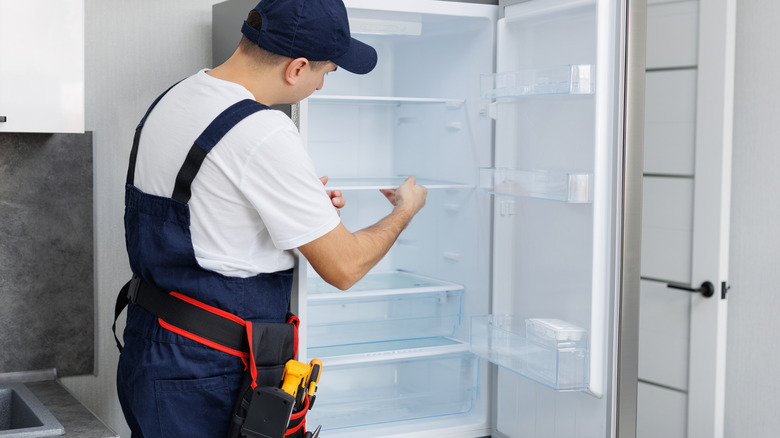
We may receive a commission on purchases made from links.
In small kitchens or ones with awkward layouts or designs, it can be hard to figure out the perfect place to install a refrigerator. Too tall for some spaces, too wide for others, you may end up only having one option — which might mean that every time you open your fridge door, you're blocking an entryway, cabinet, or other kitchen appliance. If opening your fridge door hinders kitchen flow, restricts walkways, or makes using the kitchen uncomfortable, you may be able to reverse it.
Many refrigerator models have reversible doors, meaning you can uninstall the hardware at the door hinge and reinstall the door on the other side. This will not only improve aesthetics and the flow of your kitchen layout, it will also make other tasks more convenient, such as loading groceries into the fridge or getting out ingredients to make a meal. You may also consider reversing the door if opening it causes a safety hazard. If the fridge door presses up against the stovetop when open, for instance, that could be a fire hazard or eventually lead to damage to one or both appliances.
A fridge door that impedes an entryway or walkway could also increase the risk of injury for young children, people with limited mobility or vision, or anyone who just isn't paying attention to where they are walking. One crucial refrigerator measuring step to take before you embark on this project, however, is to determine the swing radius or clearance of the door. The door should be able to open at least 90 degrees wide to allow you to pull out fridge drawers. You'll want to make sure there is actually enough space on the other side of the appliance for it to open easily.
Reversing your fridge door can be a simple DIY project
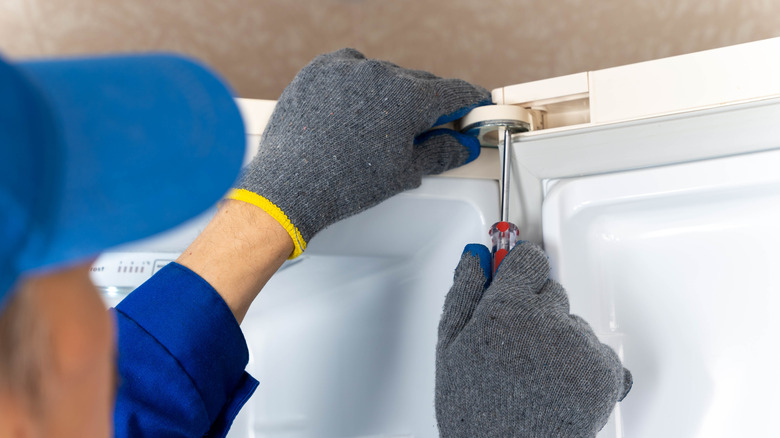
Whether you have recently completed a kitchen renovation and are ready to reinstall your appliances, or have just upgraded your refrigerator, understanding when and how to reverse the door can be a very handy skill. Start by reading your appliance manual to find out if your model has a reversible door. If it does, read the instructions carefully to determine what tools you'll need, and if you'll need help. You may need to lay the fridge on its side to access the bottom hinge hardware.
You will also need to unplug the fridge and relocate everything in the fridge and freezer to a cooler full of ice. Doing so may seem like a pain, but at least it gives you the opportunity to deep clean your fridge drawers and doors. After this, locate any plastic parts that may be covering the hinge components on the fridge door and lift them up or remove them according to the instructions in your manual. Next, unscrew the door handles and relocate them to the other side of the fridge. Then remove the plates and bolts that are holding the fridge and freezer doors in place, and remove the doors and hardware components. Follow the instructions for reinstalling everything on the opposite side of the appliance.
When you're done, you may need to clean up the gunk and mess that accumulated underneath the handles or hardware when they were installed on the other side. You can use rubbing alcohol or vodka and a soft brush or non-abrasive sponge. You can also purchase a product like De-Solv-It or Goo Gone, both of which are available at Walmart and other stores for under $20, and are safe to use on appliances.