

10 Luxury Foods That Were Once Considered 'Poor Man's' Options
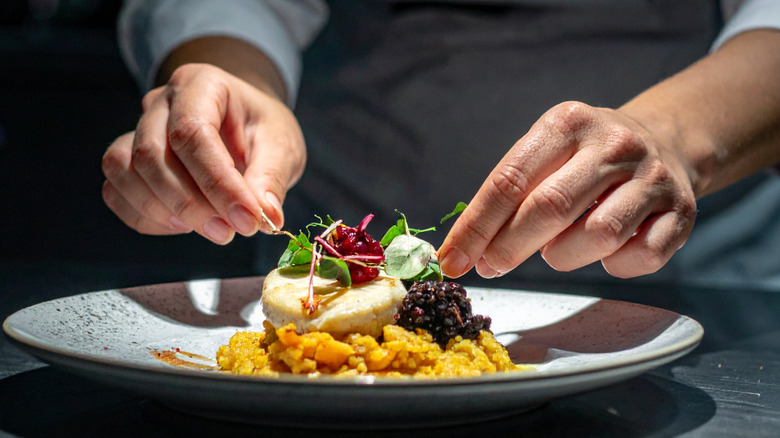
Throughout history, there have been great shifts when it comes to value that society places on certain foods. Historically, the decision what classified as luxury foods was dictated by the elite classes and people in power, and even today, not much has changed. It's pretty common that access, tastes, and cultural changes affect how we eat. The common thing that happens is when a certain item becomes attainable by all, it often falls out of fashion with the elites, as the rich tend to want exclusive access to certain foods. Ironically, sometimes the reverse is true too. Many ingredients and dishes that were once eaten out of necessity are now considered luxurious.
Various foods once not deemed delicious or nutritive were mainly reserved for the poor members of society. Still, whether we're talking about fish and meat offcuts, unappetizing vegetables, or shellfish, people have always found a way to make a tasty meal from whatever was on hand. Eventually, more people got a taste of some of these flavorful ingredients and tasty dishes and they became more coveted. However, these foods were also often popularized due to political, economic, or environmental factors. Here are some of these luxury foods that were once considered poor man's options.
Lobster
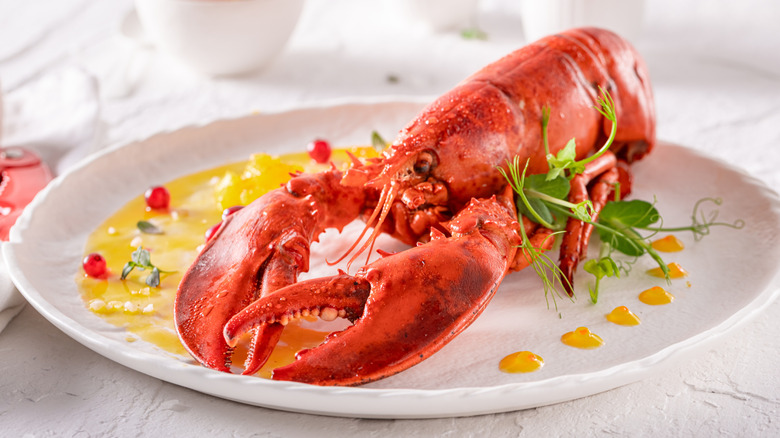
Lobster has become known as the expensive shellfish you might have if it's a special occasion or that you're willing to fork out a bit of money to enjoy. You may be surprised to know that they used to be called the cockroaches of the sea. This high value seafood used to be looked down on in the 1700s because they would wash up in abundance on New England's shores. During colonial times and slavery, it was mostly reserved for enslaved people, indentured servants, and prisoners.
It wasn't until the development of the railways that lobsters would become fashionable and even sought after. Since it was cheap and abundant, it was a perfect ingredient to serve to train passengers, who eventually fell in love with it. Many of these passengers were not from the coastal regions and had never eaten lobster before, and to them, it was an exciting new food. Plus, they were not familiar with its stigmatized reputation. Word travelers and people in other parts of the country were intrigued and also wanted to try it. This caused the demand for lobsters to increase and therefore become more expensive. By the late 1800's, lobster was already a familiar item on many restaurant menus, and this tradition continues until today. Now, you'll mainly find lobster in upscale and fine dining establishments.
Kale
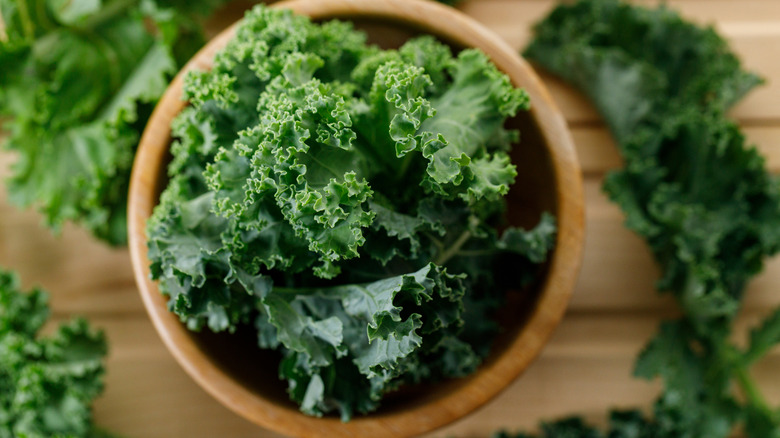
If you're not familiar with how to prepare kale, you may have bitten into a tough, bitter leaf and wondered what all the fuss was about. It perhaps wouldn't surprise you to know that kale's recent makeover into a fancy food was all due to a rigorous marketing campaign conducted by American Kale Association to make it the next food trend. In fact, some have even dubbed this phenomenon a kalespiracy. Once called the peasant's cabbage, kale is now more than just a cruciferous vegetable that's a bit difficult to work with in the kitchen. Our health obsessed culture has bought into its nutritional benefits in a major way, and it's become a menu item in many trendy restaurants and cafes.
In the past, kale was only eaten by poorer rural communities, but now it has evolved into a food item that has become a symbol of wealth and health. Nowadays, you will find numerous recipes that use kale, and you'll see it featured in smoothies, chips, cookies, and even in skincare. It's clear that the media campaign makeover truly worked in this case.
Snails
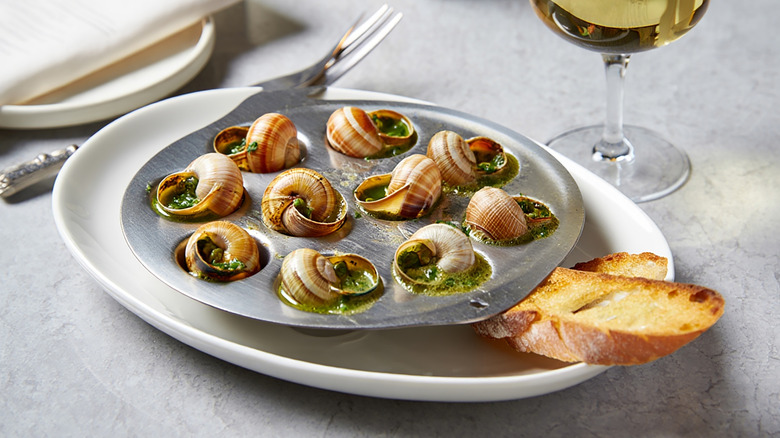
Snails are served in numerous upmarket French restaurants, and your trip to Paris wouldn't be complete without having sampled escargots paired with a butter sauce. It's true that snails drenched in a garlic butter sauce are enjoyed by many, but historically, these gastropods used to be mostly eaten by lower and middle class ancient Romans. They relied on abundant garden snails, while upper classes requested snails that were raised and fed a specific diet. Eventually, the tradition of eating them spread throughout Europe along with the Roman empire, and though eating snails was common, it was still a somewhat strange ingredient. Comically, some old French cookbooks included a snail recipe with an apology, since the upper classes would have seen it as an unappetizing addition.
So, how did snails make it into the most expensive kitchens in France? The story goes that in 1814, the famous French chef Marie-Antoine Carême was tasked with preparing the meal for a French diplomat who was hosting the Russian Tzar. As Carême was from Burgundy, where snails were popular, he prepared snails in a butter, garlic, and parsley sauce. Apparently, the Tzar loved it, and the news spread. This way of preparing snails has now become popular in France and is one of the trademark dishes of classic French cuisine.
Caviar
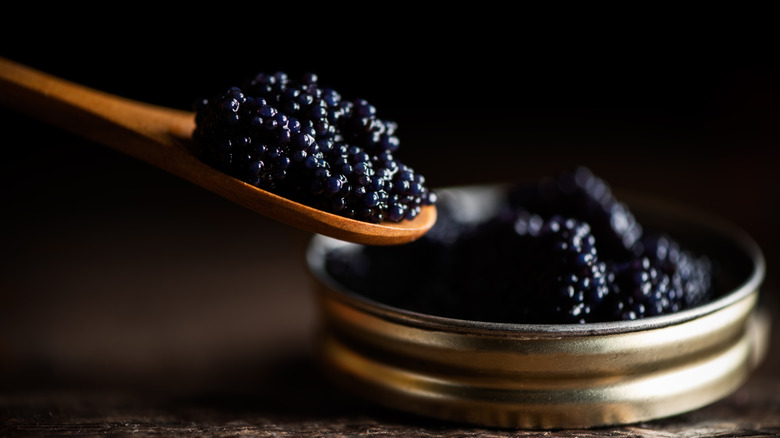
There aren't many ingredients that are exclusively associated with luxury foods, but caviar is one of them. Those little fishy, salty beads are mostly out of reach for an average person these days, but this wasn't always the case historically. In the U.S., caviar was actually served as a bar food, mostly for free, in order to keep customers drinking more to wash down the saltiness. This was largely because the fish that caviar came from, the sturgeon, was plentiful in America. In fact, in 1873, a German immigrant Henry Schacht started exporting American caviar to Europe, and as other American businesses followed suit, he started a caviar business boom. By the end of the century, the U.S. became the biggest caviar supplier.
Funny enough, some of that caviar got imported back into the U.S. – but it was labelled as Russian caviar and sold at higher prices because it was believed that Russian caviar was superior. The effects of the caviar boom caused overfishing of sturgeon, which became greatly depleted, and almost extinct. This meant all the caviar now had to be imported, and this caused prices to skyrocket. By the mid-20th century, caviar became seemingly unaffordable to most people. It's still seen as a rare food item that only the rich could afford. Now, other types of fish roe are available on the market but remember that caviar and roe are not entirely synonymous.
Oysters
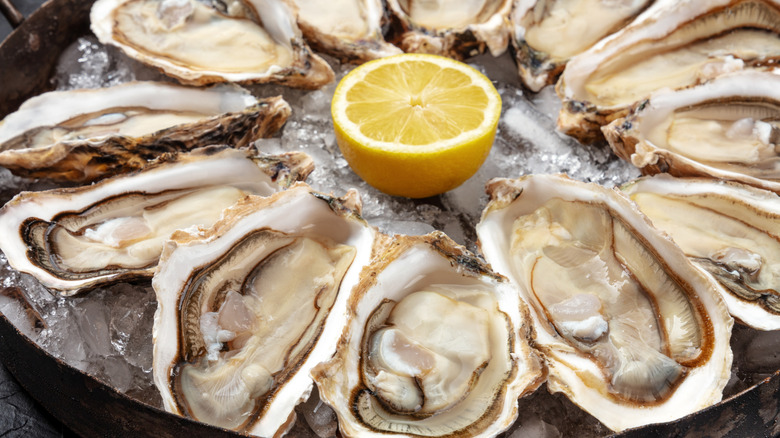
Oysters are another fishy food with humble beginnings that has been promoted into a delicacy. In the 18th and 19th century, oysters were widely available in North America, and although they were also served at fancier banquets, they were largely a food staple available to everyone and deemed as an inexpensive protein ideal for incorporating into hearty meals and stews. They were mass produced by oyster growers all across the United States, even in urban centers where conditions for growing were not the most hygienic. They became a health concern for people as deaths and sickness from oysters grown in polluted waters began to rise.
Sadly, in winter 1924, 150 people died from oyster-borne typhoid fever, which marked the beginning of an end. Following this, the urban oyster business went bust, and people looked to buy only wild oysters. This spike in demand for wild oysters caused the prices to go up. With the additional factors that require a lot of care and logistics in transportation, high prices remain until today.
Oxtail
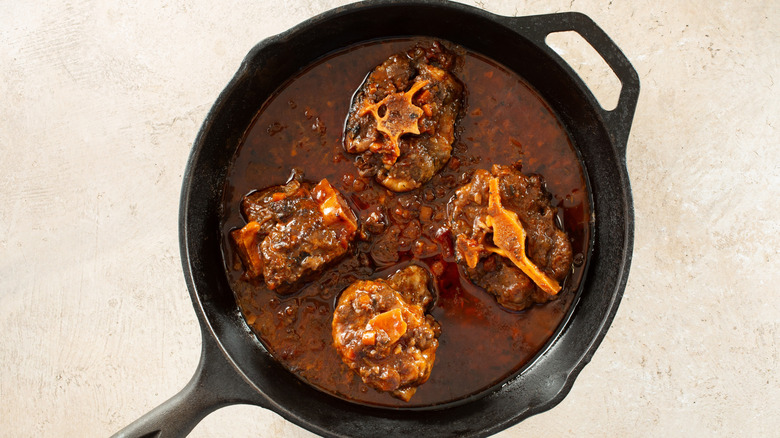
There are a number of innards and animal body parts that have gone from being cheap offcuts that poorer communities relied on to now being used in upscale and fine dining restaurants. One of those pieces is oxtail, a cut which is now relatively expensive to buy. This fatty, bony, and tough part of the animal needs slow cooking and braising to make it tender. Historically, it was one of the undesirable pieces that was given to enslaved people, while the enslavers ate filets and other tender cuts. When prepared properly though, it's packed with flavor and its richness is what makes it so popular with anybody who tries it. It has always been a celebrated piece of meat within the African American community and the Caribbean, but now it seems that many chefs are looking to add it on their menus.
Perhaps cattle are expensive to farm, or that the restaurant industry is promoting nose to tail eating to encourage less food waste, but oxtail isn't a cheap cut of meat anymore. Also, each cow only has one tail, and it's not the meatiest part, so you have to buy larger amounts of it to get the required amount of meat you'd expect. Sadly, oxtail lovers will have to pay a lot more now to get this tasty piece.
Ratatouille
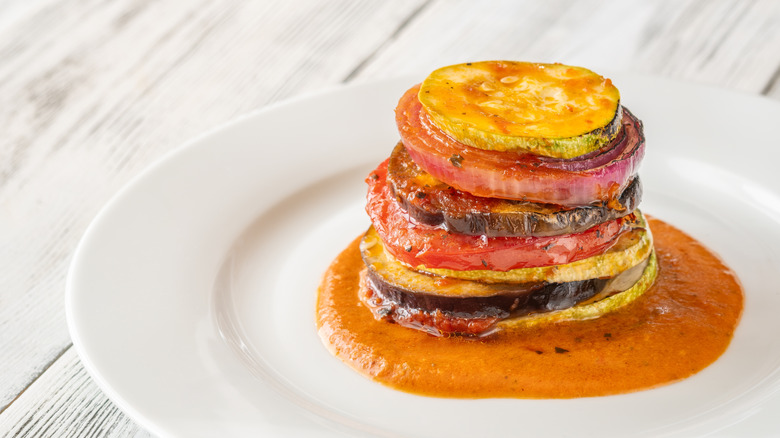
For many Americans, the first encounter with ratatouille was through Remy the rat in the eponymous 2007 Disney film, but, in the south of France where I live, ratatouille is as old as time, and grandmothers have been making what was once considered a humble, peasant dish for ages. A mix of zucchini, eggplant, and pepper, all baked in a tomato sauce was usually made to use up vegetables from the summer harvest. However, it has now been refined into an elegant meal that's not easy to perfect and get right.
It doesn't necessarily have to be expensive, but it has certainly become a common feature on luxurious restaurant menus. Perhaps the film had some impact on our association with the dish too — it was served in a gourmet restaurant — or the Mediterranean diet has simply become fashionable, but now you can find ratatouille in numerous upmarket establishments.
In France, one of the iconic ratatouille dishes was served at Alain Passard's three-Michelin star restaurant, Arpege. The dishes are seasonal, so ratatouille isn't always featured, but a regular tasting lunch menu is priced at around $300 per person. I can personally attest to the fact that ratatouille is often a common feature on summer menus in numerous fine dining restaurants in all the major Provence-region cities like Marseille, Aix-en-Provence, and Nice. State side, New York's Michelin-starred Le Pavillon has also served signature ratatouille as one of the courses. The menu here also changes, but the price of a two-course lunch is around $60 per person.
Quinoa
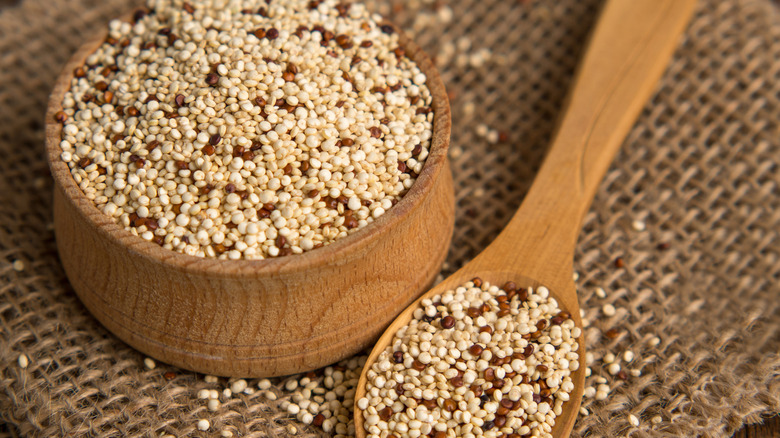
One of the worst things that can be done to the price of a food item is to classify it as superfood. While this made quinoa easily available in the U.S., it's taken one of the staple South American grains, and it turned it into a luxury health food. This crop has been a part of indigenous foodways in Andean region for approximately 5,000 years. Initially, it was rejected by the Spanish colonialists when they arrived. Instead, they encouraged the production of the grains they were used to like wheat and barley.
Fast forward to 2013, when the Food and Agriculture Organization of the United Nations named it as the International Year of the Quinoa, praising its health benefits and the fact it's a protein-dense grain with multiple nutrients. Since then, media attention about quinoa's health benefits took flight and this grain became the new hot health food in town, on a global scale. It started appearing in Western salad bars and cafes, upmarket menus, and health food stores. And all this came with a relatively high price tag, especially considering it's the staple grain of a people for thousands of years. In fact, according to Statista, in 2024, the global price of quinoa almost doubled, from an average price of $2.45 per kilogram, it reached $6.58 per kilogram. In comparison, that same year, the global price of wheat per kilogram didn't go over $0.40.
Truffles
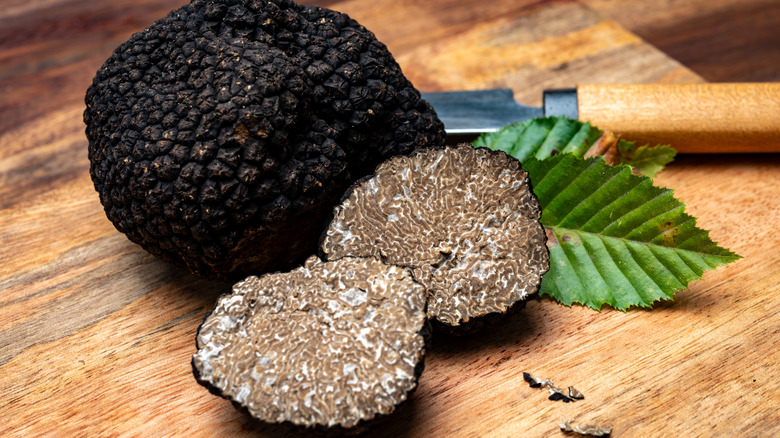
Nowadays, truffles are a luxury item served in many upscale kitchens — just a few shavings of these valuable fungi can elevate a meal. But this wasn't always the case, and though this foraged ingredient has been consumed since ancient civilizations, there was a period of time that it fell into ill repute. During Late Antiquity, in some regions, truffles were thought of as peasant food. Church even associated them with witchcraft and labeled them unsafe, which somewhat affected their reputation.
In the 14th century, truffles in Europe rose again to elite status, as they became a popular option among the rich in France and Italy, allegedly due to the influence of Italian monarch Catherine de' Medici, who married the French King Henry II. Their popularity really boomed in the 19th and 20th century when they became an integral part of French gastronomy. Truffles were celebrated by famous French chefs like Auguste Escoffier, solidifying their status as a lux ingredient until today.
There are various types of truffles, differing in flavor and price. Black truffles are more affordable and generally more available, while the prized white truffle is the most expensive variety. Prices vary, and while you can get an affordable jar of preserved black truffles at $19.20, the same amount of fresh black truffles sells for $250. The same quantity of white truffles on the same website costs $420.
Fondue
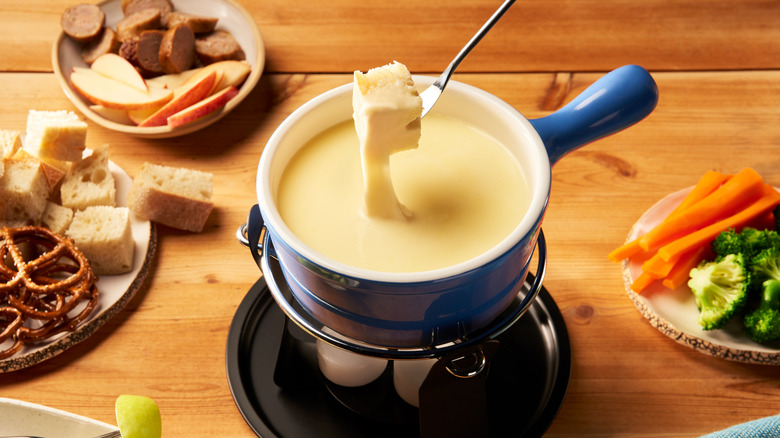
Fondue can mean many things in today's world, but in the Alpine region in Europe where it originated, it's most commonly associated with ski culture. After a tiring, freezing day on the snowy slopes, there's nothing more delicious than a rich, cheesy fondue. Nowadays, it's made with some of finest French and Swiss cheeses, but it originated as a frugal family meal during times of struggle. Fondue was a way to stretch a meal into something more during winter, when food was typically scarce. You could revive an old piece of cheese and some stale bread by making a fondue. Dipping dry or stale bread into melted cheese makes it moist and immediately more appetizing.
Over time, this tradition continued but as it was such a delicious meal, it eventually became a symbol of Swiss cuisine. It then even went international and was enjoyed by more affluent people. Today, it remains a luxurious meal in these parts of the world and beyond, often using a blend of high-quality cheeses. Though fondue is never cheap, at some places it comes with a high price, fitting right into the luxurious category. You can expect to pay around $50 per person, and as the order usually calls for a minimum of two people, it comes down to around $100 for one fondue filled with bubbly cheese.
Of course, there are cheaper ways to enjoy fondue, but this usually calls for home preparation and more affordable cheese selection. Essentially, it all depends on which ingredients you use, but you can expect that restaurants will opt for expensive, high-quality cheeses that will dictate higher prices.