

Stop Chopping These Foods On Your Wooden Cutting Board
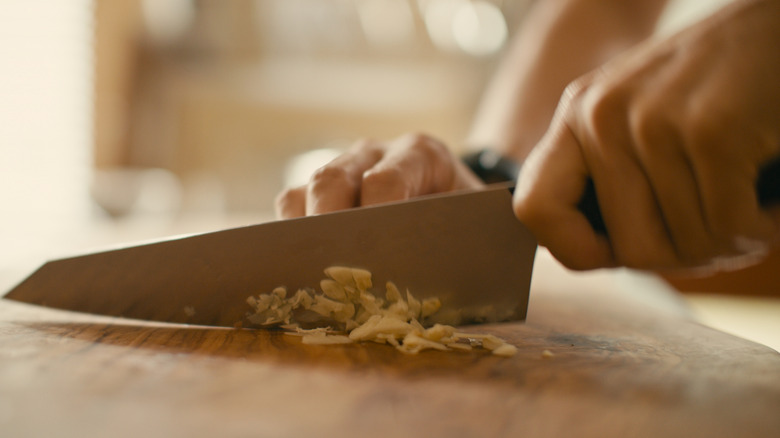
Cutting boards are one of the most important tools in our cooking arsenals. Wood is the best material for durability and even aesthetic value when it comes to cutting boards, but its nature means there are some precautions you have to take for food safety. One such precaution is knowing what you should and shouldn't chop on your wooden cutting board. In general, wooden cutting boards are considered safe because wood is porous, and, unlike plastic where bacteria can just hang out, wood absorbs bacteria, dries out, and the bacteria dies. This all only goes according to plan with proper care.
One of the best ways to keep your wooden cutting board clean is to avoid potentially harmful foods, chief among them being anything hot or oily. The fats in different oils ooze into the wood's pores where they can get trapped there and spoil. While careful cleaning keeps bacteria under control on wood cutting boards, this fat that seeps in without you even noticing will go rancid and become a bacterial minefield. Even if this doesn't make you sick, it can make everything else you chop from then on taste awful.
The heat from hot foods can also cause long-term damage. Those high temperatures directly on the wood can cause it to warp, which can over time lead to cracking. A cracked cutting board isn't just an uneven chopping surface that can range from annoying to dangerous, it's also a cutting board with a huge hideout for more bacteria.
What to chop on which cutting boards
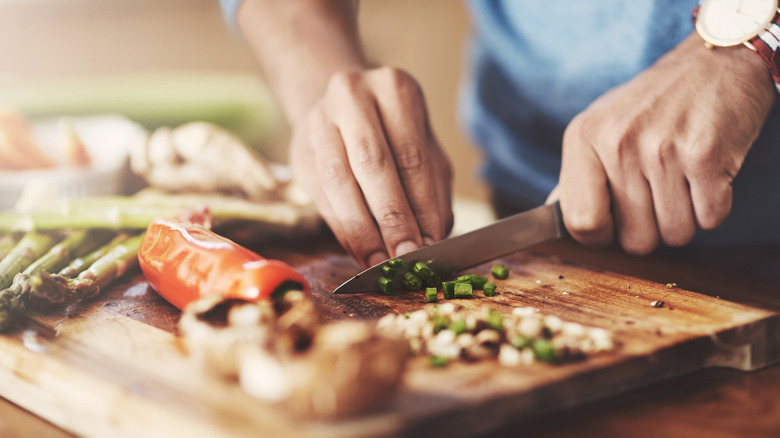
Under the threat of rancid flavors, sickening bacteria, and cracked surfaces, you'll likely never prepare hot, oily foods on your wooden cutting board again. This realization is a good opportunity to upgrade your entire cutting board game. Not only should you avoid certain foods on your wood board, but you should actually use different cutting boards for different foods to avoid cross contamination. Chefs use a color-coded cutting board system home cooks should steal, assigning certain colors to raw meat and poultry, raw seafood, washed or unwashed produce, dairy, baked goods, and other foods.
Keep color-coded plastic boards for the foods you don't want to chop on wooden cutting boards, like those hot and oily foods, as well as acidic fruits that eat at wood, raw meats, and seafood will also be helpful. Additionally, remember to sanitize your wooden cutting board after every use, no matter what you chop on it. This will keep bacteria from lingering and reproducing. The easy and effective way to sanitize wooden cutting boards is a food-safe solution of water and white vinegar. Then, it's crucial to season your wood cutting board with mineral oil, as it creates a barrier against bacteria.
If you only use your wooden cutting boards for specific foods and clean them every time, you will successfully avoid off-flavors spreading and bacterial growth. With these techniques in mind, your wooden board will last for years.