

George Harrison's Love For This Candy Caused A Chaotic Concert Trend
We may receive a commission on purchases made from links.
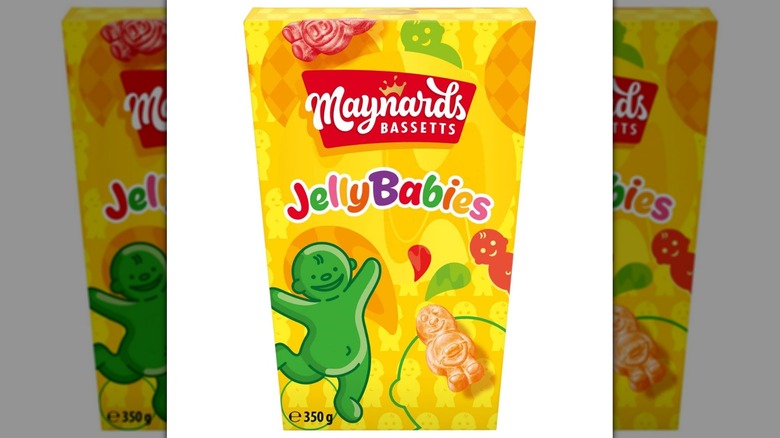
George Harrison became a vegetarian in the mid-1960s. But, before this Beatle's favorite food was vegetarian Indian cuisine, and before he was the sitar-dabbling mastermind behind "All Things Must Pass," Harrison was a lad from Liverpool with a penchant for Jelly Babies. To today's fans, a taste of Maynards Bassetts Jelly Babies offers an old-school nostalgia factor. But, during the 1960's Beatlemania, the treat was similarly enjoying its heyday.
The multicolored, starch-dusted, plump, chewy, baby-shaped candies were prized for their sweet flavor and firm yet soft texture. The classic British candy first gained popularity in the British market after being produced by Bassett's of Yorkshire, England, in 1953. Soon after, the Beatles broke onto the scene. The band was known for having a bit of fun with interviewers – and in 1963, George Harrison joked to one television host that Jelly Babies were his all-time favorite candy, and that John Lennon had eaten all of his. At least, that's one version of the "jelly bean incident's" origin story.
In an interview shared on YouTube, Harrison himself expounds, "They send us a lot of Jelly Babies and chocolates and things like that, just because somebody wrote in one of the papers about presents and things that we'd had given to us, and John said he got some Jelly Babies and I ate them." Whoever started it, the unforeseen result was the same: Suddenly, the Fab Four were being pelted en masse by fistfuls of the plump jelly candies during live performances.
Arenas full of fans pelted the band with Jelly Babies as they played
As Harrison continues in the interview, "Ever since that we've been inundated. We get about two tons a night. But the main trouble is they tend to throw them at us when we're on stage, and once I got one in my eye, which wasn't very nice." The musicians even personally reached out to fans to stop the barrage. In 1963, George Harrison replied to a fan letter written by Lynn Smith (then 15 years old), discouraging Smith and fellow fans from pelting the band with "boiled sweets [...] It's not funny."
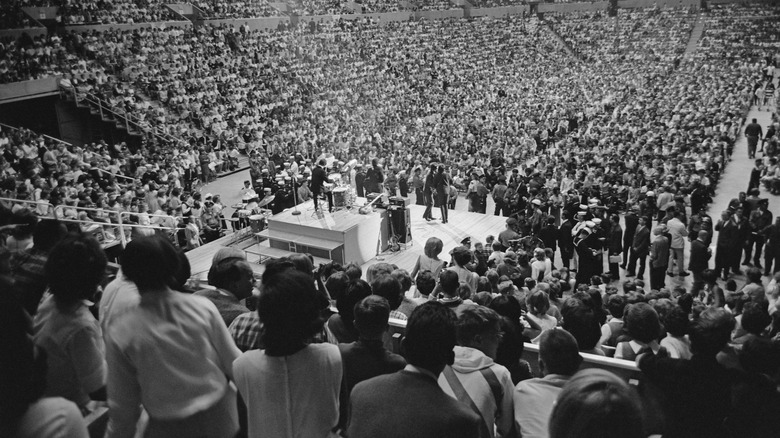
Enter: The Beatles' legendary, record-breaking, industry-changing 1964 North America tour. Happily, the British sweet wasn't sold in American markets, so the onstage barrage trend was at its end ... right? Wrong. Never underestimate the power of a teenager smitten with a rock 'n roll band. Instead of Jelly Babies, Harrison et. al. suddenly found their live shows hailed with the stateside-available alternative: Jelly beans, which are much harder than those plump British jellies (ouch). Per the lore, the tour-starting show at San Francisco's Cow Palace on August 19, 1964 — which completely sold out to a crowd of 17,000, and began with a full 4 minutes and 45 seconds of fans screaming – was stopped twice due to the sheer number of jelly beans being thrown at the stage.
American jelly beans are harder than British Jelly Babies, and created a dangerous scene
Considering the volume of propellants whizzing by at this velocity, the perhaps playful scene is suddenly reminiscent of BB gun pellets. In a follow-up interview with Harrison, an American interviewer notes that the Beatles have not exactly been "appreciative of all the jelly beans they've thrown at you on your tour." The musician responds, "No, it's been dangerous, y'know, because jelly beans are travelling about 50 miles an hour through the air, if it hits you in the eye, well, you're finished. You're blind, aren't you? We've never liked people throwing stuff at us. We don't mind 'em throwing streamers, but jelly beans are a bit dangerous, you see?"
Indeed, during that same 1964 U.S. tour, Paul McCartney was struck with both a close-range raw steak and a used flashbulb at the International Amphitheatre in Chicago on September 5. Nearly 50 years later, in 2009, Harrison's 1963 cease-and-desist jelly bean reply letter to Lynn Smith was auctioned off at Woolley and Wallis auctioneers in Salisbury, with an anticipated fetching price of £800 ($1,066 USD).