

The Science Behind Why Yellow Potatoes Create Creamier Soups Without Becoming Too Heavy
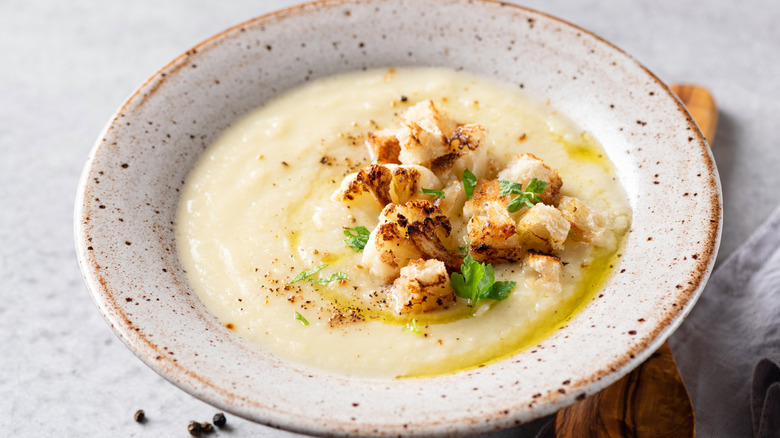
There are few things that rival the warmth and comfort of a creamy soup. Yet, while there are many ways to achieve the most velvety textures in a recipe — namely, by adding in a splash of rich and decadent dairy — adding in a potato or two can also work to achieve the same degree of creaminess. That said, not all spuds are the same. For the silkiest and smoothest soups that won't weigh things down, nothing tops a yellow potato.
Yellow potatoes are named after their golden-hued flesh. Straddling the line between starchy and waxy, these all-purpose spuds typically boast a sizable amount of starch (a complex carbohydrate) and a high ratio of moisture in comparison to other varieties. It's precisely these characteristics that allow yellow potatoes to easily melt right into a soup, its starch adds a bit of bulk and richness without causing the consistency to become gritty, gummy, or dense when blitzed, which is often the case with different spuds like low-moisture and starch-heavy Russets.
Buttery and creamy Yukon Golds are a favorite to silk-ify soups. The potato's balance of waxy and starchy traits is also what makes Yukon Golds ideal for roasting, with its fluffy-as-a-cloud interior suitable for baking, too. Another oh-so creamy yellow variety is the German Butterball, but Moonlight, Vivaldi, or Rua potatoes do the trick.
How to successfully work yellow potatoes into creamy soups and beyond
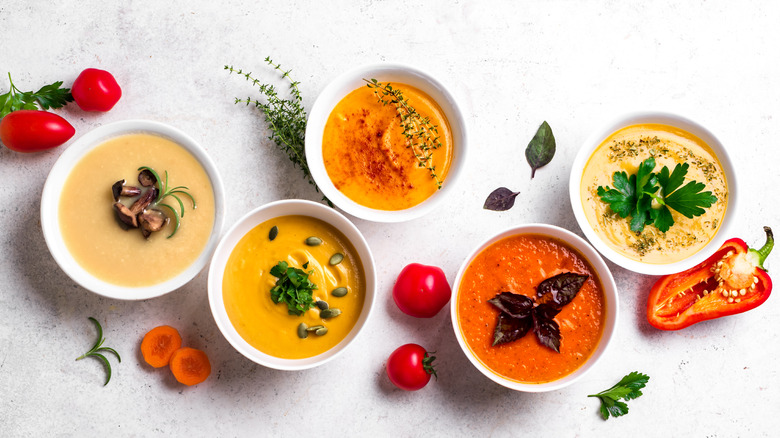
Yellow potatoes are the go-to spud for any number of silky soup recipes like a cream-less cream of celery, blended broccoli soup, or a pureed bean bisque. All you need are a few — no more than three — small tubers. After peeling and chopping into uniform chunks, toss potatoes into a pot with the rest of your ingredients to cook. While they'll disintegrate into the soup if left to simmer long enough, for the smoothest and most homogenous results, we suggest adding the potatoes during the final stretch of cooking and then blitzing the soup (spuds and all) in a blender until velvety and luscious.
If you want bursts of creaminess, however, skip the blitz. When tossed in towards the very end of cooking, the softened, gold-fleshed potatoes will hold their shape in comforting soup recipes like minestrone and are even the best option for clam chowder. The ability of yellow potatoes to soften without becoming gluey is also what allows the spuds to shine in everything from a creamy, garlicky mash to buttery fondant potatoes, or even a decadent and quick-cooking Cuban picadillo.
Potato still got you puzzled? Check out our list of 25 potato varieties and how to use them to master all there is to know about these creamy tubers, once and for all.