

Just Because Canned Whole Chicken Exists Doesn't Mean It's Worth Buying
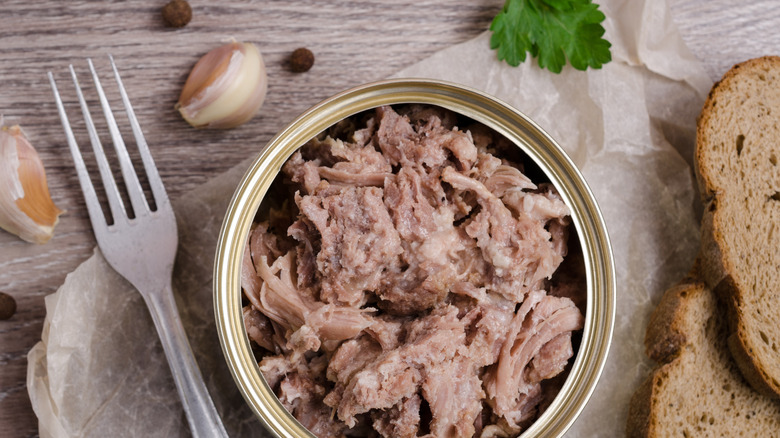
Canned foods are an integral part of many people's diets and can be very healthy, despite common misconceptions. According to the University of Maine, canned foods not only retain nutrients, but sometimes even have higher concentrations. In addition, people who regularly ate canned goods tended to consume more nutrient-dense foods and even had an increased intake of essential nutrients compared to those that didn't eat canned goods as often. But not all canned food is created equal, and whole canned chicken may be best left on the shelf.
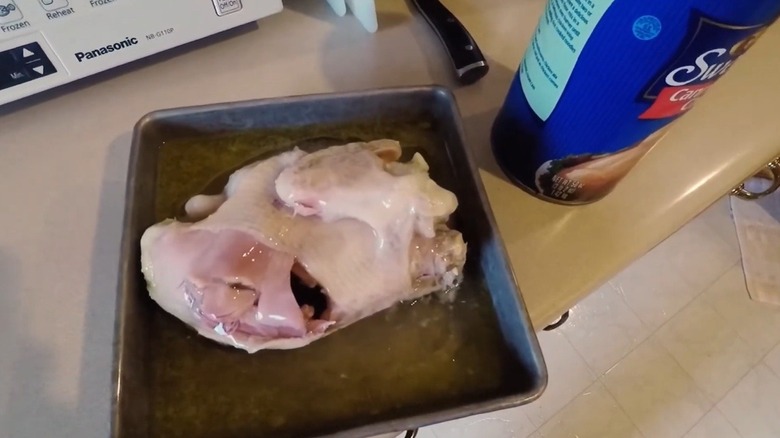
If you've spent any time online, you may have seen Sweet Sue Canned Whole Chicken in videos. Wired referenced it in an article in 2007, and YouTuber L.A. Beast was among the first to eat one on camera in 2014. The novelty of a whole chicken stuffed into a can has captured attention for nearly 20 years. Each can is 50 ounces and features a whole, fully-cooked bird with skin and bones that's packed in a gelatinous mixture of water and salt. Despite being fully cooked, the directions on the can recommend you reheat it at 475 degrees Fahrenheit for 10 to 15 minutes.
YouTuber Hks heated the canned protein before eating and said it tasted consistently "salty" and reminiscent of the chunked meat in Campbell's chicken noodle soup. L.A. Beast tried it straight from the can and called it "slimy." Emmymade followed the product's cooking directions exactly and commented on the chicken's extreme saltiness, as well as its "metallic" taste and "soft" texture. YouTuber Ashens, who tried a different brand, noted that it barely tasted like chicken.
When canned can't
The sodium content in Sweet Sue's canned chicken is high, which explains the widespread criticisms of its saltiness. According to the label, each serving contains 150 milligrams of sodium, or 6% of the daily recommended value. That sounds low, but the can suggests a very small 2-ounce serving, with 15 total servings per can. That means the whole can contains 2,250 milligrams of sodium. This salt soaks right into the meat, which overwhelms the flavor.
The cooking and canning process robs the chicken of flavor and texture, leaving a salty, slimy, too-tender product in the end. One way to salvage the meat is to use it as an ingredient for another dish. Cook it in a spicy tomato-and-pepper sauce for tacos, or mix it with mayo, onion, and other extras for chicken salad. Anything that adds new flavor, sharpness, and texture would help elevate canned chicken. While it may not be the best product, the canning process ensures it lasts a long time and travels better than fresh chicken, so it does have some usefulness.
If you're looking for a simple, already-cooked chicken, buying a rotisserie chicken from your local grocery store is a much better idea. These chickens are seasoned, tender, and ready to eat. They also probably cost less. Since prices can reach up to $27 online for canned whole chicken, Costco's $4.99 rotisserie chicken is a great deal by comparison. If you don't have the time or ability to cook a chicken yourself, whole canned chicken is an option, but it should not be your first choice.