

Alton Brown's Genius Ice Cube Trick Makes Martini Magic

A classic martini is about as simple as a drink recipe can get. Gin or vodka, vermouth, a lemon twist or olives — voila, the perfect drink has been served, right? Almost. This pared-back format actually leaves infinite room for tinkering with ratios and personal preferences, from how much vermouth is used to how bracingly cold the drink is. People have a whole lot of opinions around martinis, and we're keen on listening to those opinions when they come from the pros.
TV personality and cookbook author Alton Brown will tell you exactly how many olives a martini needs, and how he levels up his dirty martinis with his own brine formula, too. This expert knows his martinis, and one of his hacks is a game-changer for how you'll make and enjoy this cocktail from now on. That hack is "time-released vermouth." This method is how Brown achieves his preferred ratio of vermouth and dilution in every martini.
As he demonstrates in a YouTube video, Brown freezes 2 teaspoons of vermouth and 1 teaspoon of water. He pops that vermouth-and-water cube into his glass and then pours 3½ ounces of gin over it. Brown waits about two minutes before taking his first sip, which will be more gin-forward. As the cube melts, it releases more silky, bittersweet vermouth into the gin, keeping the cocktail refreshingly cold the whole time.
Vermouth-and-water cubes are a fresh spin on martini-making
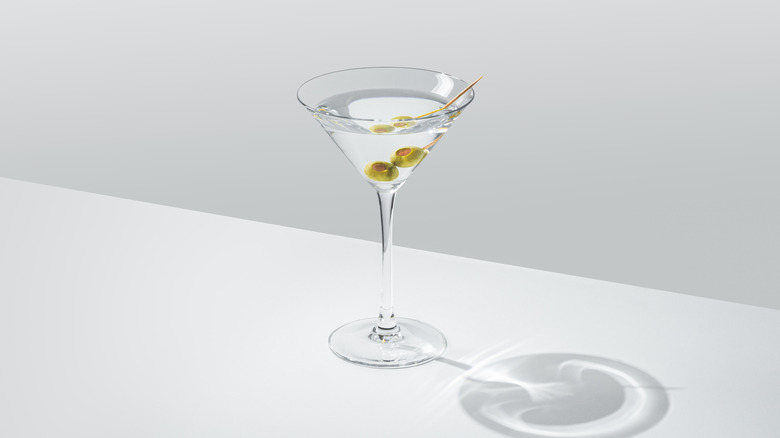
Ice has a crucial impact on cocktails. It chills drinks and provides just the right amount of dilution, marrying different elements together. Normally, you would stir your spirit and vermouth with ice, but Brown's way of introducing ice to the alcohol is a characteristically scientific approach. The ice still cools the drink and dilutes it, too, just more slowly as it melts. Brown also takes advantage of that slow melt to create a vermouth experience that evolves as you sip the cocktail.
If you like a martini on a somewhat regular basis or are hosting a dinner party, it's a good idea to have an ice tray filled with these 2:1 vermouth-and-water ice cubes. Vermouth's typical ABV range is between 15% and 22%, meaning it could get slushy in a super-cold freezer, but that's unlikely — the fortified wine should freeze into a nice, smooth cube when mixed with the water. You always want to store vermouth in the fridge, anyway, so especially if you plan on using these cubes within a shorter amount of time, you can make them in advance and freeze. To help your martini feel icy right away, make sure to keep your glasses in the freezer, too. This creates a frosty effect.
This isn't the only way to up your martini game with the slow-release concept. Once you fall in love with this technique, try making "dirty martini ice cubes" for slow release briny flavor.