

This Extra Ingredient Adds Knockout Flavor To A Well-Seasoned Prime Rib
We may receive a commission on purchases made from links.
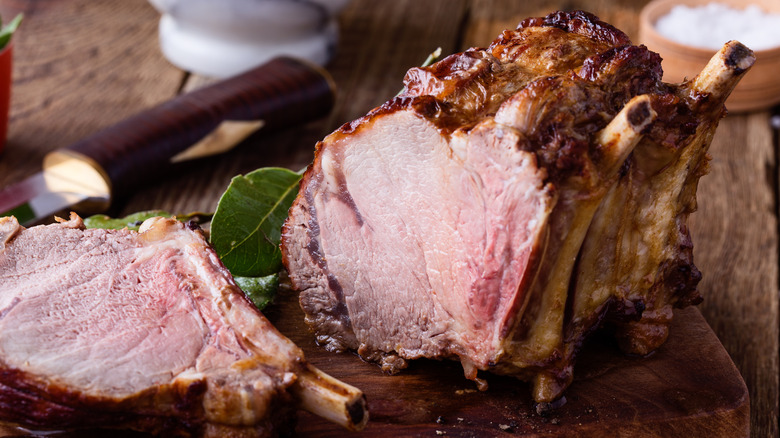
It's not every day you find yourself prepping and cooking prime rib, but if you're planning to serve this top-tier standing roast, there are some tips you need to make the absolute best prime rib every time. One of the most important aspects to cooking prime rib is making sure it's well seasoned. To thoroughly flavor the meat, you need to make sure there's sufficient seasoning to penetrate the entire roast. The best seasonings for prime rib are fortunately a matter of preference, but MSG is the one ingredient that will elevate a well-seasoned roast to perfection.
MSG, also known as monosodium glutamate, is the sodium salt of an amino acid that's naturally occurring in certain foods we actually eat frequently. The Japanese have long identified MSG as having the fifth taste of umami (savory, rich, and complex). Despite the biggest misconception about MSG to rest, it's not a chemical additive and it isn't bad for you. In fact, MSG is your secret weapon for more flavorful BBQ, steaks, and yes, prime rib too.
While you can achieve the desired umami flavor profile by simply adding MSG to your dry rub or liquid-based seasoning, there are a few different ways to get the most umami bang for your buck. Once such method is to make a coating of MSG for your rib roast, similar to salt-baking.
How to use MSG on your prime rib
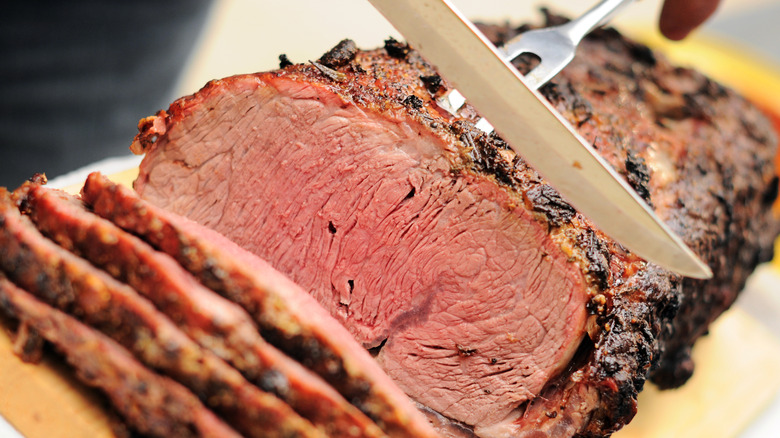
Because MSG contains only one-third the sodium of table salt, you needn't be afraid of applying it. MSG won't make your prime rib too salty, especially if you create a crust that's like salt-baking. This is a common practice used to preserve, season, and tenderize certain foods, especially fish. For prime rib, season the roast well with your choice of herbs and spices. Add dry rub to prime rib for the best flavor about an hour before you are ready to cook.
To make an "MSG-bake" prime rib you can grab an egg, several cups of MSG (like this McCormick Culinary Flavor Enhancer MSG), some water, and make a paste in a large bowl. Once the paste is a thick enough consistency, apply it all over the meat, encasing it completely. There's no need to worry about the crust burning, especially since you should be cooking your prime rib low and slow — in the oven at about 250 to 300 degrees Fahrenheit for several hours (depending on weight) or in the smoker.
Your biggest friend here will be a professional digital meat thermometer, for two reasons. Firstly, the crust on your prime rib will make it difficult to visually assess the doneness of the roast. You want to make sure you cook this prized cut of meat to the proper temperature. When it comes to prime rib, cook to 120 degrees for rare, 130 to 135 degrees for medium- rare, and 138 to 140 degrees for medium.