

How To Give Fried Okra The Perfect Crunch For The Best Southern-Style Side
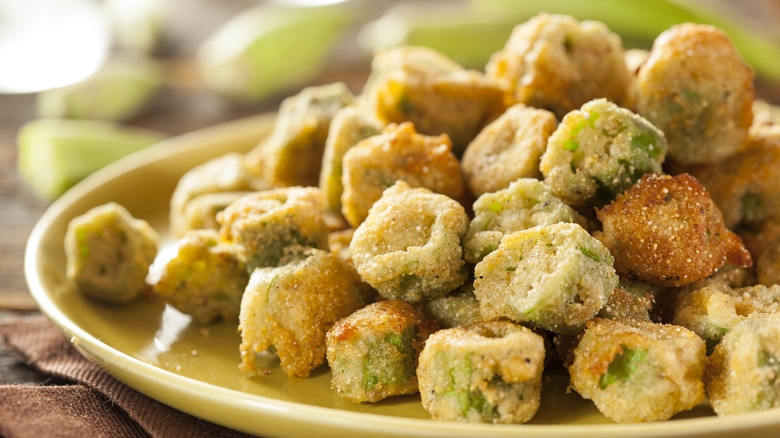
Fried okra is a crunchy, bite-sized snack that is perfect on its own, but also makes a great side dish that complements other Southern comfort foods. Frying your okra not only dresses up a healthy, nutrient-dense vegetable in an mouth-watering way, but also enhances its mouthfeel and flavor, so that you can enjoy the vegetable without the slimy texture. The secret to getting a crisp, golden brown crust on your fried okra is to use the right type of breading.
The best type of breading to use for pan-fried okra is one that is thick enough to withstand the frying process without scorching the delicate vegetable beneath, while also thin enough to obtain the ideal crunch and crispiness you want to achieve with pan-frying. Using a combination of fine yellow cornmeal, flour, and cornstarch offers the ideal balance. The coating will be light yet flavorful enough to improve the taste of the vegetable. It will also be thin enough to crisp up while frying, but have a coarse enough texture to prevent the oil and moisture in the pan from penetrating the okra and making it limp or mushy.
The ideal ratio for okra breading is one part fine yellow cornmeal to ¼ part flour, and with one or two tablespoons of cornstarch for added crispiness. Mix in your seasonings, such as salt and pepper, garlic and onion powder, cayenne pepper or smoked paprika, and blackened seasoning, before coating the okra pieces. You can also dip the pieces of okra in buttermilk or raw egg before coating so that the breading sticks better and doesn't break apart while pan-frying.
Other tips for pan-frying okra to make it crispy not mushy
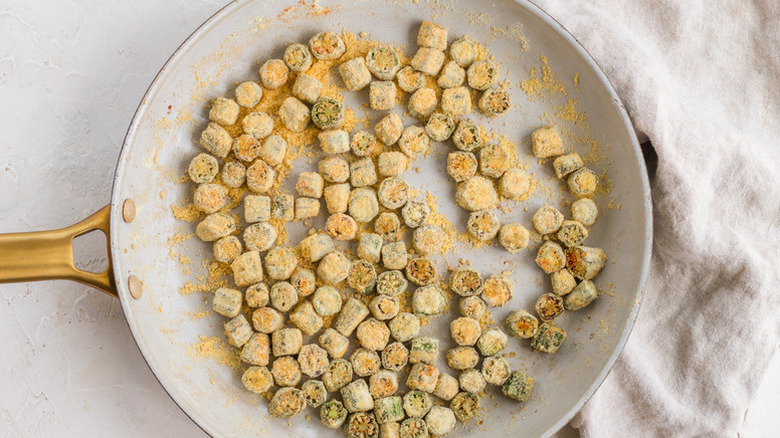
There are a few tips you need to know when cooking with okra so that you can make sure your dish turns out crispy and not mushy. First, choose young, tender okra and cut it into large pieces. Bigger pieces are less likely to get slimy when cooking. Before you coat the okra in its breading, wash it and dry it completely. If the pieces are wet, they will steam while cooking, creating a slimy vegetable and mushy coating.
After mixing up your coating and seasonings in a Ziplock bag, throw in the okra and shake the bag vigorously to coat all pieces evenly. Remove the okra to a colander to get rid of the excess breading, and then place the pieces in a single layer on a sheet pan before you start frying. This will give the coating time to dry and set. Heat 2 tablespoons of canola or vegetable oil in a cast-iron pan until it shimmers. Add small amounts of okra to the pan at a time so that you avoid overcrowding. Adding too much at once will make the temperature drop, and your okra will turn out too greasy or soggy. Cook pieces until they are golden brown on all sides, then salt them liberally and let them drain on paper towels before serving.
You can also experiment with different types of coatings to elevate fried okra to restaurant-worthy status. Soaking the okra in vinegar or lemon juice before breading it can break down the enzymes responsible for sliminess. Adding panko, seasoned breadcrumbs, or finely crushed cornflakes to the breading mixture can give the okra a heftier crunch. Frying the okra in bacon grease, butter, or Crisco rather than oil can give it a deeper, richer flavor.