

The Way Richard Nixon Ate Cottage Cheese May Make You Lose Your Appetite
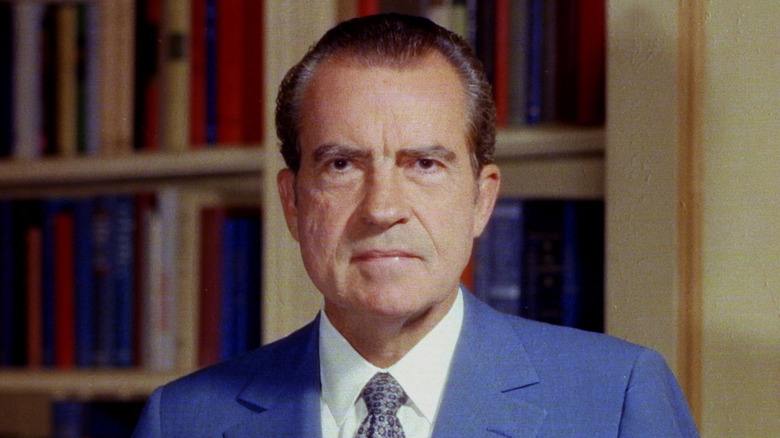
Richard Nixon is, in general, not remembered kindly by history, and we're going to have to add his weird food choices to the list of reasons why we collectively cringe when we look back on him. The 37th president reportedly regularly ate, but didn't necessarily even enjoy, a serving of cottage cheese slathered with America's favorite condiment, ketchup.
One account, published in the Reading Eagle in 1969, described the habit in detail, with Nixon telling reporters that he ate cottage cheese regularly because it was good for him, even though he didn't like it — the ketchup covered it up, and made it easier to finish. The habit apparently came from back home, as Nixon shared that his grandmother, who lived to age 93, also ate cottage cheese every day.
The awkward combination of duty and discomfort is consistent with Nixon's background and public image. He grew up in a Quaker household in Southern California, where the underlying values of simplicity and restraint were built into every day life, including food choices. As his political career advanced into the then-new television age of presidential campaigning, Nixon became increasingly conscious of his appearance and health, where he was visibly up against the handsome, younger, and more charismatic John F. Kennedy. Nixon's choice for a modest, self-effacing and protein-packed lunch aligned with his background, concerns, and ambitions.
Tricky Dick's downer diet
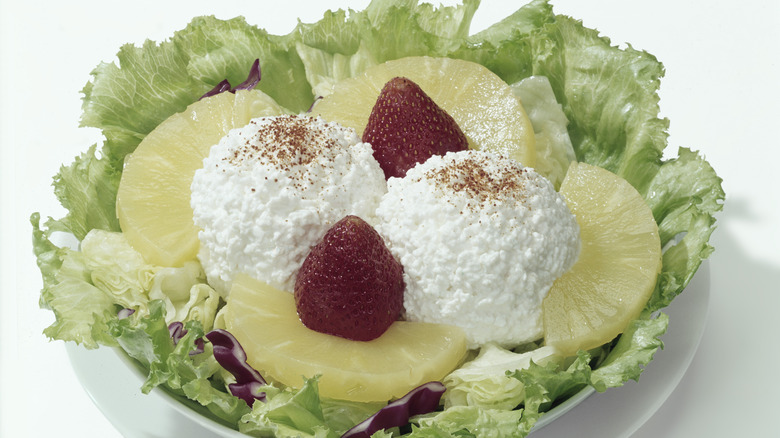
While we do not, perhaps mercifully, have photographic evidence of the ketchup and cottage cheese arrangement, one significant image from Richard Nixon's presidency shows a similarly austere meal. On August 8th, 1974, just hours before announcing his resignation, Nixon ate his final lunch at the White House. Photographer Robert Knudsen snapped a picture of the rather spare, somberly ceremonial meal: A silver tray, a glass of milk, and a plate with a sad scoop of cottage cheese sitting atop a pallid pile of pineapple. His actual, fully final last meal in the White House came next morning, a more substantial corned beef hash and poached eggs.
By the nutritional standards and diet recommendations of the era, the cottage cheese "dish" made a certain amount of sense. A cup of cottage cheese contains roughly 24 grams of protein and relatively little fat. A few tablespoons of ketchup would add sugar and a small dose of vitamin C, among a micro amount of other micronutrients.
More importantly, cottage cheese had a strong reputation as a diet food, replacing its WWI-era role as a patriotically economical meat replacement. For much of the 20th century, weight-conscious nutrition advice regularly suggested a "light lunch," often comprised of a small serving of cottage cheese garnished with canned fruit or lettuce or added to Jell-O salad for a jiggly dessert. By the 1960s, cottage cheese had all but become a symbol of disciplined eating, recommended to millions of Americans in magazines and pamphlets. Nixon said he did, at least, like ketchup, so his culinarily creative workaround was probably his attempt at making a virtuous meal tolerable.