

The Signature Flavor Difference Between German And American Bologna
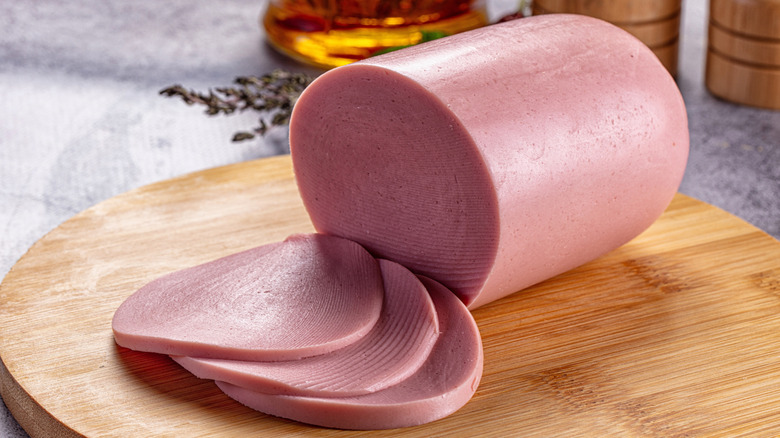
Admittedly, bologna isn't very flattering as most of us know it. It's the pink slices of mystery meat in Lunchables and cafeteria meals that seem to last indefinitely for some mysterious reason. But the bologna you've probably eaten when you were a kid has only scratched the surface of how good this sausage (yes, it's not lunchmeat) really is.
There are two popular kinds of bologna: German and American. American bologna is the classic, mass-market, hyper-industrialized version you'd find in school cafeterias. Meat is ground down into a paste, smoked, and sliced into those thin, floppy rounds you're familiar with. It's smooth in texture, rich, and slightly sweet — great for sating lunchtime hunger fast, but don't expect it to taste like smoky heaven in your mouth. No, for that, you'll need to get genuine German bologna. You'll find it in the deli section, where German-style ring bologna offers a completely different experience. Instead of just plain meat and smoke, you can taste actual spice on your palate. Garlic powder and paprika are the most common seasonings, and give the bologna a savory punch that the Americanized version just can't match. The texture is firmer, as well, since the meat is slightly more coarsely-grounded and has a heartier crunch, thanks to it having a casing à-la sausage.
Each will give you a wholly different feel, and different places across the U.S. will have a different definition of what bologna should taste like. Some like theirs in the German-style, some like American. But neither can really lay claim to being "traditionally-flavored" bologna.
Real bologna is neither American nor German ... It's Italian
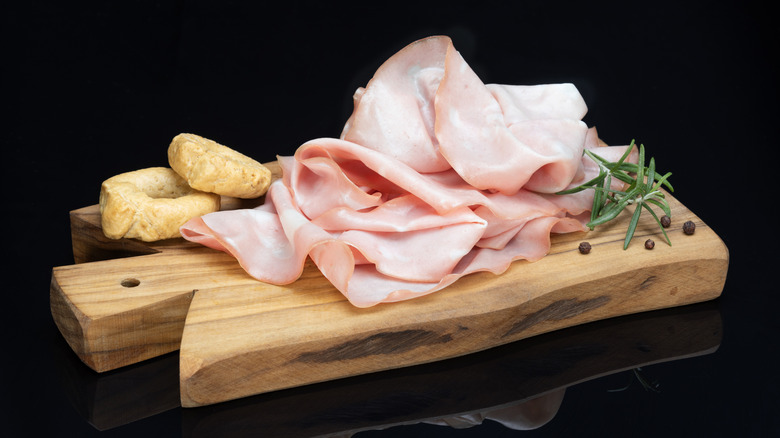
For the geography buffs out there, you've probably made a guess of bologna's real origin a while ago. Yes, it's derived from the Italian city of Bologna. But not because it's originally made there. Rather, it's an homage to Mortadella Bologna, the sausage bologna descended from. Also made from finely-ground pork, mortadella is a wholly different beast: enriched with lumps of solid pork fat for unctuousness, then studded with fresh peppercorns, pistachios, and even myrtle berries. It's luxurious where modern bologna is utilitarian — the vibe (and taste) is totally different.
Immigrants transformed bologna's story in 19th-century America. Italian and German butchers brought their sausage-making traditions to cities across the country. They adapted recipes to what was available — chicken, beef, turkey, whatever kept costs down. When the Great Depression hit, bologna became invaluable. It was cheap protein that wouldn't spoil, the kind of working-class staple perfect for families stretching every dollar. Then came the perfect convergence — sliced bread hit markets at exactly the right moment, and mechanical slicers made home preparation fast and easy. By the 1920s, Oscar Mayer saw a brilliant business opportunity. By stuffing bologna into vacuum-sealed packages and blasting catchy jingles over the airwaves, they transformed bologna into an American cultural staple as much as it's a working-class convenience.
Despite us not having to tighten our belts like we used to, American-style bologna is still a beloved — even a comfort — food for many with a ton of good brands to choose from. But if it doesn't hit the spot flavor-wise? Garlicky German-style bologna will do. And, for a treat, you won't find one better than genuine Mortadella Bologna.