

Why You Should Skip The Foil When Storing Marinated Meat
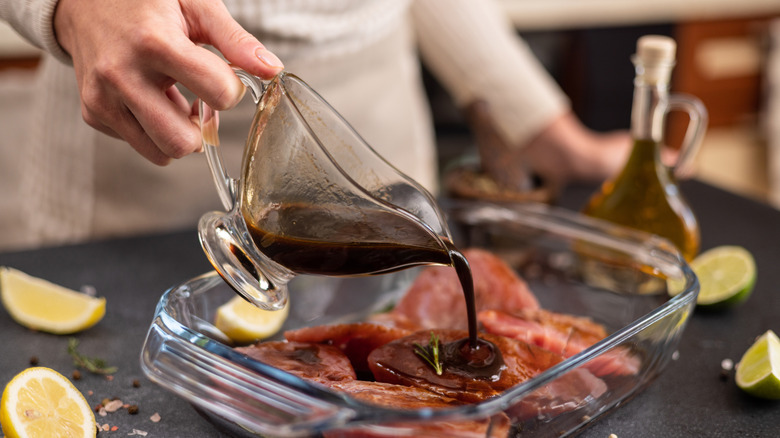
Marinating meat is a critical way to imbue it with flavor. Whether you're opting to build depth for your sweet and spicy grilled shrimp or creating a flavorful rub for barbecue smoked brisket, you'll want to make sure you allocate enough time for marinating it and — more importantly — select the right vessel or material to marinate it in. If there's any one material that you should avoid when it comes to marinating your meat, it's aluminum foil.
Encasing marinated food in foil is one of the biggest mistakes that you can make with the material. Most marinades contain acidic and salty ingredients, which interact with the metal and cause your food to taste off-putting. While there aren't any inherent health risks associated with marinating food in foil, you want to avoid doing so as not to impart any strange flavors on your protein. Plus, no one wants to accidentally rip the foil and have to deal with a sticky marinade mess.
Alternatives to foil wrapping your marinated meat
The good news is that you have many alternatives to foil wrap available. Glass, while heavy, won't interact with any of the ingredients inside it. This means you won't have to worry about the taste changing or a particularly dark marinade permanently discoloring your container. It's also nonporous, meaning that, when you marinate meat in the fridge overnight in it, you won't have to worry about it tasting like day-old Chinese food or the particularly stinky cheese you decided to store next to it.
Glass is an excellent alternative to the one container you should never use for raw meat: plastic. Unlike glass, plastic tends to hold on to bacteria, biofilm, and food residue. Even if you clean it well, any sort of bacteria left on the raw meat may camp out in the scratches and grooves, posing risk of contracting a foodborne illnesses such as Salmonella or E. coli.
The airtightness of plastic containers has also been called into question. The warped, cracked, and ill-fitting lids that develop with use create potential for cross contamination between the raw meat's juices and the other foods in your fridge. While you can store plastic containers at the bottom of your fridge to limit drip exposure, marinating your meat in a glass container is a far better option.