

'Burping' Isn't Just For Infants. Turns Out It Benefits Your Kitchen, Too
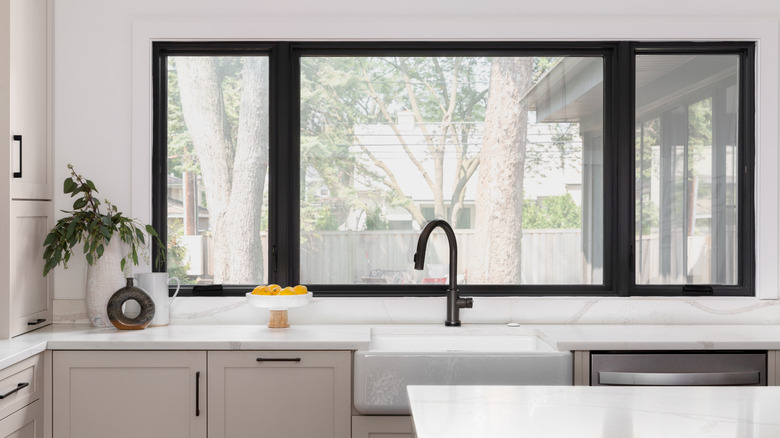
Kitchen trends certainly live by the "here today, gone tomorrow" mantra. From the millennial gray kitchen cabinet color of 2015 to fridgescaping taking up space in the fridge and the creative side of the internet, there is no shortage of buzzy, fun, and usually short-lived trends floating around in the home and lifestyle world. But one of the ones that doesn't look like it's going anywhere soon? Burping. No, not the horrid noise you make when you drink a Sprite too fast — "house burping," the trend that supposedly helps decrease mold in your home.
The "house burping" trend originally started centuries ago in Germany and called for ventilating the home at least twice daily to improve air quality. Modern interpretations usually involve opening up the windows and doors of your kitchen — or in some cases, your whole house. While there isn't necessarily concrete evidence that "burping" your home has a significant impact on mold growth, there may be other benefits to the practice, including letting volatile compounds and smells exit. Plus, we could all use a little fresh air from time to time.
Everything you need to know about this not-so-new trend
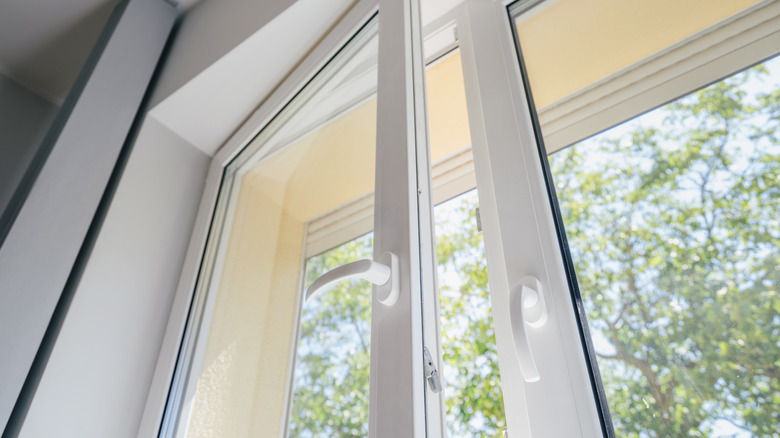
Since "house burping" is a trend, there are very few rules as to how long, how often, and even when to burp your home. Some have suggested to "burp" your home more often in the winter, as running heat constantly and keeping the windows shut can cause mold to build up. While heat is expensive, experts say that opening your windows for just five to 10 minutes twice a day in the winter can really help your space. You may also want to "burp" your space after completing a particularly high-moisture activity, like taking a hot shower, or if you have a habit of setting your smoke alarm off when you cook a cast-iron flank steak.
"House burping" may not be for everyone, or every day, however. If the air outside is particularly wet or humid, you'll want to avoid opening the windows and causing all that saturated air to creep in. If you suffer from spring allergies or live in a polluted or heavy smog area, you may also want to think about when you "burp" your kitchen.