

The Common Mexican Restaurant Mistake Many Make When It Comes To Spice
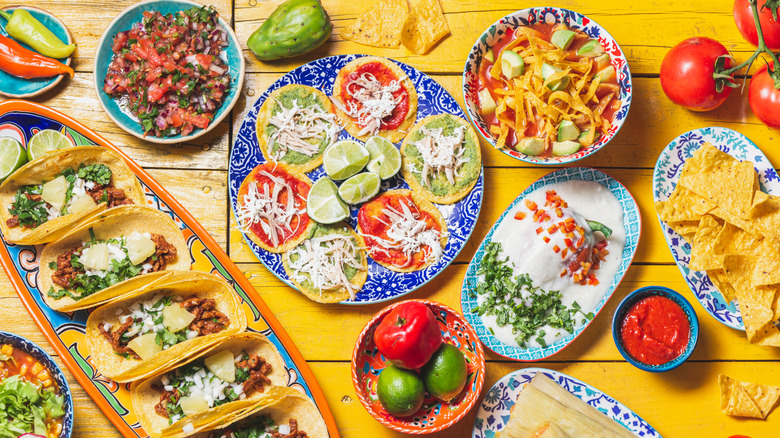
While eating at a chain like Taco Bell or Chipotle is as casual as it gets, more authentic Mexican eateries are best enjoyed after studying up on the cuisine, so you can order dishes you know you'll like. You especially want to avoid mistakes when eating at a Mexican restaurant that could make your meal less satisfying. We asked executive chef Maycoll Calderón about Mexican food misconceptions, and he pointed out that not every dish you might order at a restaurant will be spicy-hot.
"Chilies are fundamental to Mexican cuisine, but heat is only one dimension," Calderón said. "Chilies provide fruitiness, smokiness, bitterness, sweetness, and depth, not just spice. Many traditional dishes are mild or even sweet." In other words, you don't have to have a high spice tolerance to enjoy Mexico's many regional cuisines or cook Mexican recipes that will spice up your menu (not always literally). When chiles are used, it's not to burn your face off, but to add complex flavors, aromas, and textures. For some dishes, the spicy seeds of dried chiles are actually removed before cooking to create a smooth consistency.
What characterizes most Mexican dishes, rather than just spiciness? "Mexican cuisine is about harmony: acid, salt, sweetness, bitterness, smoke, texture, and sometimes heat," Calderón said. "But it's never just about spice." He added that the many types of chile peppers native to Mexico serve several different purposes in cooking, but in all cases, "Spice is about balance, not intensity."
An expert names Mexican dishes that are usually spicy versus mild
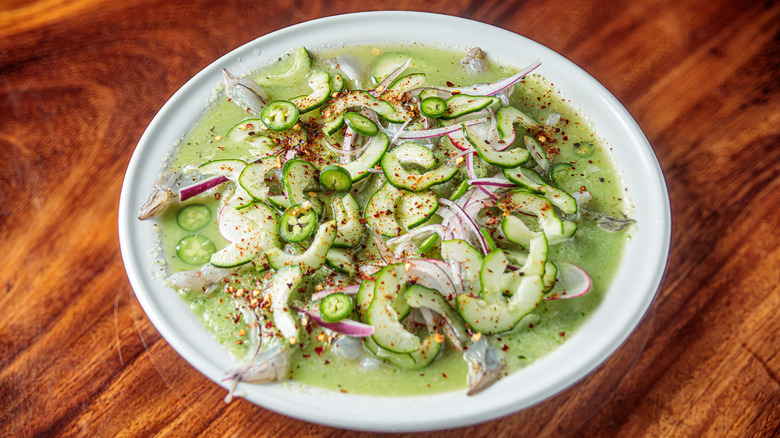
Maycoll Calderón named a few dishes from Mexico that use spicy heat as a prominent component, so you know what to try or not try based on your tolerance. "In dishes like aguachile from Sinaloa, salsa macha from Veracruz, or certain Yucatán preparations featuring habanero, heat plays a central role and is expected," he said. "It's part of the dish's identity." Aguachile is similar to yet different from ceviche, its Peruvian counterpart. Both dishes star raw seafood, but ceviche uses a marinade that's heavy on the citrus juice, while aguachile adds chile peppers, making the latter much spicier. What makes salsa macha unique is that it's more like a chile oil than the tomato- or tomatillo-based sauces you might think of as salsa. It's always spicy, but the heat level is adjustable based on the peppers used.
Calderón also named some dishes that are lower on the spiciness scale. "Dishes like mole poblano, pipián, cochinita pibil, or a delicate seafood ceviche rely on layered complexity," he said. "Overpowering them with excessive heat would disrupt their balance." Cochinita pibil is a famed Yucatán barbecue pork dish traditionally flavored with spices like cumin, cinnamon, and annatto seed, but not chiles. And while mole poblano contains dried chiles, it's supposed to have a harmonious flavor of fruity, nutty, sweet, and smoky notes, not a hit-you-in-the-face spiciness. The same goes for pipián, a sauce similar to mole that is thickened with pumpkin seeds. These dishes are good choices if you want food that's lighter on the heat.